

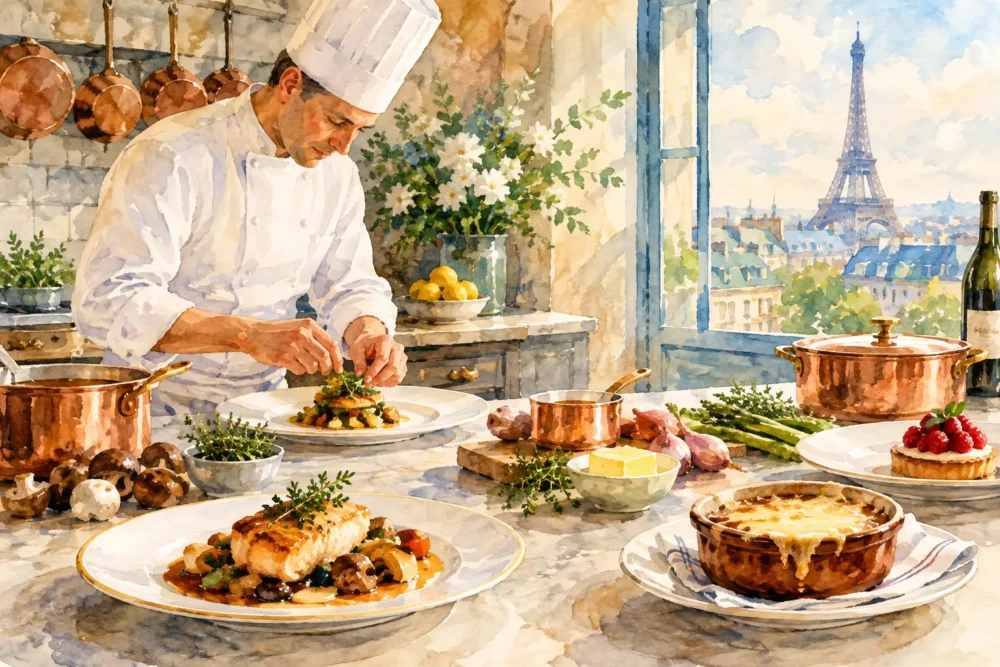
A perfectly glazed carrot, a crisp-skinned fillet of fish, a sauce that lightly coats the back of a spoon: classic French cooking techniques are often most apparent in these quiet details. They are not culinary theatrics. They are a disciplined way of treating ingredients with precision, patience, and respect, allowing each course to arrive with balance and purpose.
In a refined dining room, technique shapes far more than flavor. It determines texture, temperature, aroma, and the graceful rhythm of a meal. The result is food that feels composed rather than complicated, well suited to an evening meant for conversation, wine, and an unhurried appreciation of the table.
Why Classic French Cooking Techniques Still Matter
French cuisine has long provided the vocabulary of professional kitchens, from the way chefs organize their stations to the sauces that give a dish its final polish. While menus evolve with local produce, Mediterranean influences, and modern preferences, the underlying principles remain remarkably relevant.
At their best, these methods create contrast without conflict. A rich braise is lifted by acidity. A tender protein meets a crisp garnish. Butter lends silkiness, while herbs and citrus keep the palate awake. This is not cooking for excess. It is cooking with intention, where every element earns its place on the plate.
Technique also gives chefs a reliable framework for seasonal cooking. Spring peas may become a vivid purée, summer tomatoes a restrained confit, and cool-weather roots a deeply flavored accompaniment. The ingredient changes, but the care behind the result does not.
The Foundation: Mise en Place and Exacting Preparation
Before a pan is heated, French cooking begins with mise en place, or everything in its place. Ingredients are washed, trimmed, measured, cut, and positioned before service begins. Stocks are strained, sauces are checked, herbs are picked, and garnishes are prepared with the final plate in mind.
This discipline is easy to underestimate. In a fine dining kitchen, it is what allows a chef to respond calmly when several courses must be finished at once. More importantly, it protects consistency. A sauce cannot wait while shallots are chopped, and a delicate fish cannot hold while a garnish is still being prepared.
Knife work is part of that same standard. Uniform cuts are not merely decorative. They ensure that vegetables cook evenly and present themselves with a sense of order. A precisely cut brunoise softens at the same pace; a carefully turned vegetable takes on a polished, graceful form. Such details create visual ease before the first bite.
Stocks, Reductions, and the Architecture of Flavor
Many of the most memorable French dishes begin with a stock. Bones, vegetables, aromatics, and water are slowly transformed into a clear, flavorful foundation. A chicken stock may lend quiet depth to a velouté, while a fish fumet can intensify a sauce without overshadowing a delicate fillet.
Reduction is where that foundation becomes concentrated. As liquid simmers and evaporates, its flavor gathers. Wine becomes more expressive, natural sweetness emerges from vegetables, and the finished sauce gains body. Timing matters greatly. Reduce too little and the result can taste thin; reduce too far and salt, acidity, or bitterness may become dominant.
A well-made sauce should feel integrated, not heavy. It may carry the brightness of white wine, the warmth of shallots, or the savory complexity of a roasted jus. At René at Tlaquepaque, this respect for classical structure finds a natural companion in Mediterranean ingredients, where olive oil, herbs, citrus, and pristine seafood can bring a lighter, sunlit character to the plate.
The Art of the Emulsion
An emulsion combines ingredients that naturally resist one another, most often fat and water. Hollandaise, béarnaise, vinaigrette, and beurre blanc all depend on this controlled union. The reward is a sauce with a luxurious texture and a clean, cohesive flavor.
Temperature and pace are essential. Add butter too quickly, whisk without attention, or let an egg-based sauce become too hot, and the emulsion can split. A successful sauce has a sense of calm about it: glossy, stable, and light enough to complement rather than conceal its companion.
Butter remains central to many French sauces, though it is not the only route to elegance. Olive oil emulsions can bring a more Mediterranean expression, especially with vegetables or fish. The choice depends on the ingredient and the season. A cold-water lobster may welcome the roundness of butter, while a ripe tomato or grilled branzino may be better served by olive oil, lemon, and herbs.
Controlling Heat: Sautéing, Roasting, and Poaching
Fine cooking depends on knowing not only how much heat to use, but when to use it. Sautéing relies on a hot pan and brief cooking time to create color while preserving tenderness. It is ideal for scallops, mushrooms, chicken cutlets, and vegetables that benefit from a golden exterior and a fresh interior.
The pan must be properly heated before the ingredient arrives. Crowding it causes food to steam rather than brown, which is why professional kitchens cook in deliberate batches when necessary. The browned bits left behind, known as fond, are often the beginning of a pan sauce, deglazed with wine, stock, or a touch of acid.
Roasting uses dry heat to develop deeper flavor and caramelization. It suits meats, poultry, and vegetables with enough structure to benefit from a longer, more enveloping heat. A roast should rest before slicing, allowing its juices to settle and preserving the tenderness that careful cooking has achieved.
Poaching offers a gentler approach. Fish, eggs, fruit, and poultry can be cooked in liquid held just below a boil, preserving moisture and subtle flavor. It demands attention because the technique is quiet: there is no aggressive sizzle or dark crust to signal progress. The chef reads the ingredient instead, watching for the moment it becomes tender and just set.
Braising and Confit: Patience as an Ingredient
Braising begins with browning, then moves to a low, slow cook in a small amount of aromatic liquid. Tougher cuts of meat gradually become supple as connective tissue softens, while the liquid gathers the savory character of the dish. The finished result should be rich but never dull, usually balanced with wine, herbs, vegetables, or a final note of brightness.
Confit follows a similarly patient logic. Traditionally, duck is gently cooked in fat at a low temperature, producing meat that is exceptionally tender and deeply seasoned. The method has expanded beyond duck to include garlic, tomatoes, and other ingredients that benefit from slow concentration.
These techniques reward restraint. A braise cannot be hurried with high heat, and confit should not feel greasy. Both require a chef to build richness while preserving definition, so the last bite remains as appealing as the first.
Finishing a Plate With Restraint
The final moments of cooking often make the difference between a good dish and a memorable one. A squeeze of lemon may sharpen a sauce. A spoonful of cold butter can soften its edges and add sheen. Fresh herbs, flaky salt, or a carefully chosen garnish can provide fragrance, texture, and color.
This is where classical French technique becomes an expression of judgment rather than a fixed formula. More sauce is not always better. More garnish is not always more beautiful. A composed plate leaves space for the main ingredient to be seen and tasted clearly.
For diners, the pleasure lies in that apparent ease. A course may arrive with a delicate sauce, tender vegetables, and a precisely cooked protein, yet its balance reflects hours of preparation and years of practiced attention. The next time a meal feels effortless, pause over the details. They are often where true culinary craft is most generously felt.