

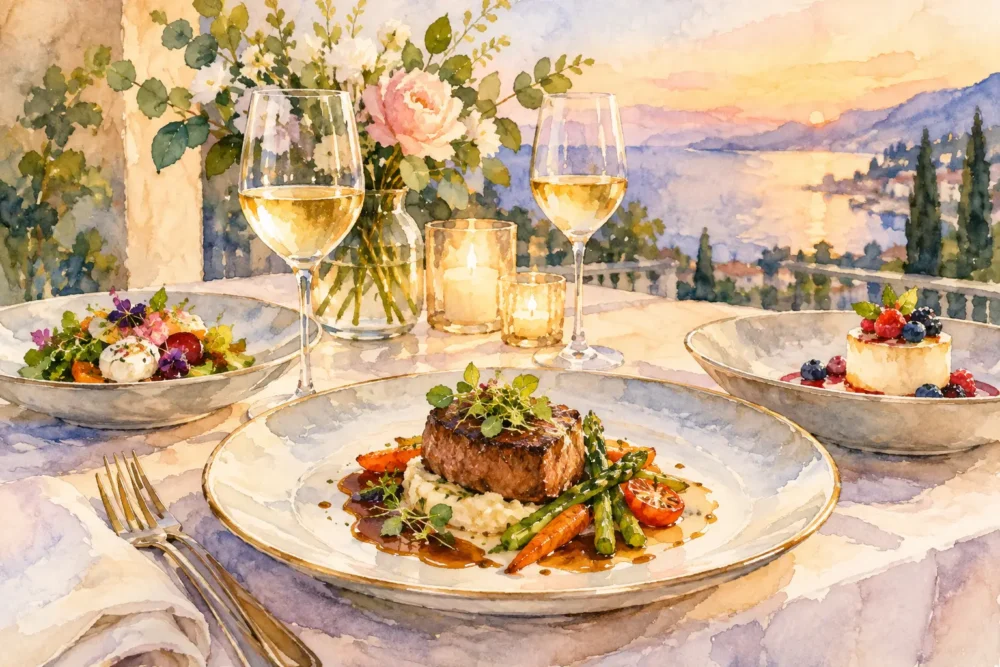
A memorable dinner begins before the first course reaches the table. The light is low but considered, the wine is poured with care, and every dish has a reason for appearing when it does. The best elevated dinner menu ideas are not simply a collection of luxurious ingredients. They are an exercise in intention, setting, and craft – designed to make guests feel welcomed, anticipated, and gently carried through the evening.
For an anniversary dinner, an intimate gathering, or a long-awaited meal while visiting Sedona, refinement comes from restraint. A menu need not be excessive to feel special. It needs contrast, seasonality, thoughtful pacing, and enough room for conversation between courses.
Elevated Dinner Menu Ideas Begin With a Sense of Occasion
An elevated menu should reflect the occasion without becoming rigid. A quiet dinner for two calls for a different rhythm than a birthday table of eight, just as a warm desert evening suggests different flavors than a winter celebration. The aim is to create a progression, not merely serve dishes in sequence.
Begin with a small opening course that wakes the palate. A chilled English pea velouté with lemon crème fraîche and mint oil feels bright in spring. In cooler months, a silken cauliflower soup with brown butter, hazelnut, and a touch of truffle offers depth without heaviness. Either course can be presented in a modest portion, allowing anticipation to build rather than asking guests to settle in too quickly.
From there, consider an appetizer with a clear point of view. Delicate seared scallops with saffron fennel, preserved lemon, and a restrained vermouth beurre blanc bring French technique and Mediterranean brightness to the same plate. For a more rustic expression, roasted wild mushrooms over creamy polenta with Madeira jus can be deeply satisfying, especially when the ingredients are at their seasonal best.
Build the Menu Around Balance, Not Excess
Luxury is often mistaken for richness at every turn. In practice, a succession of cream sauces, buttery purées, and bold reds can flatten an otherwise beautiful meal. A graceful dinner moves between rich and bright, warm and cool, familiar and unexpected.
If the first course is soft and savory, let the next have acidity or freshness. A composed salad of bitter greens, shaved fennel, citrus, and aged goat cheese offers a clean counterpoint. A warm octopus salad with white beans, arugula, olives, and paprika vinaigrette has more substance while preserving that essential lift.
Texture deserves equal attention. A tender filet with potato purée may be exquisite, but it becomes more compelling with a crisp element – perhaps haricots verts with toasted almonds or a potato pavé with a delicately bronzed exterior. A fish course benefits from the same consideration. Branzino with confit tomatoes and artichokes finds contrast in crisp skin, tender flesh, and the gentle brine of olives or capers.
The choice of entrée should also acknowledge your guests. A single showpiece protein can make sense for a small, tightly planned meal. For a larger dinner, offering two entrée paths is often more gracious: one centered on seafood or poultry, the other on meat or a vegetarian composition. This preserves a sense of abundance while keeping the kitchen’s work focused.
A French Mediterranean Approach to the Main Course
French Mediterranean cooking offers a particularly elegant framework because it values both precision and generosity. It can bring together the polished details of classic French sauces with the sunlit flavors of the coast: olive oil, citrus, herbs, tomatoes, fennel, garlic, shellfish, and market vegetables.
For a refined fish entrée, consider roasted halibut with white bean cassoulet, braised leeks, and a tomato-saffron broth. The dish has the warmth guests expect from a formal dinner, yet its broth and herbs keep it from feeling dense. A seafood-forward menu can also feature lobster with spring peas, morels, and a light tarragon sauce, particularly when the occasion calls for a more celebratory note.
For meat, herb-crusted rack of lamb with ratatouille and rosemary jus remains timeless for good reason. The presentation is elegant, and the flavors are direct. Duck breast with cherry gastrique, celery root purée, and wilted greens offers a slightly more dramatic option, balancing the duck’s richness with fruit and acidity.
A vegetarian main course deserves the same imagination as any other centerpiece. Roasted eggplant with tomato confit, cannellini beans, basil pistou, and a crisp Parmesan tuile can feel complete rather than accommodated. In autumn, a roasted squash composition with farro, wild mushrooms, toasted seeds, and sage brown butter brings color, earthiness, and real substance to the table.
Let Seasonal Ingredients Set the Tone
A menu becomes more convincing when it follows the season rather than fighting it. The finest asparagus needs very little beyond a softly cooked egg, a touch of morel, and a classic sauce. Peak-summer tomatoes can carry a first course with burrata, basil, and aged balsamic, provided the ingredients are handled with restraint.
Autumn lends itself to deeper notes: squash, quince, pears, mushrooms, chestnuts, and game. Winter welcomes braises, citrus, chicories, and seafood preparations sharpened by lemon or fennel. The point is not to chase novelty. It is to select ingredients at the moment when they have the most character.
This approach also makes a menu feel connected to its place. In Sedona, an elegant dinner can honor the surrounding landscape through warm terracotta tones, herbaceous aromatics, and a considered use of local and regional ingredients. The setting should inform the experience without becoming a theme.
Pair Wine and Cocktails With the Meal’s Rhythm
Pairings should support a course, not compete with it. A sparkling wine or citrus-forward cocktail makes a poised beginning, especially alongside seafood, salty canapés, or a fresh vegetable course. Its brightness signals that the evening has begun.
As the menu gains depth, wines can become more structured. A mineral-driven white is well suited to scallops, halibut, and dishes with beurre blanc. Pinot Noir is a natural companion to duck, mushrooms, and lamb preparations that do not rely on overly forceful spice. For fuller preparations, a balanced Rhône-style red can bring savory warmth without overwhelming the plate.
A thoughtful nonalcoholic offering matters, too. A chilled rosemary-grapefruit tonic, a restrained verjus spritz, or a house-made tea with stone fruit and herbs gives every guest a proper pairing option. Fine hospitality is not defined by alcohol. It is defined by attention.
Finish With a Dessert That Feels Like a Final Course
Dessert should bring the meal to a satisfying close, not simply add sweetness. A dark chocolate pot de crème with olive oil, flaky sea salt, and candied orange is intimate and understated. A vanilla bean crème brûlée with seasonal berries is familiar, but its appeal lies in the contrast between its fragile caramel top and cool custard beneath.
For a more composed finish, a lemon tart with toasted almond crust, berry compote, and crème fraîche offers brightness after a richer menu. In late summer, stone fruit upside-down cake with lavender cream brings a softer, more relaxed kind of elegance. Coffee, tea, and a final small confection can extend the moment without asking too much of the guest.
At René at Tlaquepaque, the most memorable dinners are shaped as complete experiences: beautifully paced, quietly polished, and grounded in the pleasure of lingering at the table. The same principle applies whether planning an evening out or composing a menu at home.
A Few Details That Make Dinner Feel Elevated
The most beautiful food can lose some of its effect when service feels rushed or the table is crowded. Set the table simply, with room for each course and enough candlelight to flatter without obscuring the meal. Choose a playlist that rests in the background. Serve courses with a pause between them, especially when guests have invested in the evening as time together.
It also helps to prepare what can be finished ahead of time. Sauces, dessert components, and garnishes often benefit from advance attention. Reserve the final cooking for the elements that demand immediacy: fish, steak, delicate vegetables, and crisp garnishes. This protects the host from spending the entire evening away from the table.
A well-composed dinner is ultimately an invitation to slow down. Choose ingredients with a story, pour something worthy of the moment, and leave enough space between courses for the evening to become its own occasion.