

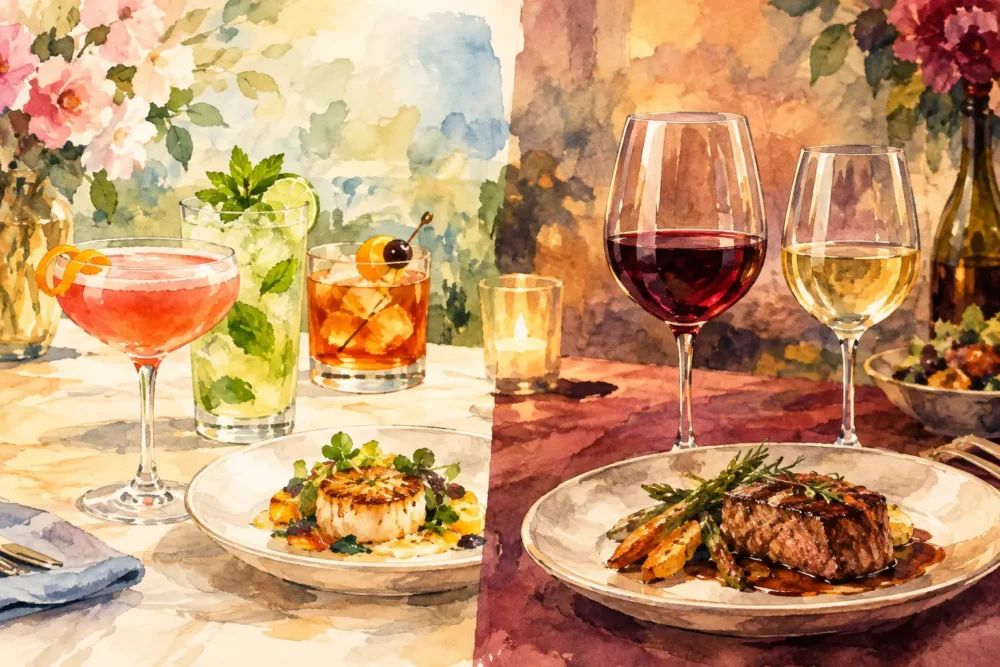
A memorable dinner is shaped as much by what fills the glass as what arrives on the plate. Cocktail pairing vs wine pairing is not simply a question of preference. It is a choice about pace, texture, aroma, and the kind of evening you wish to create. Wine can lend continuity to a meal, while cocktails bring a more immediate sense of contrast and ceremony.
For an intimate dinner, neither approach is inherently superior. The finer question is what the cuisine asks for and how you would like the evening to unfold. A delicate fish course, a richly sauced entrée, and a citrus-forward dessert each invite a different answer.
Cocktail Pairing vs Wine Pairing: The Essential Difference
Wine is often designed to accompany food over time. Its acidity, tannin, fruit, minerality, and body can echo or balance a dish without demanding attention at every sip. A well-chosen wine becomes part of the conversation, supporting the meal with quiet assurance.
A cocktail is more composed and more specific. Spirits, bitters, citrus, herbs, liqueurs, and fortified wines allow a bartender to build contrast with remarkable precision. A gin cocktail brightened with lemon and herbs may awaken a composed seafood dish. A stirred whiskey cocktail can meet the depth of roasted meats, caramelized vegetables, or a savory reduction with warmth and structure.
This distinction affects the rhythm of service. Wine invites a longer, more continuous experience, particularly through several courses. Cocktails are often most compelling when they frame a moment: an aperitif before dinner, a pairing with a single signature course, or a carefully considered drink alongside dessert.
When Wine Gives the Better Expression
Wine is especially persuasive when a menu moves through varied courses with restraint and progression. A crisp white with lifted acidity can complement oysters, shellfish, garden vegetables, goat cheese, or a bright citrus vinaigrette. It refreshes the palate while allowing subtler flavors to remain visible.
For richer dishes, the structure of wine matters. A white with depth and restrained oak may suit butter-poached fish or poultry with a velvety sauce. A red with supple tannins can bring poise to duck, lamb, beef, mushrooms, or a dish built around earthy herbs. The goal is not to match every flavor exactly. It is to find an equilibrium where the food feels more articulate after a sip.
Wine also offers a particular kind of romance. A bottle selected for the table signals a shared experience, one that develops as it opens in the glass. For anniversaries, lingering dinners, and meals that encourage unhurried conversation, this continuity has an elegance of its own.
Yet wine has limits. Strong chile heat can make alcohol feel more pronounced. Pronounced bitterness, assertive smoke, or highly acidic dressings may flatten a delicate wine or make tannins seem severe. In those moments, a cocktail with a deliberate counterpoint may offer greater flexibility.
Acidity, body, and balance
The most useful wine-pairing principle is balance of weight. A light, delicate dish rarely benefits from a dense, high-alcohol red, just as a deeply braised entrée can overwhelm a fragile white. Acidity provides lift, body supplies presence, and sweetness can soften spice or meet a dessert on even terms.
A common misstep is choosing wine by color alone. A full-bodied white may be more appropriate than a light red with certain poultry or seafood preparations. A chilled, lighter red can be lovely with charcuterie, tuna, or grilled vegetables. Preparation matters as much as the main ingredient.
When a Cocktail Creates More Possibility
Cocktail pairings excel when a dish has a distinct aromatic identity. Mediterranean ingredients such as citrus, rosemary, basil, olive oil, fennel, and warm spice can find beautiful companions in botanical spirits, dry vermouth, amaro, or a restrained splash of fruit. French technique, with its fond, beurre blanc, cream sauces, and reductions, can also welcome spirits that bring clarity rather than excess weight.
Consider a bright, dry aperitif with a first course of seafood or seasonal greens. Its bitterness encourages appetite and its bubbles or citrus elements clear the palate. For a richer course, a spirit-forward cocktail with measured dilution can offer a silkier, more savory counterpart than wine. An Old Fashioned variation with orange oils and a subtle herbal note, for example, may stand comfortably beside roasted duck or lamb when the drink is not overly sweet.
Cocktails are also useful when one diner wants a tailored experience without committing to a full bottle. A thoughtfully made drink can be selected for the exact dish and the exact mood. It can be lighter, drier, lower in alcohol, or more aromatic according to the guest’s preference.
The trade-off is intensity. A cocktail that is too sweet, too cold, too forceful, or heavily smoked can dominate the food. Great pairing cocktails leave room for the kitchen. Their purpose is not spectacle for its own sake, but a measured exchange between glass and plate.
The case for aperitifs and digestifs
Not every pairing needs to occur with the entrée. In a refined dining experience, a cocktail can be most successful at the beginning or end of the meal. An aperitif establishes anticipation without filling the palate. A digestif, perhaps herbal, citrus-led, or gently bitter, can extend the pleasure of dessert and conversation.
This approach allows wine to carry the center of the meal while cocktails provide elegant bookends. It is often the most natural answer for guests who appreciate both.
Pair for the Sauce, Seasoning, and Technique
The central ingredient is only the starting point. A piece of fish grilled with lemon and herbs calls for a different glass than the same fish served with saffron cream. Chicken prepared with olives, tomato, and garlic has different needs than chicken finished with a mushroom jus. Pairings should follow the complete composition of the dish.
Salt can make a wine seem rounder and soften bitterness. Acidic ingredients call for a wine with enough freshness to remain lively. Sweetness in a sauce may make a dry drink seem austere, while spice often benefits from a touch of fruit or residual sweetness. Richness generally needs lift, whether from wine acidity, sparkling texture, citrus, or a cocktail’s bitter edge.
Texture deserves equal attention. Creamy dishes often welcome bubbles or acidity. Crisp fried elements benefit from refreshment and restraint. A velvety purée, a slow-cooked sauce, or a deeply roasted preparation may invite a more layered, contemplative pour.
At René at Tlaquepaque, where French Mediterranean sensibility favors seasonal ingredients and careful composition, this is the pleasure of pairing: every element has an intention, from the first aromatic note to the final finish.
How to Choose for the Evening You Want
Choose wine when you want the table to settle into a graceful, continuous rhythm. It is ideal for a multi-course dinner, a shared bottle, or a meal where the cuisine should remain the leading voice. Ask for a selection with the acidity, body, and aromatic character to meet the preparation rather than merely the protein.
Choose cocktails when you want definition and contrast. They suit an opening toast, a dramatic signature dish, or a dinner in which distinct flavors deserve distinct responses. A skilled bartender can adjust sweetness, strength, and aromatic intensity with a level of precision that wine alone cannot always provide.
There is also no need to choose one path exclusively. Begin with a dry, botanical aperitif, transition to wine with the entrée, and finish with a small, composed after-dinner drink. This progression gives each beverage its proper setting and protects the meal from becoming overly alcoholic or overly elaborate.
The best pairing is the one that makes you pause after the first bite and first sip, then return to both with greater interest. Let the dish guide the glass, let the occasion guide the pace, and allow a well-set table to do what it does best: make time feel generously spent.