

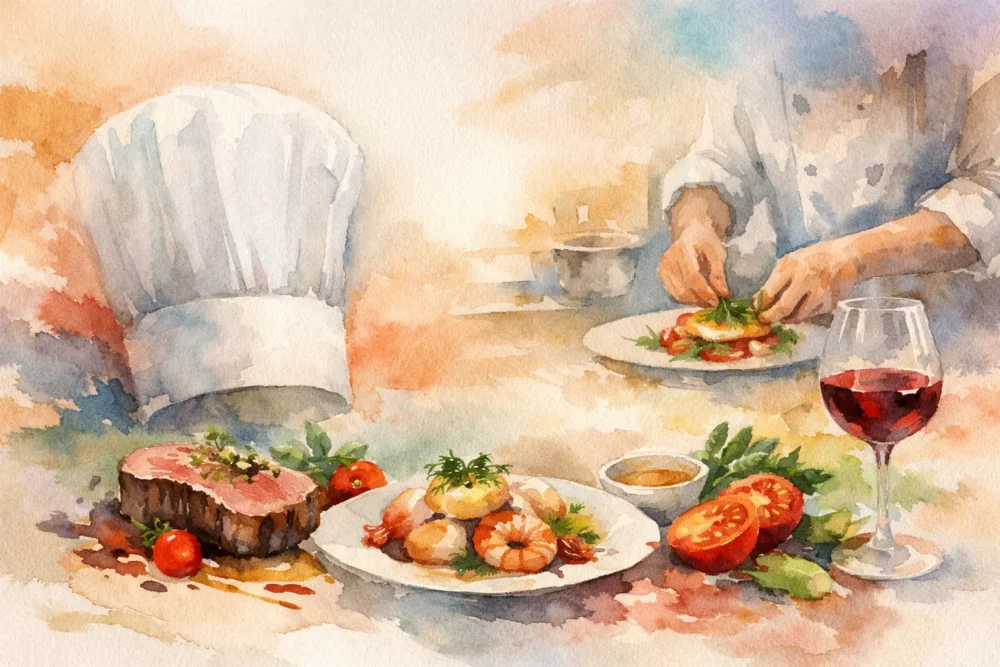
A chef driven dinner menu is not simply a collection of appealing dishes. It is an evening shaped by a culinary point of view: what is at its peak, how flavors should move across a meal, and when restraint will say more than excess. For diners who choose a restaurant for the occasion as much as the entrée, that intention changes everything.
The distinction is felt before the first course arrives. A considered welcome, a composed dining room, and a pace that leaves room for conversation set the stage for food prepared with purpose. Rather than asking guests to rush toward a single familiar favorite, a chef-led menu invites them to settle in and experience the progression of the meal.
A Chef Driven Dinner Menu Begins With a Point of View
The phrase can be used loosely, so it is worth defining what it should mean. A chef driven dinner menu reflects the chef’s judgment in every course, from the ingredients selected to the balance of the plate and the order in which it is served. It is not driven by convenience, passing trends, or an oversized list of interchangeable options.
That point of view may draw on the discipline of classical French cooking, the brightness and generosity of the Mediterranean, or a particular relationship with the seasons. The result should feel coherent. A delicate seafood course, for example, may be lifted by citrus, herbs, and a precise sauce rather than buried beneath competing elements. A rich braised preparation may be followed by a dessert with enough acidity or texture to restore balance.
This does not require unfamiliarity for its own sake. A chef’s creativity is most persuasive when it deepens pleasure, not when it turns dinner into a test. The finest menus make guests feel cared for and intrigued at once, offering recognizable pleasures through exacting technique and thoughtful composition.
Seasonality Gives the Evening Its Character
Seasonal ingredients are often discussed as a virtue, but their value is practical as well as poetic. Ingredients gathered at the right moment need less manipulation. A ripe tomato, tender asparagus, fragrant stone fruit, or wild mushroom carries its own clarity of flavor. The kitchen’s work becomes one of enhancement: proper cooking, intelligent seasoning, and a supporting cast that never overwhelms the central ingredient.
For guests, seasonality gives a dinner a sense of place and time. The menu becomes a reflection of the present season rather than a fixed script repeated without variation. A spring dinner may favor green herbs, young vegetables, and clean, mineral wines. Autumn can invite deeper sauces, game, squash, and dishes with warmth and spice.
There is a trade-off, of course. A seasonal menu may mean that a favorite preparation is not available every visit. Yet this is part of its appeal. Returning diners encounter a restaurant that is attentive and alive, while travelers receive a meal that feels connected to the moment of their visit rather than designed for uniformity alone.
Technique Creates Quiet Confidence
A polished dinner menu rarely needs to announce its skill. It reveals itself in details: a sauce that has been reduced to the right intensity, fish cooked until just opaque, a pastry with a crisp shell and a tender interior, vegetables treated with equal care as the protein beside them.
French Mediterranean cooking is especially suited to this measured approach. French technique brings structure, precision, and depth. Mediterranean influences contribute olive oil, herbs, citrus, seafood, vegetables, and a natural sense of light. Together, they can create a meal that feels luxurious without becoming heavy.
The goal is not complication. It is balance. A plate may include several components, but each one should have a reason to be there. When preparation is excellent, the diner notices harmony first and technique second. That is the quiet confidence of a kitchen that understands its craft.
The Menu Is Designed as a Complete Experience
An exceptional dinner is not merely a sequence of courses delivered to the table. It has rhythm. An opening bite awakens the palate. Early courses establish freshness and anticipation. The main course offers satisfaction and depth. Dessert creates a final note that feels complete rather than obligatory.
This is why a prix fixe experience can be so compelling. When a chef has the opportunity to guide the arc of the meal, each course can answer the one before it. A crisp white wine might brighten a first course, while a more structured red gives a roasted entrée greater dimension. Dessert can echo a flavor introduced earlier or offer contrast after a richer preparation.
À la carte dining can deliver this same sense of progression when the menu is carefully edited and service is attentive. The better question is not whether one format is superior. It is whether the restaurant has given real thought to how guests will experience the evening from arrival through the last sip of coffee.
At René at Tlaquepaque, that sensibility belongs naturally within a French Mediterranean dinner shaped by classic craft, seasonal expression, and a romantic Sedona setting.
Pacing Is Part of the Craft
Fine dining asks for time, and that is a feature rather than an inconvenience. Courses arrive with enough space for a wine to open, a conversation to unfold, and the details of the room to become part of the memory. The meal has a tempo, but never a hurried one.
For an anniversary, a birthday, or an evening away from the ordinary, this pace creates a welcome separation from the rest of the day. The table becomes a small refuge. Attentive service anticipates needs without interrupting the occasion, while the kitchen sends each course when it is ready to be enjoyed at its best.
This approach may not suit a diner seeking a quick meal between activities. It is designed for guests who value presence: the pleasure of lingering over a thoughtful plate, an interesting bottle, and the company across the table.
Why the Dining Room Matters as Much as the Plate
Food is tasted with more than the palate. Candlelight, architecture, the spacing between tables, the sound level of the room, and the ease of being able to speak without strain all affect how a dinner is remembered. A beautifully prepared dish deserves a setting that lets it be appreciated.
An intimate dining room also supports the chef’s work. Guests can notice the aroma rising from a warm course, the contrast of textures, and the visual care of the presentation. There is no need for spectacle when atmosphere, service, and cooking are in accord.
That is why thoughtful restaurants protect the character of their dining rooms. A refined setting is not about stiffness or ceremony for its own sake. It is a shared agreement that everyone in the room deserves an evening with a certain degree of calm, comfort, and consideration.
Choosing the Right Evening for a Chef-Led Meal
A chef driven dinner menu is especially well suited to occasions that deserve more than a reservation and a table. It gives couples a graceful setting for an anniversary, allows travelers to make dinner part of the destination, and offers locals a reason to mark a meaningful moment close to home.
The most rewarding approach is simple: arrive with time to spare, let the menu lead where it is strongest, and ask the service team for guidance on wine or cocktail pairings. A well-chosen pairing can reveal a new note in a dish or soften the edges of a richer course without distracting from either.
Choose the evening when conversation matters, the setting should feel as considered as the cuisine, and dinner deserves to become the occasion itself.