

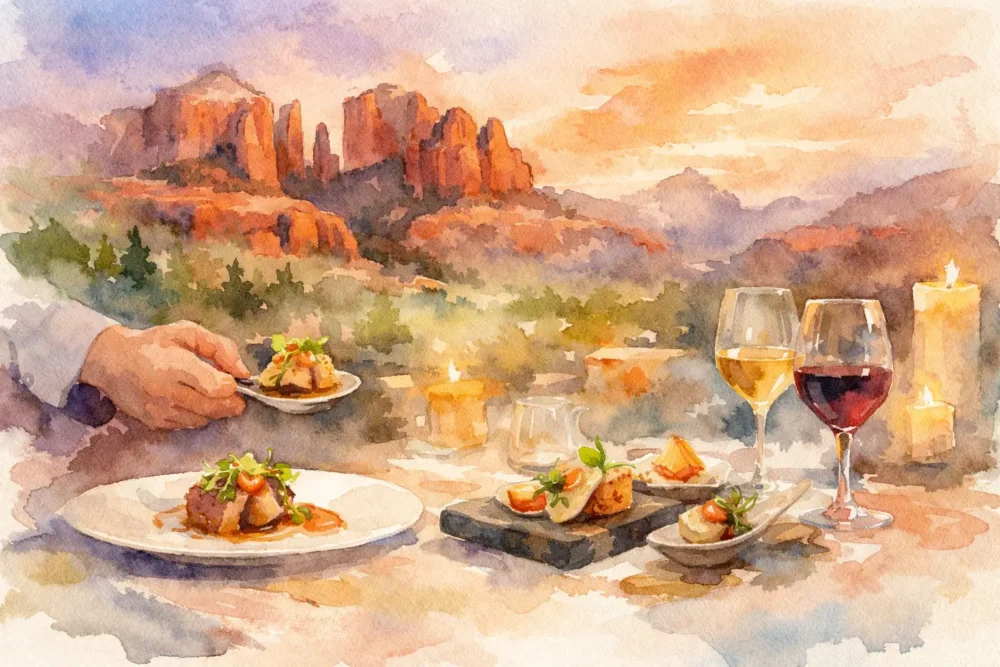
A memorable Sedona dinner rarely begins with a menu. It begins with a feeling – the hush of a candlelit room, the first pour of wine, the sense that the evening will unfold at its own gracious pace. That is the true appeal of a chef tasting menu Sedona diners seek out: not simply multiple courses, but a carefully composed experience shaped by intention, setting, and craft.
In a destination known for striking landscapes and restorative escapes, dinner can easily become an afterthought. Yet for guests who value refinement, a tasting menu offers something more lasting than convenience. It turns a meal into the centerpiece of the night. Each course arrives with purpose, each transition is measured, and the pleasure lies as much in the rhythm as in the flavors themselves.
What a chef tasting menu in Sedona should feel like
A proper tasting menu is not a larger version of dinner. It is a different kind of dining altogether. The chef sets the arc of the evening, guiding guests through a sequence of dishes designed to build, pause, and finish with elegance. The experience is curated rather than improvised.
In Sedona, where many visitors spend their days hiking, touring, or moving between galleries and scenic overlooks, that distinction matters. A tasting menu should feel like a deliberate exhale from the day. It rewards guests who are ready to slow down, settle in, and let the kitchen lead.
The best versions are composed with restraint. Richness is balanced with freshness. Technique supports the ingredient rather than overshadowing it. Portions are intentionally scaled so the meal develops without becoming heavy too early. Even before dessert, a strong tasting menu should leave guests feeling indulged, not overwhelmed.
Why the setting matters as much as the plate
Fine dining is never only about the food. A chef tasting menu Sedona guests remember often depends on the room as much as the course progression. Lighting, table spacing, acoustics, service tempo, and the general tone of the dining room all shape whether a meal feels intimate or merely expensive.
This is especially true for couples and special-occasion diners. If conversation must compete with noise, if service feels rushed, or if the atmosphere leans casual when the occasion calls for polish, the experience loses its cohesion. A tasting menu asks guests to commit their evening. The restaurant should honor that commitment with calm, poise, and attention to detail.
Sedona offers no shortage of visually beautiful places, but visual beauty alone is not enough. A serious dining experience benefits from maturity in the room – a sense of order, refinement, and confidence. The surroundings should support the meal rather than distract from it.
The anatomy of a well-composed tasting menu
Although every kitchen approaches pacing differently, a tasting menu generally succeeds or fails on balance. The opening courses should sharpen the palate and establish the tone. Middle courses often carry the most depth, where the chef can show command of texture, sauce work, and contrast. Dessert should feel like a graceful closing note, not an abrupt sugar finale.
That progression sounds simple, but it requires considerable discipline. A chef must think beyond the strength of each individual dish and consider how one course influences the next. A bright seafood course might prepare the palate for a richer meat course. A composed intermezzo can reset the senses. A restrained dessert can leave the table satisfied rather than fatigued.
For diners, this is the beauty of the format. You are not assembling your own meal and hoping the pieces align. You are placing trust in a culinary point of view. When that trust is rewarded, the evening feels seamless in the best sense of the word – not flashy, not forced, simply well judged.
French Mediterranean influence and why it suits Sedona
French and Mediterranean traditions are particularly well suited to the tasting format because they rely on clarity, structure, and respect for ingredients. French technique brings discipline to sauce, preparation, and presentation. Mediterranean influence introduces brightness, olive oil, herbs, vegetables, and a cleaner expression of richness.
Together, they create a style of dining that feels polished without becoming rigid. A course can be luxurious while still feeling fresh. A protein can arrive with precise execution and still allow seasonal produce to hold equal importance. This balance is ideal for guests who want sophistication without heaviness.
At René at Tlaquepaque, that philosophy finds a natural home. The appeal is not excess for its own sake, but refinement shaped by experience, hospitality, and a dining room designed for unhurried conversation. For those considering a special evening in Sedona, that distinction is meaningful.
What to expect from pacing and service
One of the most common misunderstandings about tasting menus is timing. Guests sometimes assume that more courses mean a hurried parade of small plates. In a well-run dining room, the opposite is true. Pacing should be measured. Courses should arrive with enough time to enjoy them fully, but not so slowly that the energy of the meal fades.
This is where service becomes essential. Attentive service in a tasting-menu setting is quiet, observant, and informed. Staff should know when to explain a dish, when to step back, and how to maintain momentum without intrusion. The best hospitality feels almost architectural. It gives shape to the evening while allowing guests to remain at ease.
If you are planning a tasting menu dinner in Sedona, allow for the time it deserves. This is not the reservation to book between other commitments. It is the commitment.
Should you add wine pairings?
Often, yes – but it depends on the evening and the guest. Wine pairings can elevate a tasting menu by drawing out nuance that might otherwise go unnoticed. Acidity can refresh the palate between richer courses. A thoughtful red can deepen the resonance of a composed meat dish. Dessert wines, when chosen with restraint, can bring a lovely close to the meal.
That said, pairings are not mandatory for a complete experience. Some guests prefer to choose a single bottle and let it accompany the arc of the dinner. Others may favor cocktails at the start and wine later. The better question is not whether pairings are more sophisticated, but whether they suit the pace and tone of your evening.
For anniversaries, celebrations, and destination dinners, pairings often add ceremony. For guests who prefer a more familiar rhythm, a bottle selected with care can be equally elegant.
Who a tasting menu is best for
A tasting menu rewards a certain kind of diner. It is ideal for couples marking an occasion, travelers who want one truly memorable meal in Sedona, and locals who appreciate culinary confidence over trend-driven novelty. It suits guests who enjoy discovery and trust the chef enough to relinquish some control.
It may be less appealing for diners who need a very quick meal, prefer highly customizable ordering, or simply want a casual evening. There is no shame in that distinction. Fine dining works best when expectations align with the format.
The clearest sign that a tasting menu is right for you is simple: you want the dinner itself to be the event. Not a stop before the evening begins, but the part of the night you will talk about afterward.
How to choose the right chef tasting menu Sedona experience
Look beyond the number of courses. More is not automatically better. A shorter, more disciplined tasting can be more satisfying than a lengthy one that loses focus. Consider the style of cuisine, the atmosphere of the dining room, and whether the restaurant values hospitality as much as culinary execution.
You should also think about the occasion. A romantic dinner calls for intimacy and composure. A milestone celebration may benefit from a more ceremonial approach with pairings, dessert, and a room that feels distinctly elevated. If the setting lacks refinement, even excellent food can feel disconnected from the purpose of the evening.
In Sedona, where many restaurants lean casual or scenic first, this matters. The strongest tasting-menu experiences tend to come from places that understand dining as an art of mood as well as flavor.
When chosen well, a tasting menu offers something increasingly rare: the chance to be fully present. No rushing, no distractions, no need to improve upon the chef’s design. Just a beautiful room, thoughtful service, and a succession of courses that invite you to stay a little longer.