

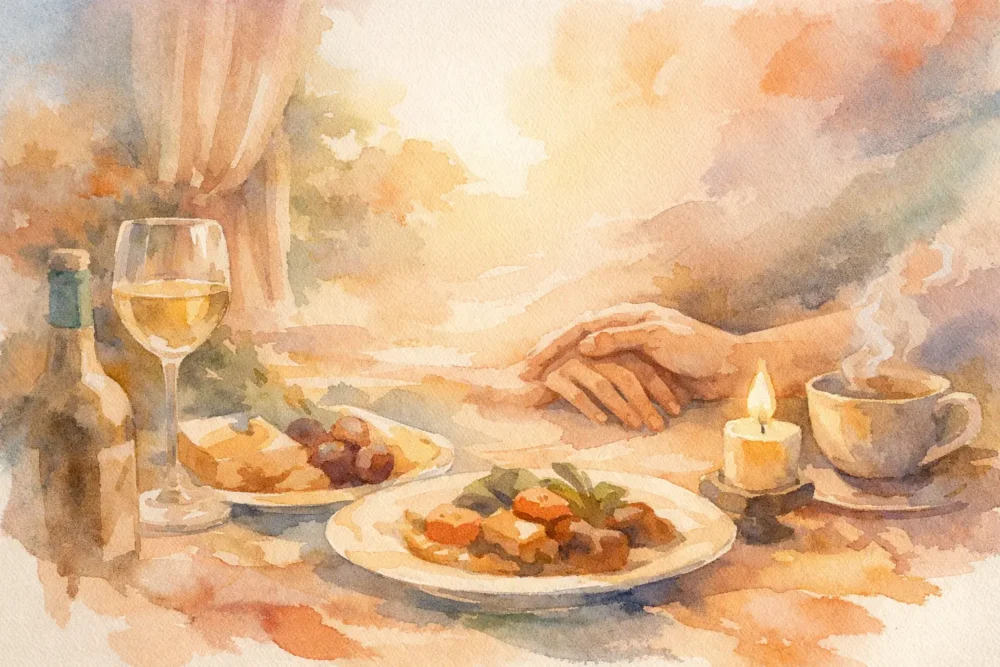
The candle has been lit, the first glass has arrived, and the evening has finally stopped asking anything of you. Knowing how to enjoy slow dining begins with recognizing that a refined meal is not a delay between plans. It is the plan: a sequence of flavors, conversation, atmosphere, and attentive service meant to unfold at its own considered pace.
For guests accustomed to hurried lunches, full calendars, and meals eaten between obligations, that pace can feel unfamiliar at first. Yet when the setting, company, and cuisine are chosen with care, an unhurried dinner becomes one of life’s most civilized pleasures.
Choose a Meal Worth Giving Your Evening To
Slow dining works best when it is treated as an occasion, even if the occasion is simply an evening together. Make the reservation for a time that leaves room on either side. Arriving directly from a rushed errand or planning to leave for another commitment in 45 minutes makes it difficult to settle into the experience.
A gracious rule is to reserve at least two hours for dinner, and more when choosing a tasting or prix fixe menu. This does not mean every course must be drawn out. It means you can receive each one without quietly calculating what must happen next.
The restaurant matters, too. Look for a dining room where the mood supports conversation, where the service is observant without being intrusive, and where the menu reflects real culinary intention. A fine meal requires more than beautiful plating. It needs a setting that invites guests to lower their voices, put away distractions, and remain present.
At René at Tlaquepaque, the European-inspired courtyard setting and French Mediterranean approach create precisely this kind of evening: one shaped as much by atmosphere and hospitality as by the plate.
How to Enjoy Slow Dining From the First Course
The most satisfying slow dinners begin before the first bite. Arrive a few minutes early rather than sliding into your table breathless. Take in the room. Notice the light, the flowers, the architecture, the music. These details are not decoration around the meal. They are part of the experience the kitchen and dining room have prepared.
Once seated, resist the urge to decide everything immediately. Read the menu once for pleasure, then again for direction. Consider the progression of the meal: something bright or delicate to begin, a more expressive entrée, perhaps a dessert that gives the evening a final note rather than an abrupt ending. If a menu includes seasonal ingredients or a chef’s prix fixe offering, allow curiosity to guide you.
Ask your server for perspective when you want it. A thoughtful question about the preparation, the season’s finest ingredient, or a wine pairing often adds depth to the meal. There is no need to perform expertise. The point is not to demonstrate knowledge, but to appreciate the craft in front of you.
Let Each Course Have Its Own Moment
Slow dining is not about eating slowly for its own sake. It is about allowing enough time to notice what is happening. Before tasting, take a moment to look at the composition of the plate. The color, aroma, temperature, and texture are all part of a chef’s point of view.
Taste the first bite without speaking immediately. This small pause makes room for a dish to register. You may notice the brightness of citrus against a rich sauce, the clean flavor of seafood, the herbal lift of a Mediterranean preparation, or the patient depth of a reduction. A well-crafted dish often reveals itself in layers.
Then let the table conversation return. The ideal rhythm moves naturally between attention to the food and attention to the people sharing it. There is no need to narrate every bite. A simple observation can be more meaningful than a full critique: the texture is beautiful, the wine changes the dish, or this is exactly what you hoped the evening would feel like.
If courses arrive with a little space between them, welcome it. That interval is often when a dining room feels most generous. Refill your water, enjoy the last sip of wine, look across the table, or simply let a previous course linger. The pause is not empty time. It gives the meal shape.
Make Conversation Part of the Experience
A memorable dinner is rarely remembered only for one exceptional entrée. More often, it is recalled through the conversation that surrounded it: a long-awaited story, a shared plan, a toast to a milestone, or the ease of being with someone who does not need to be entertained every minute.
Put phones away or place them face down and out of reach. A quick photograph of a special course may be part of the occasion, but repeated notifications fracture the very calm you came to find. Slow dining asks for a little discipline because attention is one of its most valuable ingredients.
Choose subjects that invite reflection rather than urgency. A favorite journey, a recent exhibition, an upcoming celebration, or a memory connected to the season can carry a table comfortably through several courses. Couples do not need a perfectly structured conversation, either. Silence can be intimate when it feels chosen rather than awkward.
This is one reason a quiet, adult-oriented dining room changes the character of an evening. When the room itself respects a certain level of composure, guests can hear one another, relax into a lower register, and enjoy the sense that the outside world has receded for a while.
Treat Wine and Cocktails as Companions, Not a Schedule
A carefully chosen cocktail or glass of wine can gently set the pace of a meal. Begin with an aperitif if it suits the evening, especially when you have arrived early enough to enjoy the transition from day to dinner. A crisp, aromatic drink can awaken the palate; a classic cocktail may lend a celebratory note.
Wine pairings offer another way to experience a menu with more attention. The goal is not to follow rules rigidly. A fuller white can be exquisite with richer fish preparations, while a lighter red may suit a dish that would seem too delicate for a traditional bold pairing. Your preferences still matter most, and a skilled server can help find a glass or bottle that complements both the food and the mood.
Pace matters here. Sip between bites rather than finishing a drink before the first course has found its rhythm. Water should remain part of the table as well. Staying comfortable and clear-headed allows the flavors, conversation, and evening to remain enjoyable from beginning to end.
Release the Need to Control Every Detail
Many diners struggle with slow dining because they are accustomed to efficiency. They want to order quickly, receive everything promptly, and know exactly what comes next. In a casual setting, that instinct may be practical. In a fine dining room, a little trust makes the experience better.
This does not mean accepting service that feels inattentive or confused. Excellent hospitality is still precise. Your needs should be anticipated, dietary concerns addressed, and timing handled with care. But a deliberately paced dinner may include a brief moment before an entrée or an invitation to consider dessert rather than receiving the check automatically. These gestures communicate that the table is yours for the evening, not simply a place to be turned over.
If you do have a curtain time, an early departure, or a special request, say so when you arrive. Fine dining service is at its best when it can respond gracefully to clear information. Slow dining can still be enjoyed within a shorter window, but it calls for thoughtful choices: perhaps two courses rather than a lengthy tasting menu, or lunch rather than a later dinner.
Give Dessert the Time It Deserves
Dessert is often where guests accidentally rush the end of a beautiful meal. After a rich entrée, it can be tempting to decline anything further and ask for the check. Sometimes that is exactly right. But when the evening allows, dessert offers a final opportunity to linger over technique, texture, and a last shared pleasure.
Consider sharing a dessert, adding coffee or tea, or choosing a small after-dinner pour. This is not indulgence for its own sake. It is a way of letting the evening resolve softly rather than ending in a sudden scramble for keys and parking.
The next time you sit down for dinner, leave a little more room than usual in your calendar. Order with curiosity, speak with ease, and let the final course arrive before you decide the night is over.