

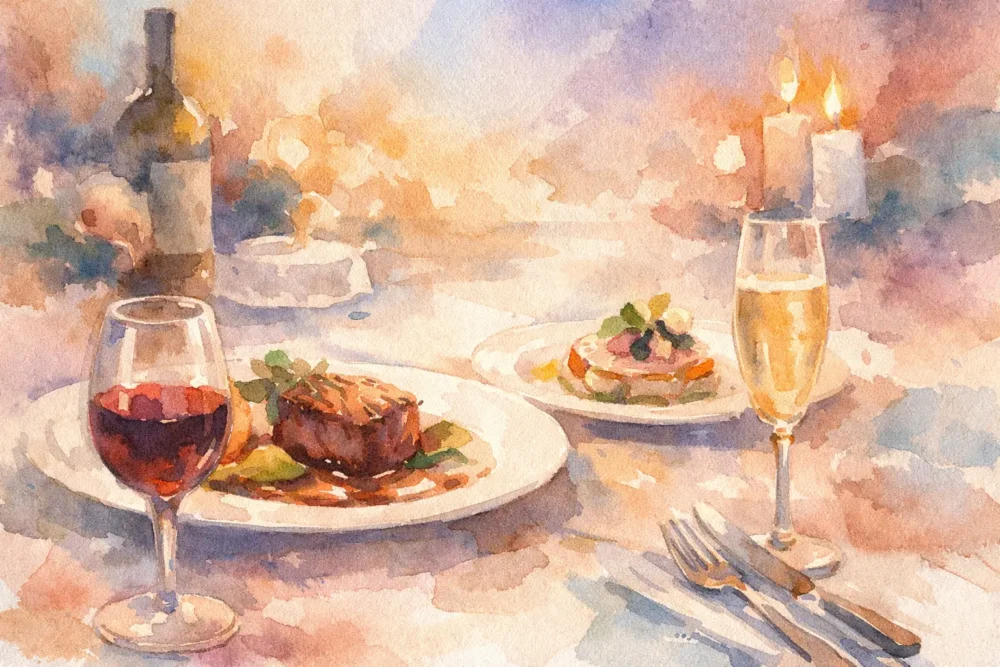
The moment a server presents a prix fixe menu, the evening takes on a different rhythm. There is less guesswork, more intention, and a quiet sense that the meal has been composed rather than assembled. This guide to prix fixe dining is for guests who want to understand not only how a set menu works, but why it remains one of the most elegant ways to experience a restaurant.
What prix fixe dining means
Prix fixe is a French term that simply means fixed price. In practical terms, it refers to a multi-course menu offered at one set price, often with a few choices within each course. Instead of ordering entirely a la carte, guests follow a structure the chef has designed to create balance from the first course to dessert.
That structure is part of the appeal. A prix fixe meal is not just a list of dishes under one total. It is a progression. The opening course may be bright and precise, the main course more layered and comforting, and the dessert a measured finish rather than an afterthought. In a refined dining room, that pacing matters as much as the ingredients on the plate.
Some restaurants offer prix fixe menus only on special holidays or for tasting events. Others make them a signature part of the dining experience. In either case, the purpose is similar: to present a cohesive meal shaped by the kitchen’s point of view.
A guide to prix fixe dining for first-time guests
If you have never ordered a prix fixe menu, the format can feel formal at first, but it is usually more welcoming than it seems. You are not giving up choice so much as accepting curation. The menu narrows the field, and that often makes the experience more enjoyable.
Most prix fixe menus include two to four courses, though some are more expansive. You may choose between a few starters, a selection of entrees, and one or two desserts. Sometimes supplements are available for premium ingredients such as filet, lobster, or a special seasonal preparation. Those additions are worth noting, since a prix fixe price does not always mean absolutely everything is included.
It also helps to know that the fixed price typically covers food only unless the menu clearly includes wine pairings. Cocktails, additional glasses of wine, taxes, and gratuity are usually separate. That does not diminish the value. It simply means the final check may be higher than the menu price alone suggests.
Why restaurants offer prix fixe menus
For guests, the benefit is elegance and ease. For the kitchen, the advantage is control. A prix fixe format allows the chef to focus on dishes that are in season, properly paced, and designed to work together. That often leads to better execution.
There is also a hospitality advantage. Service tends to feel more attentive when the meal has a shared structure. Courses arrive with a natural flow, the staff can guide wine pairings with more confidence, and the evening unfolds with fewer interruptions. In a restaurant where atmosphere is part of the experience, this matters.
The trade-off is flexibility. If you prefer to build a highly specific meal from many categories, an a la carte menu may suit you better. Prix fixe dining is ideal when you want to place more trust in the restaurant and enjoy the meal as a complete composition.
What to expect from the pacing
One of the pleasures of prix fixe dining is its unhurried pace. Courses are spaced to allow conversation, anticipation, and a genuine sense of occasion. This is especially welcome in a romantic or celebratory setting, where the meal should feel like the evening itself, not simply one part of it.
That said, pacing varies by restaurant. A weekday dinner may move more briskly than a holiday service. A chef’s tasting menu will usually take longer than a three-course prix fixe. If you have theater tickets, a tour departure, or any firm timing concern, say so when you reserve and again when you are seated. A polished dining room can often accommodate timing needs, but only if the staff knows them.
Guests sometimes mistake slower pacing for delay. In fine dining, there is a difference. A measured interval between courses is often intentional. It gives the table room to enjoy each dish fully and allows the kitchen to send plates at their best.
Is prix fixe dining a good value?
Often, yes, but value in fine dining is not only about portion size or whether the menu costs less than ordering the same courses separately. The real value is in the experience the format creates. You are paying for curation, timing, service, and the confidence of a menu designed to be greater than the sum of its parts.
In some restaurants, prix fixe pricing does offer a clear numerical advantage. In others, the benefit is subtler. You may gain access to dishes not available a la carte, seasonal combinations that show the kitchen at its strongest, or a more complete expression of the restaurant’s style.
For special occasions, that distinction matters. A beautifully structured meal feels generous in a way that goes beyond quantity. It creates shape and memory, which is why prix fixe menus are so often chosen for anniversaries, birthdays, and destination dinners.
How to order with confidence
The best approach is to read the full menu before you decide. Look for how many courses are included, whether any dishes carry a supplement, and whether substitutions are permitted. Some kitchens can accommodate adjustments for dietary needs with advance notice. Others cannot alter set dishes without disrupting the integrity of the menu.
This is where honest communication helps. If you have allergies or serious restrictions, mention them when booking, not after the first course arrives. If you simply dislike one ingredient, ask politely whether there is an alternative. In a fine dining setting, thoughtful requests are usually better received than casual customization.
Wine pairings deserve similar consideration. A pairing can deepen the experience by matching each course with a pour selected for contrast, texture, or aromatic harmony. If you prefer to order by the glass or bottle, that can be just as rewarding, particularly if you already know your palate. There is no single correct approach. The right choice depends on whether you want guidance or autonomy.
Prix fixe dining etiquette
A prix fixe meal does not require studied formality, but it does reward attentiveness. Arriving on time is one of the simplest courtesies, especially when the kitchen is pacing reservations carefully. Lingering is welcome when the restaurant’s rhythm allows for it, but arriving very late can compress the experience for both your table and the staff.
It is also wise to approach the meal with presence. Put the phone away after the necessary photo if you take one at all. Notice the sequence, the presentation, the details in the glass and on the plate. Prix fixe dining is built around intention, and it is best enjoyed in the same spirit.
For couples and special-occasion guests, this is part of the charm. A composed meal encourages conversation and attention in a way that faster, less structured dining rarely does. In a setting like René at Tlaquepaque, where atmosphere, craft, and calm are central to the evening, the format feels especially natural.
When prix fixe may not be the right choice
There are times when a set menu is not ideal. If you are dining with someone who wants complete freedom to order lightly, share unpredictably, or skip dessert entirely, a la carte may feel more comfortable. The same is true if your group has many conflicting dietary needs or if you are looking for a quick meal rather than a destination experience.
That does not make prix fixe less appealing. It simply means it shines brightest when guests want to settle in and let the restaurant lead. The format asks for a little trust and a little time. In return, it offers a meal with shape, grace, and a sense of occasion that is difficult to replicate any other way.
The next time you see a prix fixe menu, read it as an invitation rather than a limitation. It is the chef’s way of saying, this is how we hope you will experience the evening. If the setting, the company, and the moment call for something polished and unhurried, few choices are more rewarding.