

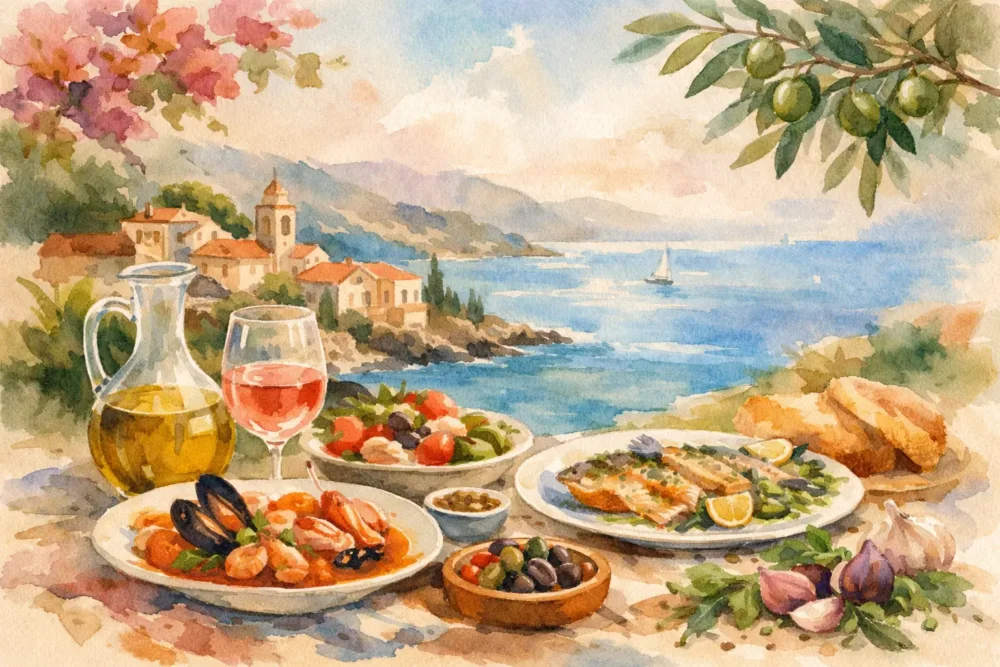
A dish arrives with quiet confidence – olive oil shimmering lightly over market vegetables, a piece of fish cooked with precision, a sauce that feels polished rather than heavy, and herbs that lift the entire plate. If you have ever asked what is french mediterranean cuisine, the answer begins there: in balance, restraint, and the meeting of French technique with the sunlit ingredients of the Mediterranean.
This is not a single regional recipe collection, nor is it shorthand for any food served near the sea. French Mediterranean cuisine is a style of cooking shaped by southern France and its long cultural conversation with the broader Mediterranean basin. It carries the discipline and refinement associated with French culinary tradition, while leaning into olive oil, seafood, vegetables, citrus, herbs, wine, and a sense of freshness that feels both elegant and relaxed.
What Is French Mediterranean Cuisine in Practice?
In practical terms, French Mediterranean cuisine brings together two distinct strengths. From the French side, it inherits structure: classical technique, careful sauce work, thoughtful pacing, and an attention to texture and presentation. From the Mediterranean side, it draws its soul: ripe produce, coastal seafood, aromatic herbs, legumes, olives, and a brighter, more open-handed use of ingredients that speak clearly for themselves.
The result is cuisine that can feel luxurious without becoming overly rich. A plate may be layered and refined, yet still taste vivid and clear. You might find saffron in a broth, tomato and fennel supporting shellfish, or lamb paired with rosemary, garlic, and a polished reduction. Desserts often follow the same philosophy – elegant, composed, and flavorful without excess.
That balance matters. Some diners hear “French” and expect butter-forward richness. Others hear “Mediterranean” and think of casual mezze or rustic grills. French Mediterranean cuisine sits between those assumptions. It can be indulgent, certainly, but it is usually more nuanced than heavy and more refined than rustic.
The Regions Behind the Style
To understand what is french mediterranean cuisine, it helps to look toward southern France, especially Provence and the Côte d’Azur. These regions have long been shaped by trade, migration, climate, and access to extraordinary ingredients. Their food reflects proximity to Italy, Spain, and North Africa as much as it reflects Parisian culinary tradition.
This is where you see tomatoes, eggplant, zucchini, peppers, olives, anchovies, shellfish, garlic, and fresh herbs take a central role. The cooking often feels touched by the landscape itself – warm weather, coastal markets, vineyard culture, and a slower rhythm of dining. Yet the French sensibility remains present in the discipline of the kitchen, the precision of a sauce, and the expectation that a meal should unfold with intention.
Bouillabaisse is one of the clearest examples. At its heart, it is a Mediterranean fish stew rooted in Provence, but in its most elevated form, it reflects French attention to layering flavor, preparing broth, and presenting the dish as something far more composed than a simple fisherman’s meal. The same can be said of ratatouille when it is treated with care, or a Niçoise-inspired preparation that respects each component rather than tossing everything together.
Hallmarks of French Mediterranean Flavor
What defines the flavor profile is not one ingredient but a pattern of choices. Olive oil often replaces or shares the stage with butter. Herbs like thyme, basil, rosemary, and tarragon bring fragrance and lift. Citrus adds brightness. Garlic is used with purpose. Tomatoes offer depth and sweetness. Seafood is common, especially when a menu draws from the coast.
There is also a strong relationship to acidity and freshness. Wine, lemon, olives, capers, and vinaigrettes help sharpen richer elements. This is one reason the cuisine feels so graceful on the palate. It does not simply pursue richness. It seeks contrast.
Texture is equally important. Crisp-skinned fish, tender braised meats, silky purées, delicate pastries, and vegetables cooked just enough to preserve their character all have a place. The plate is meant to feel complete, not crowded.
Signature ingredients you will often see
If you dine within this tradition, certain ingredients appear again and again: olive oil, seafood, fennel, saffron, tomatoes, olives, citrus, eggplant, zucchini, garlic, herbs de Provence, lentils, lamb, and carefully selected cheeses. Wine is not merely a beverage pairing but part of the culinary language.
Still, there is room for interpretation. One chef may lean more coastal and delicate, another more rustic and deeply savory. Season and setting influence the menu. In winter, the cuisine may turn toward braises, root vegetables, and darker reductions. In warmer months, it often feels lighter, more floral, and more clearly tied to the market.
How French Mediterranean Cuisine Differs From Other Mediterranean Food
Mediterranean cuisine is an enormous umbrella. Greek, Italian, Spanish, Turkish, Lebanese, and Moroccan traditions all belong to that world, but they are not interchangeable. French Mediterranean cuisine is distinct because it filters Mediterranean ingredients through a specifically French culinary lens.
That means technique tends to be more formal. Sauces are more likely to be built with classical rigor. Plating is more composed. Courses are more deliberately paced. The dining experience itself often carries a stronger sense of ceremony.
Compared with Italian coastal cooking, French Mediterranean cuisine may feel more restrained and sauce-driven. Compared with Greek cuisine, it is often less overtly rustic. Compared with Levantine traditions, it uses fewer spice-forward preparations and places more emphasis on reduction, stock, and French kitchen method. None of these differences make one superior to another. They simply speak to style.
For diners, the distinction is often felt as much as tasted. French Mediterranean cuisine tends to invite an unhurried meal, thoughtful wine pairing, and a setting where conversation matters as much as the plate.
Why It Feels So Well Suited to Fine Dining
French Mediterranean cuisine adapts beautifully to fine dining because it offers both discipline and sensuality. The ingredients have natural beauty – fresh herbs, shellfish, stone fruits, olive oil, citrus, wine – while French technique gives them elegance and precision.
That combination creates a kind of quiet luxury. A dish does not need to be overly ornate to feel special. A beautifully seared fish with saffron broth and seasonal vegetables can feel more refined than something heavier or more elaborate. The pleasure comes from craftsmanship, proportion, and confidence.
This is also why the cuisine pairs so naturally with romantic dining. It encourages attention. It rewards a slower pace. It feels worldly without being showy. In the right setting, it becomes more than a meal. It becomes part of an evening shaped by atmosphere, service, and shared enjoyment.
At a restaurant such as René at Tlaquepaque, that sensibility finds a natural home. French Mediterranean cuisine is not presented as trend-driven or theatrical, but as an intentional expression of setting and craft.
What to Expect on a French Mediterranean Menu
A well-composed menu in this style often begins with lighter, aromatic starters – perhaps seafood, a seasonal salad, or a vegetable preparation with vivid acidity and clean presentation. Main courses may center on fish, lamb, duck, or carefully prepared beef, often accompanied by vegetables, lentils, potatoes, or a composed sauce that supports rather than dominates.
Dessert matters here. French Mediterranean sweets are often elegant rather than oversized. You may see fruit, custard, pastry, citrus, chocolate, or nut-based elements presented with restraint. They are designed to finish the meal beautifully, not overwhelm it.
Wine is an essential part of the experience. Crisp whites, Provençal rosés, and balanced reds all complement the cuisine well because the food itself values freshness, structure, and aromatic detail. Cocktails can work too, particularly when they echo the herbal or citrus notes found throughout the menu.
What Is French Mediterranean Cuisine Really About?
At its best, French Mediterranean cuisine expresses a particular kind of hospitality – refined, generous, and deeply attentive to pleasure without excess. It honors ingredients, but it also honors the ritual of dining. That means pacing matters. Ambiance matters. Service matters. The meal is not only about flavor, but about how flavor is framed.
There is also a practical appeal to the cuisine today. Many diners want food that feels elegant without being too heavy, celebratory without being predictable, and memorable without relying on novelty. French Mediterranean cooking answers that desire well. It offers familiarity in ingredients, sophistication in execution, and enough variation to remain interesting across seasons.
If you are choosing this cuisine for a special evening, expect clarity over clutter, craft over spectacle, and a meal designed to linger in the memory for all the right reasons. The most compelling French Mediterranean cooking does not ask for attention with noise. It earns it with grace.