

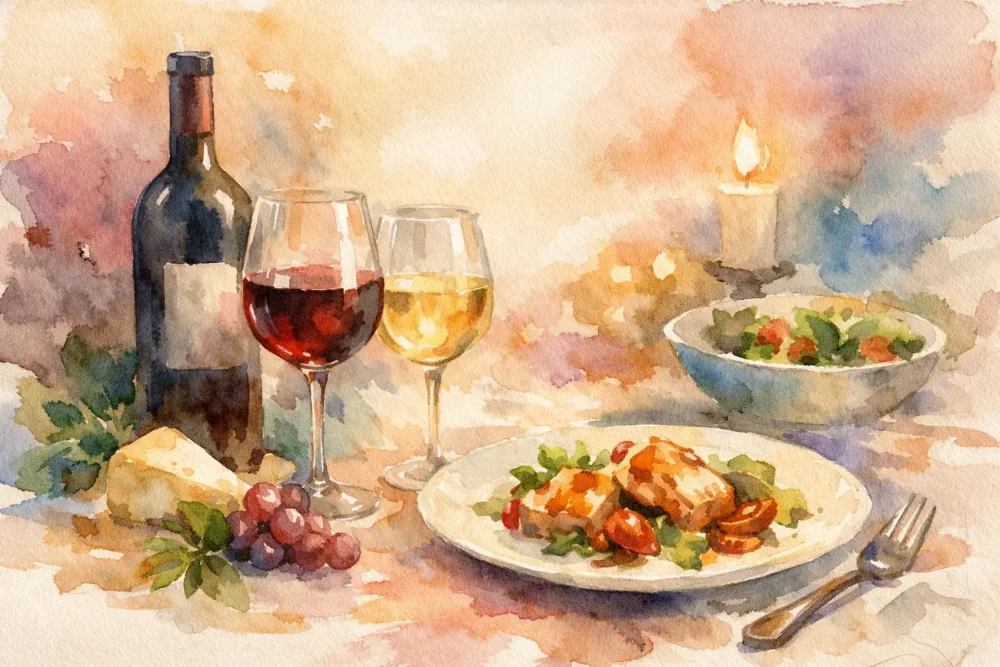
A memorable dinner does not require a cellar full of rare bottles. It begins with attention: the brightness of a lemon finish, the richness of a slow-braised sauce, the delicate sweetness of scallops, the savory depth of lamb. When considering how to pair wine with dinner, think less about rigid rules and more about creating a conversation between the glass and the plate. The right pairing lets both feel more complete.
At an unhurried table, wine also shapes the rhythm of the evening. A crisp first pour can awaken the palate before the first course arrives. A graceful red can lend warmth to a lingering main course. The goal is not to impress with complexity for its own sake, but to choose with intention.
How to Pair Wine With Dinner: Begin With Weight
The most useful place to start is the weight, or body, of the food. Delicate dishes generally ask for wines with similar restraint. Richer dishes can support wines with greater texture, intensity, or tannin. A light, citrusy white beside poached fish feels harmonious because neither overwhelms the other. A full-bodied Cabernet poured with a mild sole preparation, by contrast, can make the fish seem to disappear.
For a simple frame of reference, pair lighter-bodied wines with lighter dishes and fuller wines with more substantial preparations. Sauvignon Blanc, Pinot Grigio, dry Riesling, and sparkling wine often flatter oysters, salads, fresh vegetables, and simply prepared seafood. Chardonnay, particularly one with a creamy texture, is comfortable alongside lobster, roast chicken, or dishes finished with butter or cream.
For red wine, Pinot Noir is among the most versatile choices at the table. Its refined structure and red-fruit character work beautifully with duck, mushrooms, salmon, pork, and herb-roasted chicken. Syrah, Cabernet Sauvignon, and Bordeaux-style blends bring more presence and are often best reserved for lamb, beef, venison, or deeply caramelized preparations.
Weight is a guide, not a verdict. A grilled swordfish with olive tapenade may have enough richness for a pale red, while a lean beef carpaccio can be lovely with a bright, mineral-driven white. Preparation matters as much as the central ingredient.
Let Acidity, Salt, and Sauce Lead the Decision
The sauce often tells you more than the protein. Chicken can move in entirely different directions depending on whether it is served with lemon and herbs, a wild mushroom jus, or a velvety cream sauce. In French Mediterranean cooking, this distinction is especially meaningful because olive oil, citrus, herbs, tomato, saffron, and reductions each bring their own character to the plate.
High-acid wines are particularly useful at dinner. They refresh the palate after rich bites and echo dishes with citrus, tomatoes, vinaigrette, or tangy cheeses. A dry rosé with a tomato-based seafood dish, or a lively Sancerre-style Sauvignon Blanc with goat cheese and herbs, can make the food taste brighter and more precise.
Salt also softens the edges of wine, especially tannin. This is why a structured red can feel more polished alongside a well-seasoned steak, aged cheese, or savory charcuterie. A red that seems firm on its own may become generous and balanced once food enters the equation.
Creamy sauces call for either a white with sufficient body or a sparkling wine with vivid acidity. With roasted chicken in a tarragon cream sauce, a balanced Chardonnay can mirror the dish’s silky texture. Champagne or another traditional-method sparkling wine offers a different effect: its fine bubbles and acidity lift the richness, keeping the meal poised rather than heavy.
Match the Wine to the Dominant Flavor
When a dish includes several elements, identify the flavor that lingers longest. Is it smoky grill char, peppery spice, preserved lemon, earthy mushroom, sweet shellfish, or the savory intensity of a reduction? That dominant note should influence the selection.
Earthy mushrooms, truffles, and lentils often welcome Pinot Noir, Nebbiolo, or an elegant old-world-style red with savory complexity. Dishes built around olives, herbs, grilled vegetables, and garlic can be especially fine with Provençal-style rosé, Vermentino, or a textured white from the Mediterranean. For saffron, seafood, and bouillabaisse-inspired flavors, choose a white with freshness and subtle richness rather than overt sweetness or heavy oak.
Sweetness deserves care. A wine should be at least as sweet as the dish it accompanies, particularly with dessert. A dry red beside a sweet chocolate dessert can taste unexpectedly sharp and bitter. Instead, consider a late-harvest wine, tawny Port, Banyuls-style dessert wine, or a gently sparkling Moscato, depending on the dessert’s intensity.
Pairing Wine by Course
A multi-course dinner offers the pleasure of progression. Begin with wines that feel bright and inviting, then move gradually toward greater depth. Serving the boldest red first can make a later delicate white seem thin, even if it would have been beautiful on its own.
An aperitif or first course may call for sparkling wine, dry rosé, or a fresh white. These wines pair naturally with oysters, crudo, goat cheese, garden vegetables, and light hors d’oeuvres. Their acidity awakens the appetite without asking too much of the palate.
With a seafood course, consider the dish’s texture and seasoning. Briny oysters and chilled shellfish favor brisk, mineral whites. Seared scallops with a browned butter element can take a rounder Chardonnay. Salmon, particularly when roasted or grilled, has enough richness for Pinot Noir or a lighter Grenache.
For the main course, move toward the wine’s structure. Herb-roasted lamb finds an easy companion in Syrah, Cabernet Franc, or a classic Bordeaux blend. Beef tenderloin with a reduction suits Cabernet Sauvignon, while braised short ribs may call for the depth of Syrah, Malbec, or a mature red blend. If the plate is built around poultry or pork, Pinot Noir, Grenache, and fuller-bodied whites offer more flexibility than many diners expect.
Cheese and dessert deserve their own moment. Rather than automatically serving red wine with every cheese course, consider contrast and intensity. A blue cheese can be exquisite with a sweet wine; soft-ripened cheeses often welcome sparkling wine or Chardonnay; aged hard cheeses can stand beside savory reds. For dessert, choose a smaller pour and let the wine feel like part of the final course, not an afterthought.
The Pairings That Often Surprise Guests
Some of the most successful pairings come from setting aside familiar habits. Red wine with fish can be excellent when the fish is meaty, roasted, or served with earthy ingredients. A chilled, lighter Pinot Noir alongside salmon, tuna, or mushroom-accented halibut is a thoughtful choice.
Sparkling wine is another exceptionally flexible dinner companion. Beyond celebrations, its acidity and texture make it compelling with fried foods, salty appetizers, creamy sauces, and even roast chicken. It can carry a dinner from the first toast through a first course with remarkable ease.
Rosé deserves similar consideration. A dry, food-friendly rosé has enough freshness for seafood yet enough fruit and body for grilled vegetables, Provençal flavors, charcuterie, and lighter meats. In a warm Sedona evening or a courtyard setting, it brings a sense of ease without sacrificing refinement.
At René at Tlaquepaque, the most graceful pairings are not treated as an accessory to the meal. They are part of the experience, chosen to honor the season, the chef’s composition, and the pace of the table.
Serve the Wine With the Same Care
Even a well-chosen bottle can lose its appeal when served too warm or too cold. Most whites and sparkling wines should be cool, but not icy, so their aroma and texture can emerge. Light reds benefit from a slight chill, while full-bodied reds are more expressive just below typical room temperature. A red served too warm can taste alcoholic and heavy; a white served too cold may seem muted.
Give structured reds a little air before dinner, especially young Cabernet Sauvignon, Syrah, or Nebbiolo. Decanting can soften their edges and release more layered aromas. There is no need to decant every bottle, however. Delicate older wines may be better opened carefully and poured with minimal handling.
Most of all, resist the pressure to find one perfect answer. A pairing is successful when it suits the dish, the guests, and the occasion. If the table loves Pinot Noir, that preference matters. If a favorite white makes a simple seafood dinner feel more festive, it belongs there.
Choose the bottle that invites another thoughtful bite, another unhurried conversation, and a little more time at the table.