

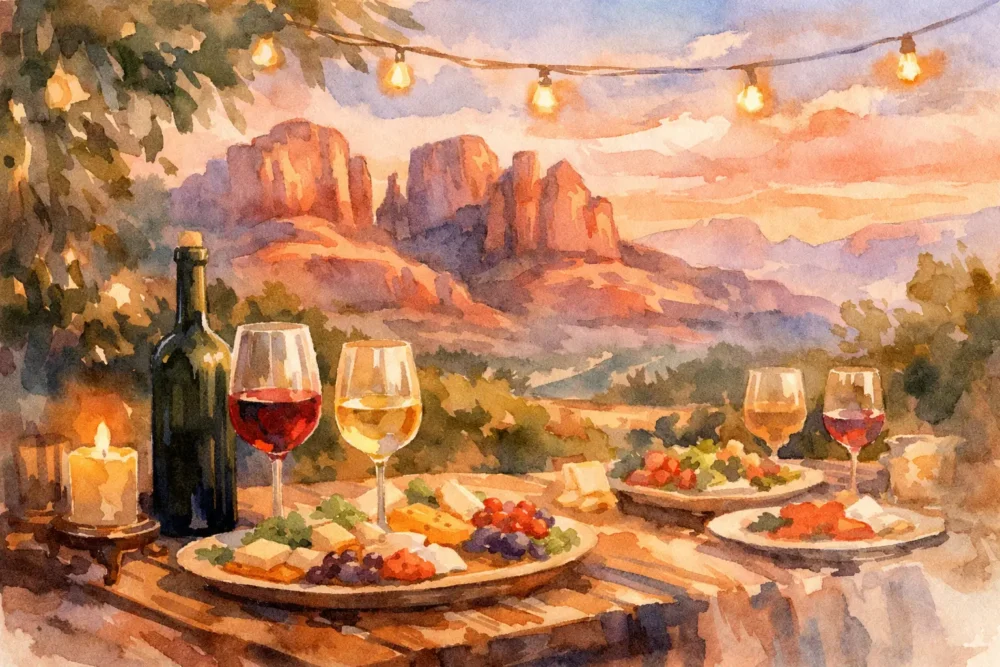
A memorable wine pairing dinner Sedona guests talk about later rarely begins with the bottle. It begins with the room, the pace of the evening, the confidence of the kitchen, and the quiet sense that nothing has been rushed. In a place known for dramatic landscapes and celebratory travel, dinner should feel equal to the destination.
That is what separates a pleasant meal from a true pairing experience. Wine can flatter a dish, sharpen it, soften it, or carry it into a more expressive register altogether. But the pairing only works when the setting allows guests to notice those details. A loud room, hurried service, or menu built without balance can flatten even an excellent list.
What makes a wine pairing dinner in Sedona worth seeking out
Sedona is full of visual grandeur, and many visitors understandably plan their dining around the view. For a pairing dinner, though, scenery is only part of the equation. The strongest experiences tend to come from restaurants that understand sequence and restraint. Each course should feel connected to the next, and each pour should have a reason for arriving when it does.
This matters because pairing is not simply matching red with meat or white with fish. Acidity, texture, temperature, salt, butter, herbs, and smoke all shape how wine behaves at the table. A bright, mineral white beside a delicate seafood preparation can bring clarity and lift. The same wine next to a heavily seasoned sauce may disappear completely. Good pairing is precise, and precision is most convincing when it feels effortless.
In Sedona, that precision feels especially fitting when the dining room itself invites calm. Travelers often come here to slow down, reconnect, and mark an occasion. An unhurried dinner answers that mood far better than a high-turnover service model ever could.
The best wine pairing dinner Sedona style starts with cuisine
If you are choosing where to book, look at the menu before the wine list. This may sound backward, but the kitchen sets the terms of the evening. A thoughtful pairing dinner depends on food with structure – sauces made with care, seasonal ingredients treated with discipline, and plates that balance richness with freshness.
French and Mediterranean influences are particularly well suited to pairing because they naturally create range. You might move from oysters or shellfish with a crisp white, into a composed salad with a rosé or lighter-bodied red, then toward a refined preparation of fish, duck, lamb, or filet with deeper, more layered wines. Desserts, too, can be treated with sophistication rather than sugar for sugar’s sake, allowing a late-harvest pour or fortified wine to finish the meal with grace instead of heaviness.
There is also a practical advantage to this style of cooking. Sauces, reductions, olive oil, herbs, citrus, and careful seasoning give sommeliers and servers more to work with. Pairings become more interesting because the food is more articulate.
Why setting matters as much as the pairing
A pairing dinner asks guests to pay attention. That sounds simple, but attention is fragile. It disappears in a chaotic dining room or under service that feels performative rather than polished.
The right setting supports the evening quietly. Lighting should be warm rather than theatrical. Tables should allow conversation without strain. Service should guide the meal with confidence, not interruption. When diners feel settled, they begin to notice the finer qualities of both plate and glass – the brightness in a white Burgundy, the earth and spice in a restrained Rhône, the way a sauce softens tannin or a citrus element sharpens fruit.
For couples and special-occasion diners, this matters even more. A wine pairing dinner often marks something personal – an anniversary, a birthday, a proposal weekend, a long-awaited trip. The mood should feel intimate and intentional. In Sedona, where so much of the travel experience is centered on beauty and atmosphere, a restaurant that understands romance without overstating it has a distinct advantage.
How to choose the right pairing experience
Not every guest wants the same evening, and that is where discernment matters. Some diners want a fully guided prix fixe meal with each course paired for them. Others prefer to order a la carte and ask for a bottle or two that can travel well across multiple dishes. Neither approach is inherently better. It depends on how structured you want the night to feel.
If you want a complete occasion
Choose a restaurant with a strong prix fixe format or a kitchen known for composed, coursed dining. This usually produces the most coherent pairing experience because the food and wine can be considered together from the start. The pacing tends to be more elegant, and the dinner feels designed rather than assembled.
If you want flexibility
A la carte can be excellent, especially when the wine list has depth by the glass and the staff knows how to guide a table with different tastes. This approach works well if one guest prefers seafood while the other wants a richer entrée, or if you would rather shape the evening around appetite than a preset structure.
If the occasion is romantic
Prioritize atmosphere over novelty. A dramatic list means little if the room feels crowded or the service rushed. For a romantic dinner, the most satisfying choice is often a restaurant that values quiet confidence – beautiful surroundings, attentive pacing, and a menu with enough sophistication to make the wine feel earned.
What to look for on the wine list
A serious wine pairing dinner does not require an encyclopedic cellar, but it does benefit from range and judgment. Look for a list that moves beyond the obvious. You want classic regions, certainly, but also wines chosen because they work with the cuisine, not because they merely sound impressive.
Balance is a useful sign. If a list includes crisp sparkling options, mineral-driven whites, fuller whites with texture, elegant Pinot Noir, structured Cabernet, and a few dessert wines selected with care, there is room to build an evening properly. By-the-glass choices matter too. They allow diners to pair more precisely across several courses without overcommitting early.
Just as important is whether the staff can speak about the wines with clarity. The best guidance is calm and specific. Not a speech, and not a sales push. A good recommendation should explain why a wine suits a dish – perhaps because its acidity cuts through richness, or because its savory profile complements herbs and roasted notes.
The trade-offs guests should consider
A pairing dinner is one of the most rewarding ways to dine, but it does ask for a certain mindset. If you want speed, spontaneity, or a highly casual atmosphere, another style of meal may fit better. Pairing shines when guests are willing to settle in.
There is also the question of preference versus precision. Sometimes the technically correct pairing is not the wine you most enjoy drinking. That is perfectly fair. A guest who loves fuller reds may still prefer one with a lighter entrée, even if a white would be the classic match. The best restaurants respect that tension. Fine dining should feel guided, not rigid.
Price is another factor. A true pairing experience often reflects the quality of the ingredients, the cellar, and the service behind it. For many guests, that is exactly the point. They are not looking for volume or convenience. They are looking for craft, atmosphere, and a dinner that feels worthy of the moment.
A refined choice for a wine pairing dinner in Sedona
For guests seeking a polished, romantic evening, René at Tlaquepaque stands out because it understands that pairing begins long before the first pour. The experience is shaped by a mature dining room, French Mediterranean technique, thoughtful pacing, and a setting that encourages conversation instead of competing with it. In that kind of environment, wine becomes part of a larger composition rather than a separate attraction.
That distinction is meaningful. When cuisine, service, and atmosphere are aligned, pairings feel less like a feature and more like the natural expression of the house.
Making the evening memorable
A few simple choices can elevate the night. Book later rather than earlier if you want the dinner to feel leisurely. Dress for the room, not just the weather, because part of fine dining is entering the occasion with intention. Let the staff know if you are celebrating something, and be honest about your preferences. The better they understand your tastes, the better they can shape the experience.
It is also wise not to overplan the rest of the evening. A proper pairing dinner deserves space around it. Leave time to arrive composed, enjoy each course, and linger over dessert or a final glass if the room invites it.
Sedona gives people many ways to celebrate beauty. A well-executed pairing dinner offers one of the most intimate. When the cuisine is composed with skill, the wine is chosen with judgment, and the setting allows the evening to unfold at its own pace, dinner becomes more than a reservation. It becomes part of why the trip is remembered.