

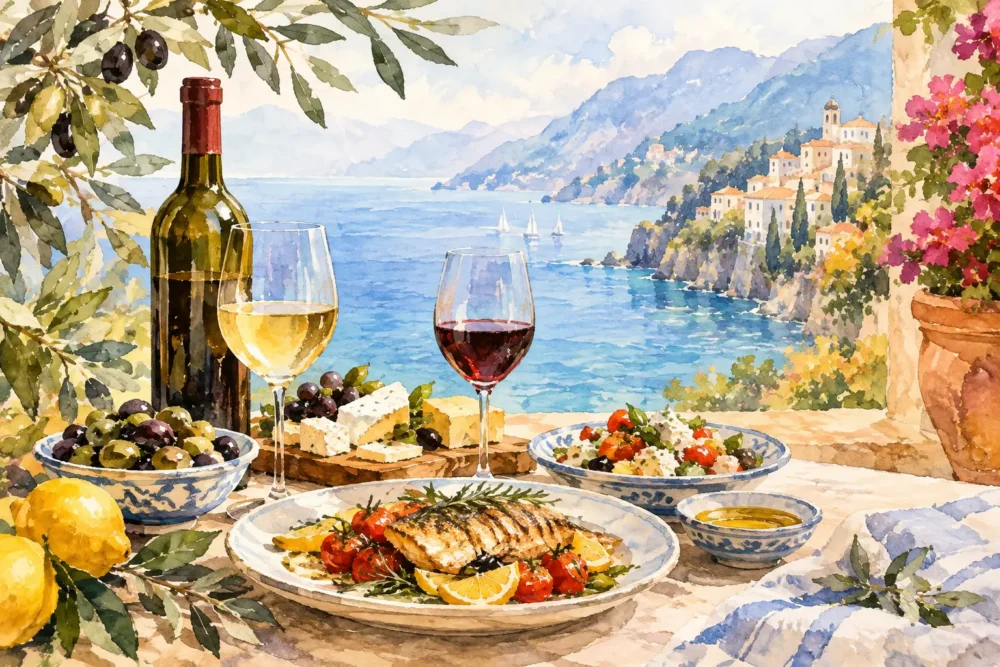
The first forkful of grilled branzino, the perfume of rosemary over lamb, the silk of a butter-finished sauce: each asks something different of the glass beside it. A thoughtful mediterranean wine pairing guide is less about rigid rules than recognizing the elements that give this cuisine its grace – brightness, olive oil, herbs, sea salt, smoke, and slow-developed flavor.
At the table, the finest pairing does not call attention to itself. It lengthens a conversation, refreshes the palate, and gives a familiar dish a more vivid shape. For French Mediterranean cooking in particular, wine should honor both precision and warmth: enough structure for technique, enough freshness for sunlit ingredients.
Mediterranean Wine Pairing Guide: Start With the Plate
The Mediterranean is not one flavor profile. A coastal seafood preparation from Provence and a braised lamb dish influenced by the Levant may share garlic, herbs, and olive oil, yet demand entirely different wines. Before choosing a grape or region, notice the dish’s weight, its acidity, its dominant seasoning, and the manner in which it is cooked.
Acidity is often the quiet foundation. Lemon, tomato, capers, vinegar, and a bright reduction all make a wine’s freshness especially welcome. A crisp white with lively acidity can make a rich sauce feel lighter, while a low-acid, heavily oaked bottle may seem broad or muted beside the same dish.
Texture matters just as much. Olive oil gives vegetables and fish a supple, savory richness without the density of cream or butter. Wines with mineral definition, saline character, or a subtle bitter-almond finish are often especially flattering here. When butter, saffron, or a velvety purée enters the composition, a rounder white can be beautiful, provided it still carries enough lift.
Finally, let the most assertive element lead. With delicate sole, the fish is the center of the pairing. With tuna and a tapenade, the olive, brine, and depth of the tapenade may be the more decisive voice. With lamb scented by rosemary and garlic, the wine must meet both the meat and the herbs.
White Wines for Seafood, Vegetables, and Bright Sauces
For oysters, chilled shellfish, or simply prepared white fish, look first to wines that are dry, clean, and quietly mineral. Muscadet, Picpoul de Pinet, Vermentino, and Assyrtiko bring brisk acidity and an almost saline edge that feels naturally at home with the sea. Their restraint is a virtue. A grand, aromatic white may overwhelm a dish whose elegance lies in delicacy.
Grilled fish offers more room. Char from the grill, a garlic-herb marinade, or a fennel garnish can support a fuller white such as a dry Provençal rosé, a restrained Chardonnay from Burgundy, or a textured white Rhône blend. Here, the goal is not simply to match richness. It is to find a wine that can carry the smoky, savory notes while preserving the fish’s clean finish.
Sauvignon Blanc is particularly effective with preparations featuring lemon, goat cheese, fresh herbs, or green vegetables. Its herbal tension can echo parsley, basil, tarragon, and chive without making the pairing feel literal. Yet it is not the answer to every green dish. When artichoke, asparagus, or bitter greens take center stage, a dry Italian white with a touch more body and gentle bitterness, such as Vermentino, may feel more composed.
Tomato-based seafood stews and saffron-scented broths require a little more consideration. A very lean white can disappear against their layered character. Choose a white with texture, perhaps from the Rhône, Languedoc, or southern Italy, or reach for a light red served slightly cool. The best choice depends on whether the dish leans toward delicate broth or deep, slow-simmered tomato.
Rosé Belongs at a Serious Mediterranean Table
A well-made dry rosé is one of the most versatile wines in Mediterranean dining. Its understated fruit, refreshing acidity, and gentle structure allow it to move from charcuterie to grilled vegetables, from tuna to herb-roasted chicken. It is especially lovely when a table shares several plates and no single wine needs to dominate.
Provençal rosé remains a classic for good reason. Its pale color should not be mistaken for lack of character. The better examples offer citrus peel, wild strawberry, stone, and a subtly savory finish that suits olive tapenade, niçoise-style flavors, and lightly spiced dishes. For a richer preparation, seek a rosé with more body and grip rather than simply choosing the palest bottle available.
Rosé does have limits. It can be too gentle for a deeply reduced sauce, a pepper-crusted steak, or lamb that has been slowly braised until lush and concentrated. In those moments, moving to red is not a matter of formality. It is a matter of balance.
Reds for Lamb, Duck, and the Grill
Mediterranean reds are often at their best when they balance ripe fruit with earth, herbs, and acidity. Those qualities make them natural companions for grilled lamb, duck, beef, and mushrooms. Rather than reaching automatically for the biggest Cabernet Sauvignon, consider wines that speak the same aromatic language as the dish.
Syrah from the northern Rhône brings black pepper, violet, and savory depth to lamb with rosemary or thyme. Grenache-based blends offer warmer red fruit and a supple texture that works beautifully with grilled meats, ratatouille, and dishes touched by cumin or paprika. For duck, Pinot Noir can be an elegant choice when the sauce is based in cherry, fig, or mushroom rather than heavy sweetness.
Sangiovese deserves a place wherever tomato, olive, and herbs are present. Its acidity keeps pace with tomato sauces, while its earthy edge complements roasted eggplant, braised greens, and meat ragù. A youthful, tannic red may feel severe beside a delicate dish, however. If the plate is refined rather than rustic, select a wine with polished tannins or allow the bottle time to open.
Serving temperature is part of the pairing. Many reds show more poise at a light cellar chill, especially in Sedona’s warmth. Around 55 to 60 degrees allows fruit, fragrance, and freshness to emerge while keeping alcohol from seeming overly prominent. This is particularly helpful for Grenache, lighter Syrah, and Pinot Noir.
Do Not Forget the Sauce and Garnish
Classical technique often means that the sauce has as much influence as the protein. A butter-based sauce may invite Chardonnay or Chenin Blanc even when the entrée is fish. A vivid olive relish can make a bright rosé or Vermentino more compelling than a richer white. A red-wine reduction, meanwhile, can justify a structured red beside a protein that might otherwise call for something lighter.
Sweetness deserves the same attention. A glaze of fig, apricot, or honey changes the equation. Dry tannic reds can turn bitter against sweetness, while a wine with generous fruit, soft tannins, or a touch of residual sugar may be more harmonious. With blue cheese, fruit-based desserts, or a dessert carrying caramel and nuts, the wine should generally be sweeter than the dish itself.
At René at Tlaquepaque, the pleasure of pairing rests in this attention to detail: the wine is chosen not as an accessory, but as part of the composition of the evening.
A Graceful Way to Choose at Dinner
There is no need to arrive with a grape variety already decided. Share what you are drawn to on the menu, whether you prefer a taut mineral white or a softer, fuller red, and whether you plan to enjoy several courses. A skilled recommendation can account for the arc of the meal, not merely the entrée.
For two guests ordering different dishes, look for the bridge. Dry rosé, elegant Pinot Noir, and textured white wines frequently succeed because they accommodate contrast without sacrificing personality. If one dish is delicate seafood and the other is lamb, choosing wine by the glass can be the more satisfying expression of the meal. The trade-off is simple: one bottle offers a shared ritual, while individual pours offer greater precision.
The most memorable bottle is rarely the one with the loudest reputation. It is the one that makes the herbs more fragrant, the sauce more luminous, and the final course feel as considered as the first. Choose with curiosity, allow the meal an unhurried pace, and let the wine give the evening its own distinct sense of place.