

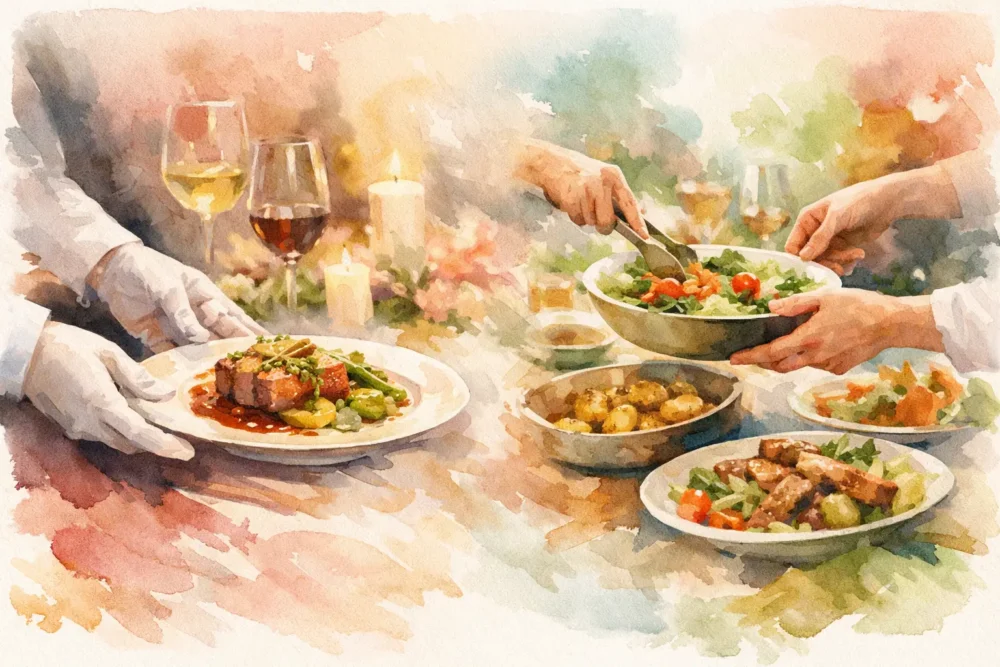
A private dinner is remembered in small, sensory details: the first course arriving precisely as conversation settles, the glow of the table, the ease with which guests share a bottle of wine. When considering plated service versus family style, the decision is not simply about how food reaches the table. It shapes the rhythm, visual character, and social energy of the entire occasion.
For an anniversary dinner, a wedding reception, a milestone birthday, or an intimate gathering in Sedona, both styles can be beautiful. The right choice depends on the mood you hope to create, the menu itself, and how you want guests to spend their time together.
What plated service brings to the table
Plated service presents each course individually, composed by the kitchen and delivered to every guest. It is the natural language of fine dining: intentional portions, thoughtful placement, and a sense that each plate is a finished expression of the chef’s craft.
This approach gives a dinner a measured, unhurried pace. Courses arrive together, allowing every guest to experience the same flavor, temperature, and presentation at the same moment. A delicate seafood preparation, an artfully arranged salad, or a precisely cooked filet retains the contrast and detail the chef intended. There is no passing, portioning, or deciding who will take the last serving. The attention stays on the food and the company.
For formal celebrations, plated service also creates visual calm. Place settings remain orderly, tables feel spacious, and floral arrangements or candlelight can hold their place as part of the setting. This can be especially appealing when the event includes toasts, a curated wine pairing, or several courses designed to build on one another.
At René at Tlaquepaque, the appeal of a composed plate reflects a broader philosophy of dining: culinary technique, seasonal ingredients, and gracious service working together without haste. For hosts who want an evening to feel polished and quietly ceremonial, plated service offers a strong foundation.
The considerations with plated dining
The refinement of plated service does ask for more advance planning. Guests usually select entrées before the event, particularly when the menu includes distinct main courses. Dietary needs and preferences should be gathered carefully so that every plate feels considered rather than accommodated at the last minute.
Portions are also defined by the menu. This is often a benefit for a multicourse evening, where richness and pacing are carefully balanced. But a host seeking a more abundant, leisurely style of sharing may find plated service slightly more formal than desired.
How family-style service changes the atmosphere
Family-style service places generous platters and bowls at the center of the table for guests to share. It has warmth and movement. A platter of roasted vegetables, a composed salad, or a beautifully presented entrée becomes part of the conversation as guests pass, serve, and encourage one another to try another bite.
Despite its name, family style does not have to feel casual. In the right setting, it can be generous, elegant, and distinctly Mediterranean in spirit. Large serving pieces, seasonal preparations, and thoughtfully set tables can create an atmosphere of abundance without sacrificing polish. It is particularly well suited to groups who already know one another or who want the meal to encourage easy introductions.
This service style gives guests a degree of choice at the table. Someone may take more of a favorite side dish, another may sample a little of everything, and the shared act of serving can make a group dinner feel less structured. For rehearsal dinners, milestone birthdays, and relaxed corporate gatherings, that openness can be the point.
The considerations with family style
The very qualities that make family style inviting can make it less ideal for certain events. Passing platters requires room, so table size and centerpiece scale matter. It can interrupt a more formal program or make a smaller table feel busy. Guests may also be hesitant to serve themselves if they are meeting for the first time or navigating a particularly formal occasion.
Food also changes as it travels around the table. Dishes designed to be shared generously tend to perform best, while highly delicate preparations may lose some of their intended temperature or presentation. Family style calls for a menu built with this service in mind, not simply plated dishes transferred to larger platters.
Dietary planning requires extra care as well. Shared dishes can make it harder to separate allergens or accommodate vegan, gluten-free, or other individual needs with the same clarity as a plated meal. A skilled event team can design alternatives, but the host should discuss these details early.
Plated service versus family style: choosing by occasion
For a romantic or highly formal celebration, plated service is usually the more natural choice. It creates a refined cadence, keeps attention on the occasion, and allows the kitchen’s precision to take center stage. A wedding reception with a formal toast sequence, an elegant anniversary dinner, or a client gathering where a composed impression matters will often benefit from this approach.
For an event centered on familiarity and shared enjoyment, family style may be more fitting. It softens the formality of a private room without making the evening feel informal. Think of a multigenerational birthday dinner, a post-wedding gathering, or a reunion where guests will linger over wine and conversation. The food becomes an invitation to connect rather than a pause between planned moments.
Guest count should influence the choice, though not dictate it. Plated service is often easier to coordinate for a larger group because every guest is served in sequence and portion sizes are clear. Family style can feel especially gracious for smaller groups, where platters remain within easy reach and sharing feels natural. With a larger party, it may require multiple platters per table and attentive replenishment to preserve the same sense of ease.
The room matters, too. A candlelit courtyard or intimate dining room may lend itself beautifully to either format, but the table layout changes the experience. Plated courses preserve open space and a clean visual line. Family-style serving pieces create a more abundant tablescape, best suited to tables with enough room for both food and conversation.
Let the menu lead the decision
A service style should honor the food rather than compete with it. French-influenced dishes that depend on exact sauce work, delicate garnishes, and precise temperature are often strongest when plated. Each guest receives the same carefully finished composition, and the kitchen retains control over the final moment before service.
Mediterranean flavors can lend themselves especially well to sharing. Roasted vegetables, grains, salads, braised meats, and generous accompaniments invite guests to serve themselves and return for another taste. That does not mean every Mediterranean menu should be family style. A refined menu can move between traditions, perhaps beginning with plated appetizers and concluding with shared sides alongside a main course.
A hybrid format can be an elegant answer when the event calls for both structure and warmth. A plated first course establishes the evening’s tone, while shared accompaniments at the entrée create a relaxed sense of abundance. Dessert may return to individual presentation, giving the final course a graceful, celebratory finish. This approach is not right for every gathering, but it can offer the best of both styles when executed with intention.
Questions to settle before selecting a service style
Before finalizing your event menu, consider what you want guests to feel. Should the evening be quiet and composed, with every detail arriving in an orchestrated sequence? Or should it feel convivial, with food moving freely across the table and conversation gathering around it?
Consider the practical details alongside the atmosphere: the number of guests, the table shape, the event timeline, dietary needs, and whether guests will choose entrees in advance. Ask how wine will be served and whether speeches or presentations will take place between courses. These elements affect pacing as much as the menu does.
Most importantly, choose the format that feels true to your guests. Plated service offers precision, poise, and a distinctly celebratory sense of occasion. Family style offers generosity, flexibility, and a more communal table. A thoughtfully planned dinner does not need to follow a rule. It simply needs to give excellent food, attentive hospitality, and meaningful conversation the space they deserve.
The finest choice is the one that lets your guests settle into the evening, raise a glass without rushing, and remember not only what they ate, but how beautifully the gathering felt.