

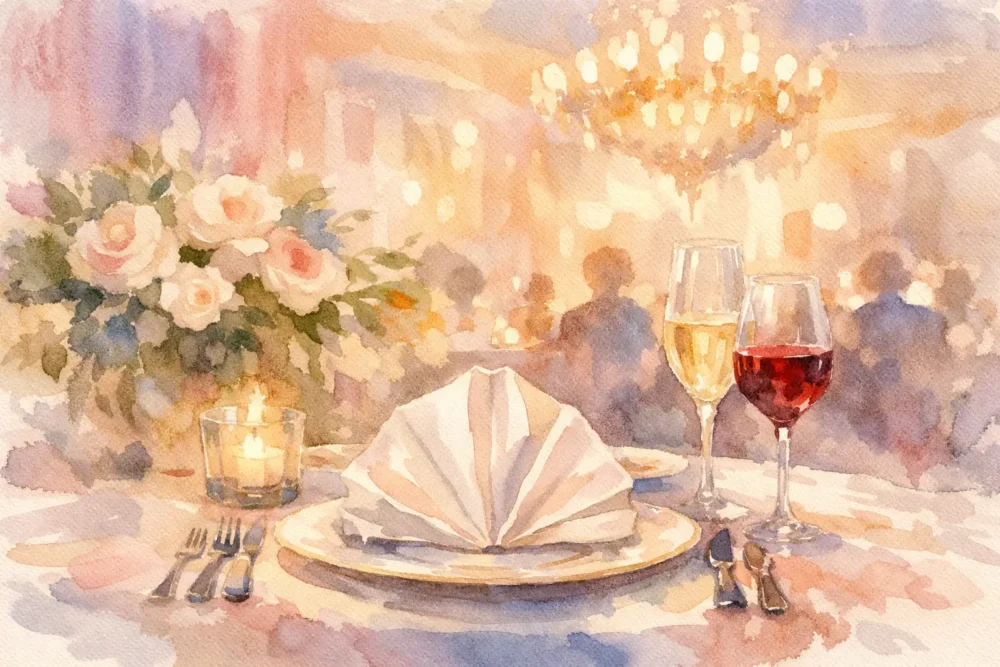
The first moments at a fine dining table set the tone for the evening: a composed arrival, a gracious greeting, and the sense that there is nowhere else you need to be. This guide to fine dining etiquette is not about performing rules for their own sake. It is about moving comfortably through an experience designed around attention, conversation, and the pleasure of a beautifully prepared meal.
Fine dining should never feel stiff. The most polished guests are often the least conspicuous because they understand that good manners create ease for everyone at the table, from fellow diners to the service team.
Before You Arrive: Dress, Reservations, and Timing
An elegant dinner begins before the first course. Reservations are a commitment to both the restaurant and the guests sharing your table, so arrive on time or a few minutes early. If plans change, call as soon as possible. A timely notice allows the restaurant to extend hospitality thoughtfully to all guests.
Dress with respect for the setting. Fine dining does not always require formalwear, and expectations can vary by restaurant and season, but polished, intentional attire is usually appropriate. Consider the occasion, the dining room, and the climate. A tailored jacket, a refined dress, or elevated separates feel at home in a romantic restaurant without appearing overly ceremonial.
If you are meeting another couple or celebrating with a group, avoid letting logistics become the evening’s main subject. Confirm the reservation, arrive ready, and allow the occasion to unfold at an unhurried pace.
A Guide to Fine Dining Etiquette at the Table
Once seated, let the host or server guide the first few moments. Place your napkin on your lap after everyone has been seated or after the host does. If you leave the table briefly, set it loosely on your chair. At the end of the meal, place it neatly to the left of your setting rather than folding it again.
Your place setting may include more glassware and flatware than you use at an ordinary dinner. There is no need to study it with concern. The simplest principle is to work from the outside in as each course arrives. The utensils placed farthest from the plate are generally intended for the first course, with each subsequent piece moving closer to the plate.
Bread plates are typically on the left, while beverages are placed on the right. If you pause and cannot remember, a discreet glance at the table setting is preferable to reaching across a companion’s place. Small details matter, but calm matters more. Fine dining service is designed to offer guidance when it is needed.
Keep personal items off the table whenever possible. Phones, keys, sunglasses, and handbags can interrupt the visual calm of the setting and compete with the people in front of you. Silence your phone and place it away. A meal of this nature is one of the rare occasions where being fully present is a genuine luxury.
The Pace Is Part of the Experience
A refined meal is not rushed between appointments. Courses are often paced to create space for conversation, wine, and anticipation. Resist the instinct to hurry service along simply because there is a pause between plates. Those quieter intervals are part of the rhythm of the evening.
That said, your schedule matters. If you have theater tickets, a tour departure, or another fixed commitment, mention it when you arrive. A considerate server can help shape the pacing without disrupting the dining room.
Ordering With Confidence and Courtesy
A well-written menu may introduce ingredients, preparations, or French culinary terms that are unfamiliar. Ask questions without apology. A thoughtful question about the character of a dish, its richness, or a wine pairing shows interest in the craft. It also helps the service team guide you toward a meal you will enjoy.
If you have allergies or dietary restrictions, communicate them clearly and early. Do not assume that an ingredient can simply be removed from a composed dish. In a chef-driven kitchen, each element may contribute to balance, texture, and presentation. The team can often offer suitable options, but advance notice gives them the best opportunity to do so well.
When dining with guests, avoid turning the menu into a debate. Offer a recommendation if asked, then let others choose freely. The same restraint applies to the wine list. If a sommelier or knowledgeable server is available, share your preferences and price range quietly. There is no need to demonstrate expertise. The point is to select a bottle that complements the food and the table’s preferences.
At René at Tlaquepaque, as in other intimate dining rooms, the most rewarding choice is often to trust the experience: seasonal ingredients, careful technique, and a pairing chosen with the entire meal in mind.
Wine, Cocktails, and Toasts
When wine is presented, the person who ordered it may be offered a small taste. This is not a test of whether you personally enjoy the wine. It is an opportunity to confirm that the bottle is sound and consistent with what was ordered. A brief sip and a simple acknowledgment are all that is required.
Hold stemmed wine glasses by the stem rather than the bowl. This keeps fingerprints from the glass and helps preserve the wine’s temperature. For cocktails, follow the glassware provided and take your time. Fine dining is not an occasion for hurried rounds.
A toast is most elegant when it is brief and sincere. Raise your glass, make eye contact, and offer a few words that suit the occasion. You need not clink glasses across the table, especially in a close or crowded setting. A warm gesture is more memorable than a grand performance.
Conversation That Suits the Room
An intimate dining experience depends on a shared atmosphere. Speak at a volume that belongs to your own table, not the entire room. Laughter is welcome; a booming voice, speakerphone call, or repeated interruptions are not.
Choose conversation that allows everyone to participate. Celebrations naturally invite stories, but be mindful of speaking over others or directing every topic toward one guest. If business is being discussed, keep sensitive matters private. The dining room is a place to enjoy company, not to make others feel as though they have entered a meeting.
Photography deserves similar discretion. A single quiet photo of a beautiful plate or a special occasion can preserve the memory. Repeated flashes, standing to find an angle, or delaying the meal while everyone waits for a photograph shifts attention away from the work on the plate. Enjoy the presentation first. Then, if you wish, capture it quickly and return to the table.
Dining Gracefully, Course by Course
Wait until everyone at your table has been served before beginning, unless a host or server encourages you to proceed. This is especially appropriate when dishes arrive at slightly different times or when a course is meant to be enjoyed at a particular temperature.
Take modest bites and set your utensils down between them. When pausing, rest your knife and fork on the plate rather than on the tablecloth. When you have finished, place them together diagonally on the plate, with the handles around the four o’clock position. This quietly signals that the plate may be cleared.
Bread is best broken into small pieces, buttered one piece at a time, and eaten neatly. Soup is spooned away from you and sipped from the side of the spoon. These customs may seem formal, yet their purpose is simple: they keep the meal composed and comfortable.
If something goes wrong, such as a dropped utensil or a dish that is not prepared as requested, notify your server discreetly. Do not reach for a fallen fork, wave broadly across the room, or direct frustration toward the table. Poise is not pretending that nothing happened. It is allowing the right person to resolve the matter with grace.
Showing Appreciation at the End of the Evening
When dessert, coffee, or an after-dinner drink is offered, consider whether you would like to extend the evening rather than treating the final course as an afterthought. A composed dessert and a well-chosen digestif can be a lovely close to a celebratory meal, particularly when the setting invites lingering conversation.
When the check arrives, handle it quietly. If you are hosting, it is thoughtful to settle it away from the center of the table when possible. For shared meals, establish the arrangement with simplicity. Fine dining is rarely improved by a lengthy calculation over small differences in orders.
Thank the service team sincerely as you depart. Excellent hospitality involves many unseen decisions, from the timing of each course to the care taken with a wine pour. Recognition need not be elaborate. A direct, gracious thank-you carries real weight.
The best etiquette leaves no impression of rules at all. It allows the food, the setting, and the people beside you to remain at the center of the evening. Arrive with intention, stay curious, and give the occasion the gift of your full attention.