

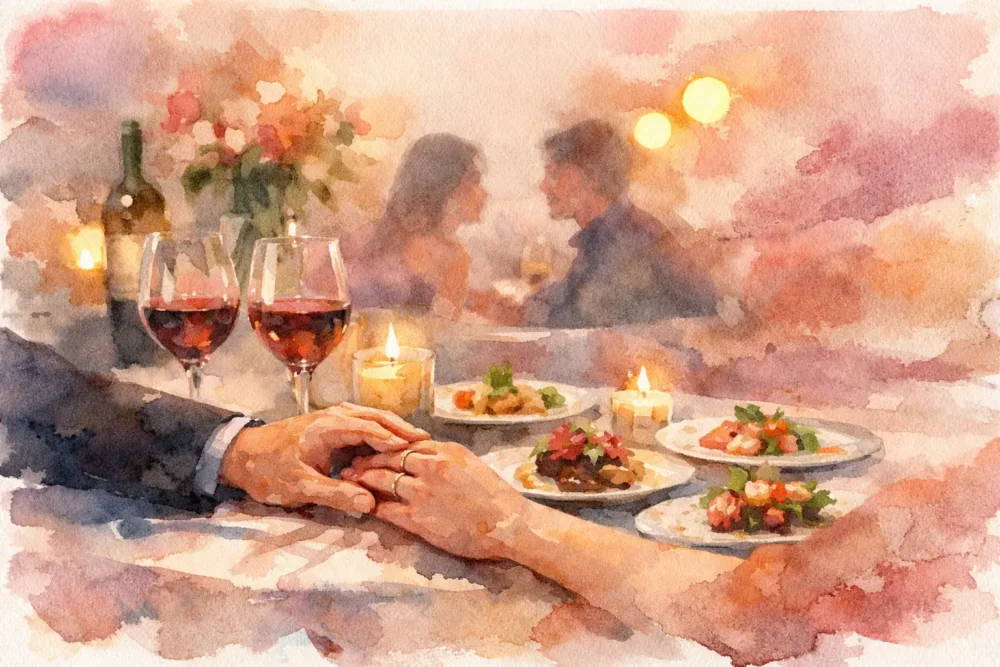
A tasting menu is not simply a longer dinner. It is an evening placed in the chef’s hands: a progression of flavors, textures, and courses designed to unfold at an unhurried pace. Knowing how to choose a tasting menu begins with choosing the feeling you want the evening to hold – celebratory, romantic, adventurous, or quietly indulgent.
For a meaningful dinner, the best menu is rarely the one with the most courses or the most elaborate language. It is the one that suits your appetite, your preferences, your company, and the occasion you came to honor.
Start With the Occasion
A tasting menu asks for time and attention. That makes it especially suited to anniversaries, birthdays, engagements, destination dinners, or an evening when conversation deserves more room than a quick reservation allows. Before looking at the courses, consider whether you want dinner to be the centerpiece of the night or one part of a fuller itinerary.
If you have theater tickets, a long drive ahead, or a tightly scheduled day of sightseeing, an extended chef’s menu may feel rushed. A composed prix fixe menu, with a more defined number of courses and a predictable pace, can be the better choice. On the other hand, if the goal is to linger over wine, savor a beautiful setting, and let the evening unfold naturally, a tasting experience offers a sense of occasion that ordering à la carte may not.
The company matters, too. A tasting menu is particularly lovely for two people who enjoy sharing impressions as each course arrives. It can also be memorable for a small group, though large parties should consider whether every guest is comfortable committing to the same pace and culinary direction.
How to Choose a Tasting Menu That Fits Your Palate
Read the menu for its point of view, not merely its ingredients. A well-conceived tasting menu has a culinary identity. It may lean toward classical French technique, Mediterranean brightness, regional ingredients, seafood, game, vegetable-forward cooking, or a more experimental approach. Choose a restaurant whose natural style already appeals to you. A tasting menu is not the ideal time to gamble on a cuisine you generally avoid.
Look for a sense of balance across the courses. Rich preparations can be exquisite when offset by acidity, herbs, seafood, fresh produce, or a lighter interlude. A menu built entirely around heavy sauces, red meat, and luxurious additions may suit a cold-weather celebration, but it can feel demanding if you prefer a brighter, more delicate meal.
Seasonality is often a good sign. A menu that changes with the market allows the kitchen to work with ingredients at their most expressive. In Sedona, a French Mediterranean approach may feel especially fitting when it brings together careful technique, vivid produce, and the graceful restraint of a European dining room.
Do not assume that an unfamiliar ingredient is a warning. A tasting menu should offer a degree of discovery. The distinction is between being pleasantly surprised and being consistently uncomfortable. If you dislike shellfish, organ meats, mushrooms, spice, or raw preparations, say so before reserving rather than hoping those elements will not appear.
Consider Appetite, Pace, and Course Count
Course count alone does not tell you how filling a tasting menu will be. Six generous courses can be more substantial than ten delicate ones, and the bread, amuse-bouche, palate cleanser, and petits fours all contribute to the experience. If you tend to eat lightly, choose a menu known for precision rather than abundance, and avoid treating the bread basket as an appetizer.
For those arriving genuinely hungry, a longer tasting menu can be deeply satisfying, particularly when it includes a savory opening, a fish course, a composed entrée, cheese or a pre-dessert, and a final sweet course. Still, the goal is not to leave uncomfortably full. Fine dining is best when each course leaves enough curiosity for the next.
Ask about the anticipated duration when making a reservation. A polished restaurant will be able to give a realistic range, though pacing naturally depends on the evening and your party. Two to three hours is common for a relaxed tasting experience. If you are celebrating, leaving room in the schedule is one of the most generous choices you can make for yourselves.
Decide Whether Pairings Add to the Evening
Wine pairings can bring another layer of intention to a tasting menu. The right glass may sharpen the citrus notes in a seafood course, soften the richness of a sauce, or create an unexpected bridge to dessert. A pairing is especially worthwhile when the menu moves across several proteins, sauces, and flavor profiles that would be difficult to match with one bottle.
That said, a pairing is not automatically the best choice. Diners who prefer to linger over a favorite bottle, who are driving, or who simply want a lighter evening may enjoy selecting one or two wines instead. Many guests find that sharing a bottle for the savory courses, then choosing a dessert wine or after-dinner spirit later, offers a lovely middle ground.
The same principle applies to cocktails. An aperitif can set an elegant tone before dinner, but a highly flavored cocktail throughout every course can compete with subtle food. Let the meal lead. If the menu is intricate and restrained, consider beginning with a cocktail and moving to wine, or allowing the sommelier to suggest a measured pairing.
Address Dietary Needs Before You Arrive
A tasting menu involves advance preparation, often with ingredients and sauces developed well before service. Dietary requests are most graciously handled at the time of reservation, not when the first course is placed on the table. State allergies clearly, distinguish them from preferences, and share any restrictions for each guest.
Restaurants can often accommodate many needs with notice, but not every menu can be altered without changing the chef’s intended composition. Severe allergies, vegan dining, celiac requirements, and multiple restrictions may require special planning or may be better served by a different menu format. This is not a failure of hospitality. It is an honest recognition that excellence depends on both safety and craft.
If one person in a party has restrictions, ask whether the entire table must participate in the tasting menu. Policies vary, and knowing the answer in advance prevents an awkward decision at the table.
Look Beyond the Food
The most memorable tasting menus are shaped by setting as much as cuisine. Consider the dining room’s atmosphere, the level of service, and whether the restaurant creates the kind of evening you are hoping to share. A tasting menu needs a room where you can hear one another, where courses arrive without hurry, and where the staff understands when to explain and when to step back.
For a romantic dinner, a courtyard setting, candlelit interior, or quietly refined room can make the experience feel complete. At René at Tlaquepaque, the appeal lies in this harmony of French Mediterranean craft, attentive service, and an intimate setting designed for lingering conversation.
It is also worth considering the restaurant’s approach to formality. A tasting menu does not require stiffness, but it does reward presence. Dress in a way that feels appropriate to the room, silence the phone, and arrive prepared to enjoy the meal as a shared occasion rather than a sequence to rush through or document.
Questions Worth Asking Before You Reserve
A short conversation with the restaurant can help you choose with confidence. Ask whether the chef’s menu is available nightly, whether the whole table participates, and how much time to allow. If the menu is not posted in full, ask for its general style: seafood-forward, seasonal, classic, vegetarian-friendly, or more adventurous.
You may also ask whether wine pairings are offered, whether a celebration can be acknowledged, and whether dietary accommodations are possible with advance notice. These practical details create the ease that allows the evening itself to feel effortless.
A tasting menu is at its best when it reflects your own taste while inviting you slightly beyond it. Choose the restaurant whose cooking you trust, reserve enough time to enjoy the pacing, and let the evening be about more than the next course. The finest meals leave behind not just a favorite dish, but the rare pleasure of having nowhere else to be.