

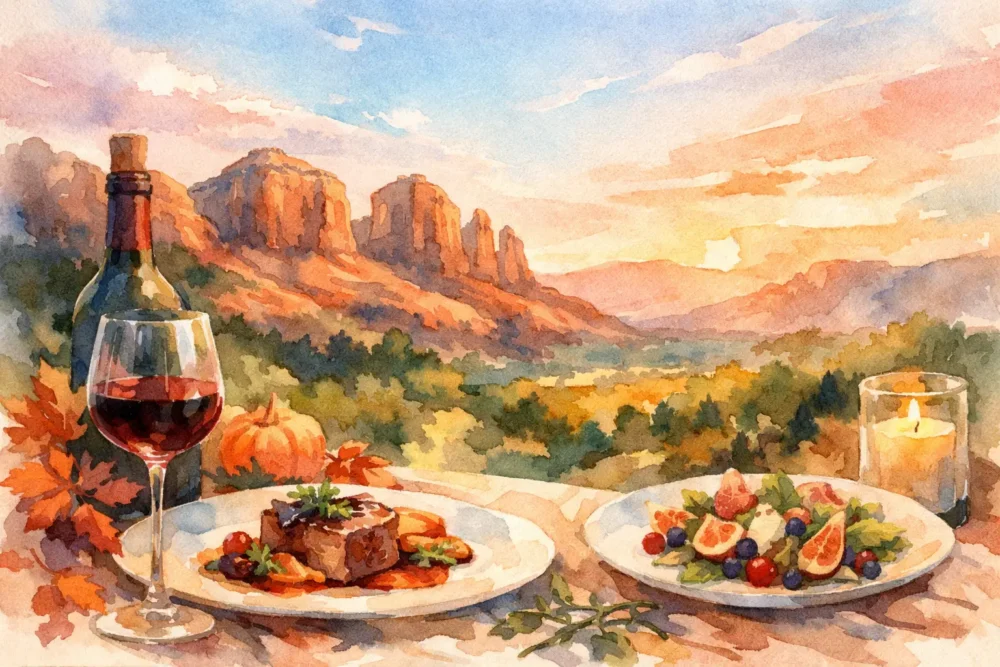
There is a particular pleasure in arriving for dinner just as Sedona’s light begins to soften – the red rocks glowing outside, the air cooling, the day giving way to something quieter. In that moment, a seasonal fine dining menu Sedona guests truly remember should feel in step with its surroundings: composed, expressive, and shaped by the time of year rather than fixed in place.
Fine dining is often discussed in terms of luxury, but seasonality is what gives it life. A menu can be polished and technically precise, yet still feel detached if it ignores what is freshest, most compelling, and most appropriate for the season. In a destination such as Sedona, where guests come seeking beauty, calm, and memorable experiences, that difference matters.
What makes a seasonal fine dining menu in Sedona distinctive
A seasonal menu in Sedona should do more than rotate ingredients. It should respond to climate, mood, and the pace of the dining experience itself. Spring favors brightness and delicacy. Summer calls for restraint, balance, and dishes that feel elegant rather than heavy. Autumn welcomes deeper flavors, richer textures, and a sense of warmth. Winter invites comfort, but never excess.
That rhythm is especially suited to French and Mediterranean cooking. Both traditions rely on technique, certainly, but they also respect the ingredient at its peak. A carefully prepared fish course with citrus and herbs belongs to a different season than a slow-braised meat finished with a more concentrated sauce. The skill lies not only in execution, but in knowing when each expression feels right.
For guests, the result is a menu that feels current rather than repetitive. Returning diners notice nuance. Travelers remember that their meal felt tied to Sedona in that exact moment, not interchangeable with a restaurant experience elsewhere.
Seasonal fine dining menu Sedona guests should expect
When diners reserve a fine dining table in Sedona, they are not simply choosing entrees. They are choosing intention. A seasonal menu should reveal that intention from the opening course through dessert and wine.
The first sign is clarity. Dishes should feel edited, not crowded with components competing for attention. Seasonal asparagus in spring, heirloom tomato in summer, wild mushroom in fall, or citrus in winter should appear because each ingredient has a purpose. Fine dining at its best is never about showing how much can be added. It is about showing what can be elevated.
The second sign is pacing. Seasonal menus often benefit from a measured progression – lighter openings, more structured middle courses, and a finish that feels satisfying without becoming heavy. This matters for couples and celebratory diners who want conversation to unfold naturally over dinner. An unhurried meal allows each course to hold its own place.
The third sign is balance. Sedona attracts guests celebrating anniversaries, birthdays, engagements, and long-awaited evenings away. In those moments, a menu should feel indulgent but composed. Richness has its place, yet contrast is what keeps a meal memorable. Acidity, texture, herbaceous notes, and thoughtful temperature play all shape a better experience.
Why seasonality matters more in fine dining than in casual restaurants
Casual restaurants can rely on familiarity. Guests may return for the same dish because consistency is the point. Fine dining works differently. Guests still expect consistency in quality and service, but they also expect discernment.
A seasonal approach signals care. It suggests the kitchen is paying close attention – to sourcing, to weather, to what guests are craving, and to how a menu reads as a whole. That attentiveness becomes part of the luxury. Not extravagance for its own sake, but the quiet confidence that every element has been considered.
There is also a practical side. Ingredients at their natural peak tend to offer better flavor and texture. That sounds obvious, yet it is often what separates a good meal from an exceptional one. A summer stone fruit dessert needs very little intervention if the fruit is beautiful. A winter root vegetable puree can carry depth and elegance when handled with precision. Seasonality lets technique support the ingredient rather than disguise it.
The setting should match the menu
In Sedona, setting carries unusual importance. Guests are often not looking for speed. They are looking for atmosphere – candlelight, architecture, a quiet courtyard, polished service, and a dining room that invites conversation rather than noise. A seasonal menu should feel inseparable from that environment.
This is where many restaurants misjudge the experience. They may update ingredients seasonally, yet maintain a rushed or overly casual energy that undercuts the meal. Refined dining requires harmony between plate and place. If the room encourages stillness and attentiveness, the menu should reward that attention.
An intimate restaurant with European sensibility understands this instinctively. Service should guide the meal without interrupting it. Wine pairings should feel considered rather than performative. Desserts should close the evening with elegance, not simply sweetness. The menu is only one part of the experience, but it is the part that makes the setting feel complete.
How a chef’s point of view shapes seasonal dining
Not every seasonal menu is equally compelling. Much depends on the chef’s perspective. Some kitchens change dishes frequently but without a clear identity. Others evolve the menu while preserving a recognizable style.
That distinction matters. Guests choosing fine dining in Sedona are not only seeking freshness. They are seeking authorship. They want to feel that the menu reflects a culinary point of view grounded in craft.
French Mediterranean cuisine offers a particularly strong foundation for this. It allows a chef to move gracefully between delicacy and richness, coastal brightness and classic depth. A spring menu may lean into tender vegetables, lighter sauces, and fresh herbs. Fall may bring more savory concentration, silkier textures, and a deeper dialogue with wine. The through line should remain visible, even as the ingredients shift.
At René at Tlaquepaque, that philosophy feels especially at home. The expectation is not novelty for novelty’s sake. It is refinement with purpose – a menu shaped by the season, yet anchored in classic technique and a calm, romantic dining experience.
What diners should look for before reserving
A strong seasonal fine dining menu in Sedona will usually reveal itself before the first course arrives. The restaurant’s language matters. If the emphasis is on craft, atmosphere, and thoughtful hospitality, that is often a promising sign. If the experience is framed only around trend or spectacle, the meal may feel less enduring.
The menu itself should also suggest confidence. A concise selection often indicates greater focus than an expansive list trying to satisfy every preference. Prix fixe offerings can be especially appealing for guests who want to experience the kitchen’s seasonal point of view in a more complete way. They remove some of the guesswork and create a more coherent progression across the meal.
Wine and cocktail programs also deserve attention. In a truly refined setting, beverages are not an afterthought. They should complement the season just as the food does. Crisp whites, structured reds, herb-driven aperitifs, or a dessert pairing chosen with restraint can deepen the sense that the evening has been carefully composed.
The trade-off guests should understand
Seasonality does come with one quiet trade-off: favorite dishes may not always be available. For experienced diners, that is part of the appeal. A seasonal menu asks for a little trust. In exchange, it offers freshness, variation, and a more vivid sense of place.
That said, the best restaurants know how to balance change with continuity. Signature strengths should still be present in spirit, whether through technique, hospitality, or the overall tone of the menu. Guests should feel guided, not unsettled.
This is especially important for special occasions. A birthday dinner or anniversary should hold a sense of occasion, but not uncertainty. The kitchen’s role is to make seasonality feel graceful and assured – something to anticipate, not navigate.
Why this matters for the Sedona dining experience
Sedona is not a city people visit accidentally. They come for beauty, stillness, celebration, and escape. Dinner should honor that reason for being here. A seasonal menu does exactly that because it resists the generic. It reflects time, place, and mood with more sensitivity than a static approach ever can.
For locals, this keeps fine dining rewarding across repeat visits. For travelers, it creates a meal that belongs to their trip rather than merely filling an evening. For couples, it makes dinner feel like an event with shape and memory.
The finest restaurants understand that luxury is not loud. It is a room that feels settled, service that feels intuitive, and a menu that tastes as though it could only have been served now, in this season, in this setting.
If you are choosing where to spend an important evening in Sedona, look for a restaurant that treats the menu as a living expression of craft. The right table, the right pace, and the right seasonal dish can turn dinner into the part of the trip you keep talking about long after the desert air has cooled.