

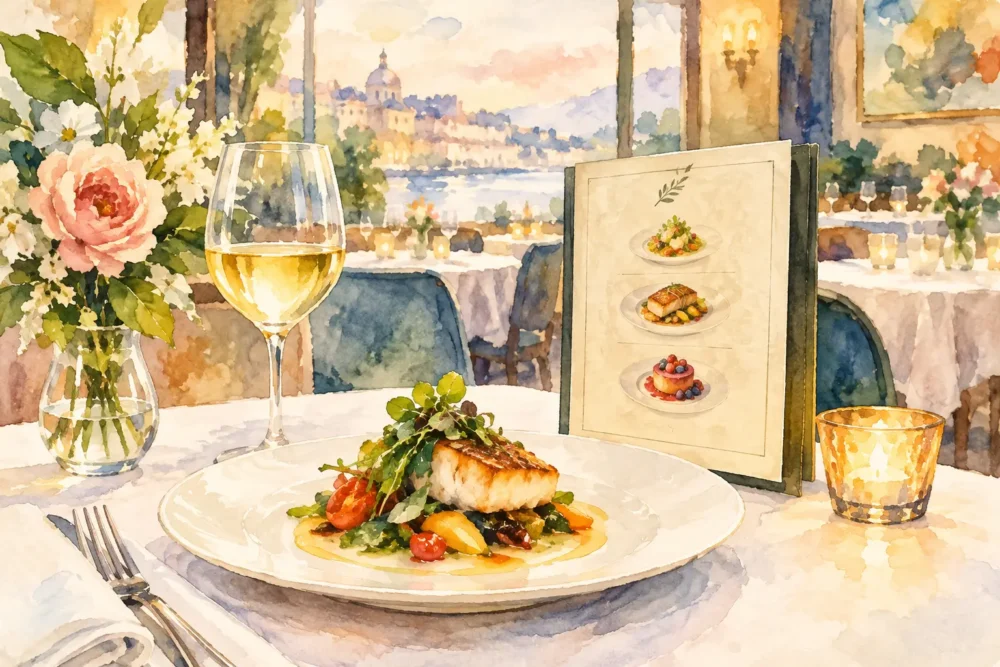
A prix fixe menu may appear simple: a set number of courses at one stated price. Yet behind that elegant format is a considered promise. When guests ask, why do restaurants offer prix fixe, the answer reaches beyond convenience. It is a way to shape an evening with intention, giving the kitchen, the service team, and the table a shared sense of rhythm.
For a refined restaurant, dinner is not merely a sequence of orders delivered to the table. It is an experience of flavor, setting, conversation, and care. A well-designed prix fixe menu allows each of those elements to unfold at an unhurried pace.
Why Do Restaurants Offer Prix Fixe Menus?
Restaurants offer prix fixe menus because they create clarity without eliminating pleasure. The chef can compose a progression of dishes that belongs together, while guests know the structure and price of the meal before the first course arrives. That balance is particularly appealing for anniversaries, destination dinners, and evenings when the goal is to be present rather than to make a series of decisions.
The phrase prix fixe translates from French as “fixed price.” Traditionally, it refers to a multi-course meal offered for one set amount, often with a choice between a few dishes in each course. It is not simply a smaller menu. At its best, it is a complete culinary composition.
A first course might introduce brightness, delicacy, or texture. The entrée builds depth and substance. Dessert provides contrast or a graceful final note. Wine and cocktails can be suggested with greater precision because the service team understands the likely path of the meal. Each course has room to make sense on its own and to complement what came before.
A Menu Designed as a Whole
An à la carte menu invites exploration across many individual dishes. A prix fixe menu invites the chef to tell a more focused story. That distinction matters.
With a curated format, a kitchen can pair a silky soup with a crisp seasonal salad, follow it with a carefully composed fish or meat course, and finish with a dessert that feels earned rather than incidental. The goal is not to limit choice for its own sake. It is to offer choices within a structure that protects balance, pacing, and quality.
French and Mediterranean cooking are especially well suited to this approach. The cuisines value restraint as much as richness: a precise sauce, a beautifully roasted vegetable, a citrus note that lifts a savory course, or a dessert with enough lightness to conclude the meal elegantly. When a chef has the opportunity to design several courses together, those details can be expressed more clearly.
At René at Tlaquepaque, this kind of intention suits a dining room made for lingering conversation, candlelit celebration, and the pleasure of being fully looked after. The menu and the setting work together, rather than competing for attention.
Better Seasonal Cooking and More Exacting Execution
A prix fixe menu also gives the kitchen a practical advantage that guests can taste. Knowing that a defined number of diners may select from a smaller group of dishes allows chefs to purchase and prepare with greater confidence. Ingredients can be ordered at their peak, used thoughtfully, and presented with consistency.
This is not merely a matter of efficiency. It can mean a more beautiful plate. A kitchen can devote careful attention to a sauce finished to order, a garnish that remains fresh and vivid, or a fish course cooked with the timing it deserves. Preparation becomes more deliberate because the team is not trying to execute an endless number of combinations at once.
Seasonality benefits as well. A prix fixe menu can change when the market offers something exceptional: tender spring vegetables, summer stone fruit, autumn mushrooms, or winter citrus. Instead of forcing every ingredient to remain available year-round, the chef can allow the menu to reflect the moment.
There is a responsible side to this precision, too. More predictable ordering can reduce unnecessary waste. A restaurant still must account for dietary needs, changing reservations, and guest preferences, but a carefully planned menu makes it easier to use premium ingredients with respect.
The Value Is in More Than the Price
Some guests assume that prix fixe always means a bargain, while others assume it always means a splurge. Neither is necessarily true. The value of a prix fixe menu lies in transparency and in the completeness of the experience.
Before reserving, guests can understand the cost of the meal more easily than they might with several separately priced courses. For a special occasion, that clarity can feel reassuring. It also makes room to decide whether a wine pairing, a celebratory cocktail, or a final coffee belongs in the evening.
For the restaurant, a set format provides a steadier foundation for sourcing, staffing, and preparation. Those operational benefits help support the level of service guests expect in fine dining: attentive timing, knowledgeable guidance, and food that arrives in its intended condition.
Still, prix fixe is not automatically the right choice for every diner or every occasion. If a table wants one simple course before a concert, or if guests have widely different appetites, à la carte dining may offer more freedom. The best restaurants understand this trade-off. A prix fixe menu should feel like an invitation, not an obligation disguised as elegance.
Pacing Is Part of the Hospitality
In a fine dining room, timing is not a technical detail. It is one of the quietest forms of hospitality.
A prix fixe menu gives the dining room a natural cadence. The first course arrives after guests have settled in. The next course follows when conversation has had time to breathe. Service can be observant without becoming intrusive because the team has a clearer sense of where each table is in the meal.
That does not mean every table is rushed through the same schedule. A thoughtful service team reads the room. A couple lingering over a bottle of wine may appreciate a little more space between courses. Guests celebrating a birthday may prefer a gentle pause before dessert. The structure of prix fixe supports consistency, while hospitality preserves flexibility.
This is one reason prix fixe works so well for romantic evenings. It removes the subtle pressure to order quickly or calculate what comes next. Guests can turn their attention back to one another, to the courtyard light, to the glass in hand, and to the pleasure of the next plate arriving at just the right moment.
Choice Still Has a Place
The strongest prix fixe menus do not confuse refinement with rigidity. Many offer alternatives within each course, allowing a guest to choose between lighter and richer preparations, seafood and meat, or familiar and more adventurous flavors. Dietary accommodations may also be possible with advance notice, though they depend on the menu and the kitchen’s ability to preserve the integrity of each dish.
That is the key distinction: a prix fixe menu is curated, not impersonal. It asks the chef to lead, while still leaving room for the guest to participate.
When reviewing a prix fixe offering, it helps to look at the experience rather than the course count alone. Consider whether the selections sound balanced, whether the pace suits the occasion, and whether the restaurant communicates clearly about substitutions, beverages, and dietary needs. A higher price may be justified by exceptional ingredients, a memorable setting, polished service, and the confidence that every course has been considered in relation to the next.
A prix fixe dinner is best approached with a little curiosity and enough time to enjoy it. Choose the evening when conversation matters, arrive ready to linger, and let the meal reveal its logic one course at a time.