

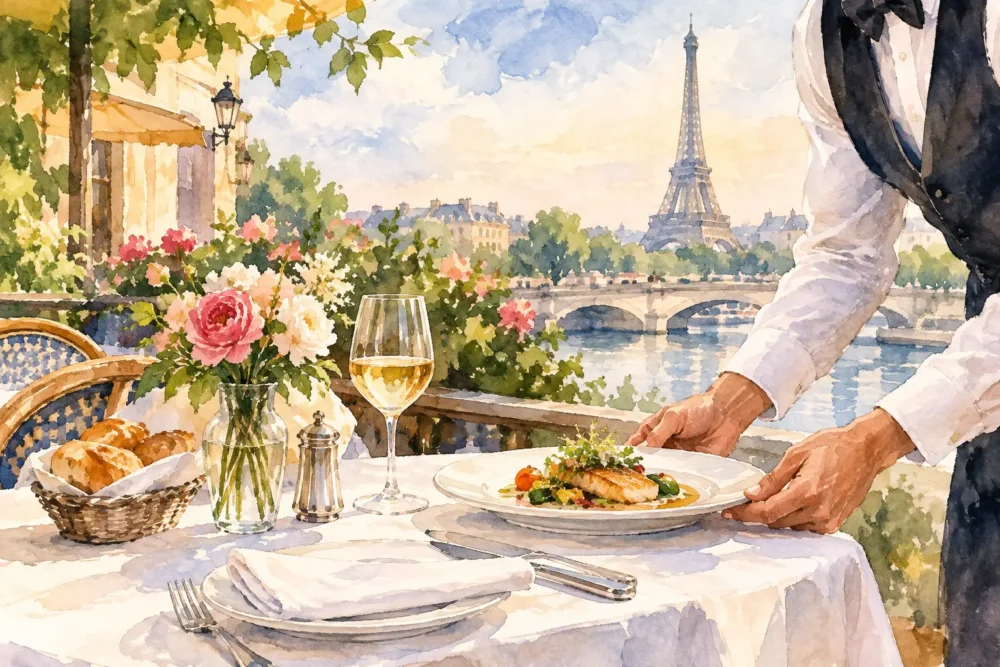
The quiet arrival of a polished silver cart, the brief perfume of a sauce finished beside the table, the measured placement of each course – these details turn dinner into an occasion. This guide to French table service offers a gracious introduction to the traditions behind that experience, along with the practical etiquette that allows guests to feel entirely at ease.
What French Table Service Means Today
In contemporary American fine dining, French table service generally describes an attentive, formal style in which some elements of a meal are presented, finished, carved, plated, or served at the table. The service may include a guéridon, or rolling service cart, especially for a composed salad, a flambéed dessert, a carved roast, or a sauce prepared in view of the guest.
The purpose is not theater for its own sake. When practiced well, tableside service reveals culinary craft while keeping the dining room calm and personal. It gives a guest a closer view of the work behind the plate: a server carving with precision, a captain spooning a sauce, or a dessert receiving its final finish at precisely the right moment.
The term can also cause some confusion. Historically, service à la française referred to an elaborate style in which many dishes were placed on the table at once. Most modern restaurants do not use that format. Today, a French-inspired dining room more often follows a paced, course-by-course progression, with thoughtful tableside moments reserved for dishes that benefit from them.
The Rhythm of a French-Inspired Meal
A refined meal is designed with an unhurried pace, not an empty one. From the first greeting to the final coffee, service should anticipate needs without interrupting conversation. A host or server may offer an aperitif, describe the evening’s menu, and guide guests toward wine or cocktail selections that suit the table’s preferences.
Bread may arrive before the first course, often with butter and a dedicated bread plate. The first course might be a composed salad, soup, or seafood preparation, followed by a fish or pasta course, then an entrée. Depending on the menu and the occasion, cheese, dessert, coffee, and digestifs may extend the evening pleasantly.
Not every dinner includes every course, and there is no need to order according to a rigid script. A couple sharing an intimate late dinner may prefer an appetizer, entrée, and dessert. For a birthday or anniversary, a chef’s prix fixe menu can offer a more complete expression of the kitchen’s intention, with each course naturally leading into the next.
At René at Tlaquepaque, this sense of progression belongs to the larger experience: French Mediterranean cooking, a romantic courtyard setting, and service shaped to leave room for the table’s own conversation.
A Guest’s Guide to French Table Service
The most useful etiquette is remarkably simple: allow the staff to guide the choreography. Fine dining is not a test of manners. It is a shared effort to preserve the comfort, beauty, and ease of the room.
When you are seated, place your napkin on your lap after the host does, or soon after you are settled if there is no formal host. If you step away from the table, loosely place the napkin on your chair. At the end of the meal, it belongs to the left of your setting, rather than folded precisely or left on the plate.
Utensils are arranged in the order they will be used, working from the outside inward. If a dish arrives with unfamiliar utensils or a tableside preparation calls for a particular spoon or fork, there is no need to guess. The service team will quietly set what is needed, and following their lead is always appropriate.
Bread is generally broken into a small piece before buttering, rather than buttering a whole roll at once. This small habit is practical as much as traditional. It keeps the table neat and lets the course unfold at an easy pace.
When the Service Comes to the Table
Tableside preparation asks for a little awareness from guests and a great deal of skill from the team. If a server approaches with a cart, platter, or carving board, make room by moving personal items away from the table edge. Phones, handbags, sunglasses, and keys are best kept off the table whenever possible, both for comfort and for the visual serenity of the setting.
A server may present a platter for your consideration before serving. This is an invitation to appreciate the preparation, not a request for a lengthy decision unless options are offered. If a choice is involved, such as the preferred portion of a roast or the amount of sauce, a brief, clear response is ideal.
Service from a platter may occur from the left, while plated courses are often placed from the right. There are variations based on the restaurant, the dish, and the available space, so guests need not monitor every movement. The gracious response is simply to pause, make room, and allow the course to be placed without reaching across the server.
This is particularly relevant when a dish is flamed or finished beside the table. Enjoy the moment, but keep hands and loose clothing clear of the service area. A photograph may be tempting, yet it is considerate to ask before standing or leaning in. The best dining rooms protect both the craft of the presentation and the privacy of neighboring tables.
Wine, Water, and the Art of Accepting Guidance
Wine service follows its own quiet sequence. After selecting a bottle, the server may present the label for confirmation before opening it. The guest who ordered the wine is usually offered a small taste first. This is not a test of whether the wine is personally appealing. It is a chance to confirm that the bottle is sound, without signs of cork taint or oxidation.
Once approved, the wine is poured for the table. If you would prefer sparkling water, still water, or a pause before another pour, a simple word to your server is all that is required. Attentive service should feel responsive rather than insistent.
Pairing advice is also part of the pleasure. A crisp white can heighten the delicacy of seafood, while a structured red may complement a richer meat course. Yet preference matters. Guests who favor a lighter red with fish, or a nonalcoholic pairing with a prix fixe dinner, should feel comfortable saying so. The best recommendation begins with the guest, then reflects the chef’s cooking.
Conversation and Pace at the Table
French dining traditions prize the table as a place for conversation. That does not require formality or whispered voices. It does mean giving the meal enough attention to unfold. A leisurely pace allows a sauce to be enjoyed while hot, a wine to change in the glass, and a companion’s story to reach its natural end.
If you have a concert, tour, or other commitment, mention your timing when you arrive. A fine dining team can often help shape the evening accordingly, though certain preparations are intentionally paced and cannot be rushed without losing their character. For a special occasion, the opposite may be true: letting the team know that you hope for an unhurried evening helps them create space for it.
Avoid placing used utensils directly on the tablecloth after they have touched food. Rest them on the plate between bites. When you are finished, place your knife and fork together on the plate, angled toward the upper right. This discreet signal helps the server clear the course at an appropriate moment.
The Difference Between Formal and Stiff
French table service has sometimes been mistaken for ceremony without warmth. In a memorable dining room, it is neither distant nor overly familiar. Its formality creates freedom: glasses are replenished without a search for attention, courses arrive at a considered tempo, and guests can remain absorbed in one another rather than in logistics.
That level of care depends on mutual respect. Arriving on time for a reservation, observing the restaurant’s dress and age expectations, and keeping calls away from the table support the intimate atmosphere that guests have come to enjoy. These gestures are not restrictions. They protect the calm, adult experience that makes a romantic dinner or milestone celebration feel distinct from an ordinary night out.
A thoughtful guest need not know every convention before sitting down. Come ready to enjoy the setting, ask a question when you are curious, and let the service team carry the details. The finest table service leaves you with more than a recollection of what was served – it leaves space to remember the person across from you.