

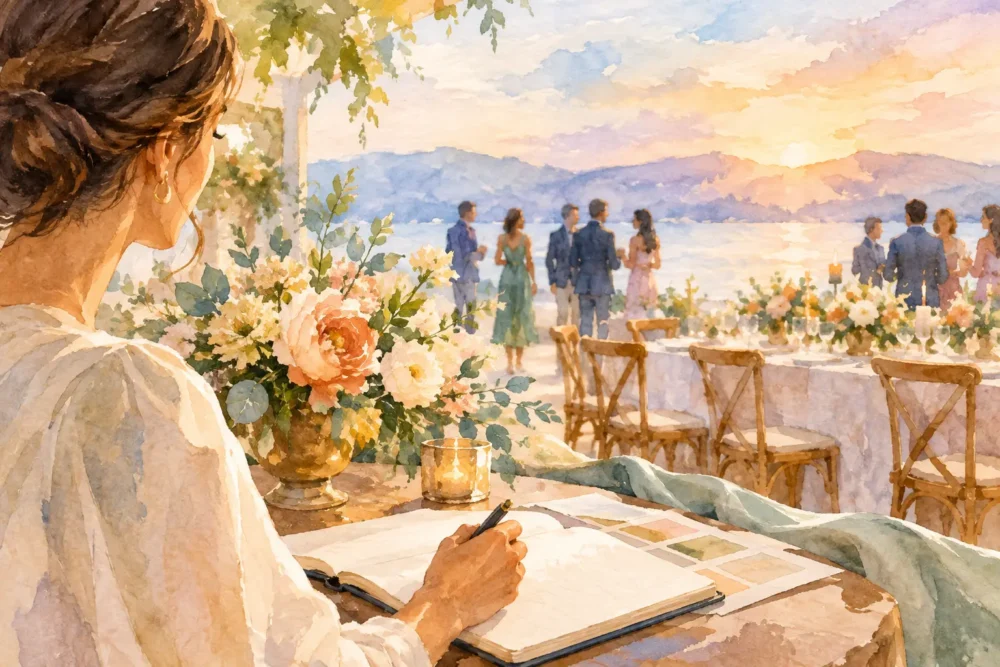
A private dinner is remembered less for the number of guests than for the feeling that settles over the table: candlelight reflected in glassware, a room comfortably removed from the evening’s noise, conversation allowed to unfold without urgency. The strongest private event outcomes begin there, with a clear sense of what guests should experience from arrival through the final course.
For a birthday, anniversary, rehearsal dinner, corporate gathering, or intimate welcome evening in Sedona, food is essential, but it is not the only measure of success. The setting, pace, service, and thoughtful details must work in concert. When they do, the occasion feels personal rather than programmed.
Define the Private Event Outcome Before Selecting Details
The first decision is not the menu. It is the purpose of the gathering.
A couple hosting an anniversary dinner may want quiet, privacy, and a graciously unhurried pace. A host planning a business dinner may need an environment that supports conversation and allows guests to leave with a favorable impression of the company. A family marking a milestone may wish for warmth and ceremony without making the evening feel formal for formality’s sake.
These goals influence every subsequent choice. A celebratory event can welcome a more expressive cocktail reception and a composed dessert presentation. A gathering intended for meaningful conversation benefits from a table arrangement that keeps every guest included, restrained background activity, and courses timed to create natural pauses rather than interruptions.
It helps to describe the desired result in one sentence: “We want our guests to feel cared for and relaxed,” or “We want this evening to honor a life-changing occasion with elegance.” That statement gives the host and event team a useful standard for decisions that might otherwise feel minor.
The Setting Should Support the Occasion
A beautiful room is not merely a backdrop. It sets expectations before the first glass is poured. For private events, the right setting considers scale, atmosphere, acoustics, and the relationship between guests and the room.
An intimate group may be best served by a space that feels enclosed enough for easy conversation, rather than one that leaves a small party visually adrift. A larger gathering needs room for service to move with discretion and for guests to settle in without feeling crowded. In either case, a refined dining environment brings an advantage: the visual details are already considered, so additional decoration can remain restrained.
At René at Tlaquepaque, the character of the surrounding village and the restaurant’s European-inspired atmosphere can give a private occasion a sense of place. For visitors, that distinction matters. A private dinner in Sedona should feel connected to the destination, not interchangeable with an event room found anywhere else.
Hosts should also consider the level of privacy that is genuinely needed. Complete separation may be ideal for speeches, presentations, or confidential business discussion. For some celebrations, however, the energy of an elegant dining room enhances the evening. The best choice depends on whether guests should feel secluded, social, or gently part of a larger scene.
Consider the Arrival as Part of the Experience
The first ten minutes often determine whether an event feels composed. Clear arrival instructions, a warm welcome, and a prepared table give guests immediate confidence that the evening has been considered.
If guests are traveling from different parts of Sedona or arriving after a ceremony, build in a small margin before dinner begins. A rushed start can affect the entire meal. A calm welcome cocktail or a thoughtfully selected first pour offers guests time to arrive fully, greet one another, and enter the rhythm of the occasion.
Menu Planning Is an Expression of Hospitality
A private-event menu should offer pleasure without asking guests to make too many decisions at the table. A curated selection allows the kitchen and service team to maintain consistency, while giving the meal a sense of progression.
French Mediterranean cuisine is especially well suited to this purpose. It can move from bright, seasonal beginnings to more substantial courses with natural elegance, using texture, color, and restraint rather than excess. The menu should feel celebratory, yet appropriate to the time of day, the season, and the gathering itself.
There are trade-offs to consider. A tightly defined prix fixe menu creates a polished, synchronized experience and helps keep the evening on pace. It is often the strongest option for larger groups or events with a set schedule. A menu with more guest choice may feel generous and flexible, though it requires careful planning to preserve timing and accommodate a range of preferences.
Dietary needs deserve attention well before the event date. Asking guests in advance allows the chef to create alternatives with the same care as the primary menu. No guest should feel like an afterthought when a special plate is placed before them.
Wine and cocktails can also shape the mood. A welcoming aperitif encourages an easy beginning, while considered pairings can give each course more dimension. For a business event, a lighter approach may be appropriate. For a milestone dinner, a celebratory toast or a final dessert wine may provide the precise note of occasion the evening calls for.
Pace Is One of the Most Overlooked Private Event Outcomes
An excellent dinner has movement, but it never feels hurried. Courses arrive when guests are ready, not simply when the kitchen is ready to send them. Glasses are refreshed with awareness. Conversations are given room to continue.
This is where a clear event timeline is useful, particularly when toasts, remarks, or a presentation are involved. The most graceful moments are planned, then delivered without announcing their planning. A host may wish to offer remarks after the first course, when everyone is settled, or before dessert, when the evening naturally gathers toward a close.
Avoid overfilling the schedule. Private events sometimes lose their intimacy when every fifteen minutes carries another instruction, announcement, or activity. If the goal is connection, allow guests to converse. If the goal is recognition, give the honored person a moment that is not immediately followed by another demand for attention.
For events with guests of varying ages or travel schedules, an earlier reservation may offer a more relaxed cadence. For a romantic celebration, a later seating can invite a more lingering experience. Neither is universally better. The right timing is the timing that serves the people at the table.
Service Should Feel Present, Not Performative
In fine dining, attentive service is an art of observation. Guests should not need to search for assistance, yet they should never feel watched or interrupted. That balance becomes even more meaningful during a private event, where the host is often trying to be fully present with guests rather than manage logistics.
Share key details with the event team ahead of time: the name of the guest of honor, the desired moment for a toast, whether anyone has mobility considerations, and whether the occasion calls for a particular level of formality. These details allow service to anticipate rather than react.
A host should also decide how visible they want event coordination to be. Some prefer to direct all questions personally. Others would rather the restaurant quietly manage the evening once plans are confirmed. The latter often makes it easier for the host to enjoy their own event, but either approach can work when expectations are clear.
Measure Success by What Guests Carry With Them
Private event outcomes are not limited to a smooth check-in or a well-executed menu, though both matter. They are found in the softer evidence: guests remaining at the table a little longer than expected, a couple recalling the meal on a future anniversary, colleagues speaking more openly after an evening of thoughtful hospitality.
The most memorable occasions are rarely those with the most elaborate agenda. They are the ones in which intention, setting, and craft give people permission to be present with one another. Choose the details that create that feeling, then allow the evening enough space to become its own memory.