

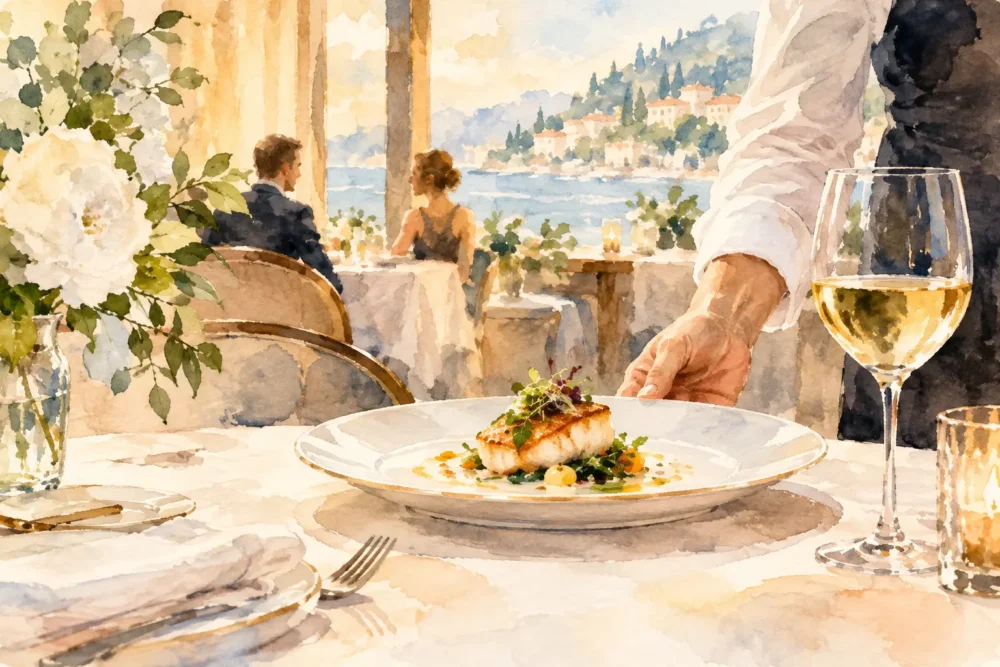
A memorable dinner rarely begins with the first bite. It begins in the moment a guest is greeted, when the room feels composed, the table is ready, and there is no need to wonder what comes next. Fine dining hospitality is the quiet discipline of creating that assurance throughout an evening: attentive without interruption, polished without stiffness, and personal without becoming familiar.
For guests who choose an elevated restaurant for an anniversary, a long-awaited evening in Sedona, or simply a beautiful meal shared with someone they love, the experience must offer more than excellent food. It should create the feeling that time has been set aside with intention.
Fine Dining Hospitality Is an Experience, Not a Script
Technical service matters. A properly presented wine, an informed answer about a dish, and a cleared plate at the right moment all reflect training and care. Yet guests do not visit a fine dining restaurant to observe a sequence of correct motions. They come to feel welcomed into an experience that has been considered from every angle.
That distinction is subtle, but essential. Scripted service can sound polished while still feeling distant. Genuine hospitality pays attention to the person in front of it. One table may wish to linger over an aperitif before considering the menu. Another may be celebrating and appreciate thoughtful acknowledgment without becoming the center of the room. A practiced dining room reads these differences with restraint.
The goal is not constant presence. It is confidence. Guests should know their needs will be noticed without having to search for someone, and they should have room to enjoy one another without feeling observed. This balance is the foundation of an intimate dining experience.
The Welcome Sets the Pace
A graceful arrival changes the entire rhythm of a meal. It starts with a host who recognizes that guests may be stepping in from a busy day, a drive through Sedona, or an afternoon spent exploring Tlaquepaque. The transition from outside to inside should feel immediate and calm.
A warm greeting, an easy confirmation of the reservation, and an escort to a prepared table communicate that the evening is already in capable hands. These details may seem small, but they remove friction. In fine dining, ease is a form of luxury.
The setting carries equal weight. Lighting should flatter conversation rather than compete with it. Music should give the room texture without asking guests to speak over it. Table spacing, glassware, linens, and flowers all shape how a guest settles in. None should demand attention for its own sake. Their purpose is to support the people at the table and the food they have come to enjoy.
A refined room also benefits from clear expectations. Restaurants built for romance and conversation are not trying to be everything to every occasion. A calm, adult-centered atmosphere is part of the offering, particularly for guests who have chosen the evening for connection, celebration, or quiet pleasure.
Service Should Be Present, Never Performative
The finest service often goes unnoticed in the moment because it feels natural. Water is refreshed before a glass is empty. A napkin is replaced with discretion. A server recognizes a pause in conversation and waits rather than interrupting. Courses arrive with an unhurried rhythm that allows each one to be appreciated.
That rhythm matters because pacing is deeply personal. A prix fixe dinner may invite a more leisurely progression, with time between courses for wine, conversation, and anticipation. A guest attending a performance or returning to a hotel may prefer a slightly quicker pace. Neither preference is wrong. Hospitality means adjusting gracefully while protecting the integrity of the kitchen and the experience of the room.
Knowledge is another expression of care. A server should be able to describe a preparation clearly, explain the role of a seasonal ingredient, and offer wine or cocktail guidance that feels useful rather than persuasive. The best recommendation begins with a question: Are you hoping for something bright and mineral-driven? Do you prefer a richer red with your entrée? Would you like the dessert to be the final course, or a shared finish to the evening?
This is not performance for performance’s sake. It is craft in service of pleasure.
The Kitchen and Dining Room Share One Promise
Guests experience a restaurant as a whole, even though many hands contribute to a single dinner. The kitchen creates flavor, temperature, texture, and presentation. The dining room provides context, timing, and care. When those teams are aligned, a plate arrives at its proper moment with an explanation that adds value, not noise.
French Mediterranean cooking is especially well suited to this kind of hospitality because it rewards attention to detail. A delicate sauce, a perfectly timed fish course, a thoughtful garnish, or a dessert with contrast and balance can be diminished by rushed delivery or a distracted explanation. Conversely, elegant service cannot compensate for food that lacks precision. The standard must be shared.
Seasonality also gives the experience a sense of place and occasion. A menu that changes with ingredients offers guests a reason to return, but it also asks the staff to remain fluent in the details. When the team understands why a particular produce item, seafood selection, or preparation is on the menu, the dining room can speak with quiet confidence about the chef’s intention.
At René at Tlaquepaque, that connection between setting and craft is central to the meal. A French Mediterranean dinner in a romantic courtyard should feel coherent from the first cocktail through dessert, not like excellent components placed beside one another.
Anticipation Is More Valuable Than Interruption
There is a common misconception that luxury service means frequent check-ins. In reality, repeated interruptions can make an evening feel managed rather than enjoyed. Hospitality becomes more sophisticated when it anticipates needs without inserting itself into every conversation.
This requires observation. A server may notice that guests are sharing each course and arrange the table accordingly. A member of the team may recognize a birthday from the reservation notes and coordinate a discreet acknowledgment. If a diner has mentioned an allergy, the reassurance should be clear and calm, never anxious or overly public.
Discretion is particularly meaningful during significant occasions. Some guests want a celebratory flourish. Others want their milestone to remain between the people at the table. Fine dining hospitality respects both choices. It never assumes that more attention is always better.
The same principle applies to payment and farewell. Presenting the check should never feel like a signal that the table is being hurried out, just as allowing a table to linger should not mean leaving guests without care. A graceful close preserves the mood of the evening and leaves guests with the sense that their time mattered.
Why the Details Stay With Guests
People may remember the flavor of a remarkable dish for years. They also remember how a restaurant made them feel: relaxed after a demanding week, celebrated without spectacle, or fully present with someone important. Those memories are formed through details that are often invisible when they are done well.
It depends, of course, on the occasion. A business dinner needs privacy and reliable timing. A proposal calls for sensitivity and coordination. An anniversary may invite a slower, more romantic pace. The standards remain high, but the expression of hospitality should change to suit the purpose of the table.
This is why fine dining cannot be reduced to formal table settings or expensive ingredients. It is a living exchange between guests, kitchen, and service team. The finest version feels generous rather than grand, precise rather than rigid, and beautifully paced from arrival to departure.
When choosing a restaurant for an evening that deserves more than convenience, look for this kind of intention. The right room will give you space to savor the meal, the conversation, and the rare pleasure of being completely unhurried.