

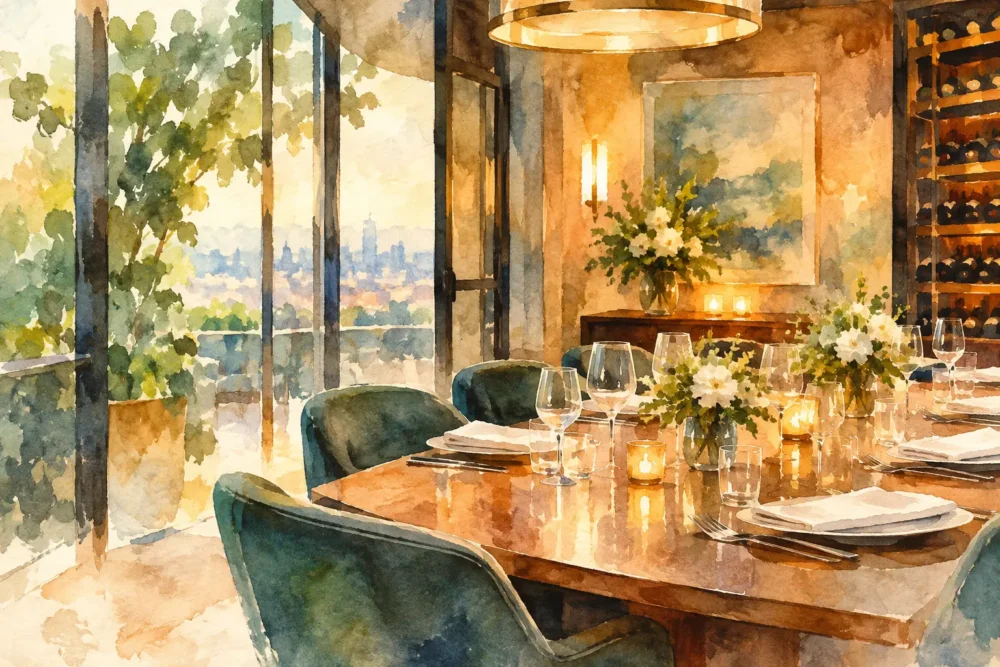
A private restaurant buyout changes the character of an evening. The room becomes yours: the light, the pace of dinner, the first toast, and the quiet conversations that follow. This guide to private restaurant buyouts is designed for hosts who want more than a place to gather. It is for those planning an occasion with intention, whether that means an anniversary dinner, an intimate wedding celebration, a milestone birthday, or a corporate evening that deserves genuine warmth.
A buyout is not simply a larger reservation. It is an agreement to reserve all or a defined part of a restaurant for your guests, often with a dedicated menu, service team, and event timeline. The details matter because they protect the quality of the experience for everyone in the room.
A Guide to Private Restaurant Buyouts: Begin With the Setting
Before discussing menus or budgets, consider the feeling you would like guests to carry home. A courtyard reception beneath Sedona’s evening sky calls for a different approach than a candlelit dinner in an intimate dining room. The best restaurant for a buyout is not necessarily the largest. It is the one whose setting, service style, and culinary point of view naturally suit your occasion.
Fine dining is especially well suited to gatherings where conversation is part of the purpose. A beautifully paced meal gives guests a shared rhythm without asking them to compete with a crowded bar, loud music, or a rushed sequence of courses. For a celebratory group that values wine, seasonal cooking, and attentive hospitality, that calm is part of the occasion itself.
Ask the restaurant how the space is normally experienced. Will your group have exclusive use of the dining room, patio, or both? Is there a minimum guest count, or is the buyout priced around a food and beverage commitment? How does the room feel with your anticipated number of guests? Forty guests in a room made for sixty can feel relaxed and graceful. The same forty in a compact dining room may be better served by a private-room arrangement than a full buyout.
At René at Tlaquepaque, the appeal of a private gathering lies in the marriage of French Mediterranean craft, a romantic village setting, and an unhurried dining experience. For hosts, the essential question is whether that particular sense of place reflects the people and purpose behind the celebration.
Understand What a Buyout Includes
The word buyout can mean different things at different restaurants. In most cases, the host commits to a minimum spend that allows the restaurant to close a space, or the entire venue, to the public. That minimum may include food and beverages, while taxes, gratuity, administrative fees, rentals, and additional staffing may be separate. Clarify this early, before comparing proposals.
A thoughtful proposal should identify the event date and timing, guest-count range, reserved areas, menu format, beverage plan, applicable fees, deposit schedule, cancellation terms, and the final guarantee date. It should also explain what happens if your guest count falls below the contracted minimum or exceeds the room’s comfortable capacity.
Do not view the minimum solely as a room fee. It represents the restaurant’s ability to dedicate its kitchen, dining room, and service staff to your party. Still, transparency is essential. Ask whether there are separate charges for a reception hour, valet coordination, floral installation, audiovisual needs, printed menus, cake service, or extended event time. A polished evening is easier to create when the financial picture is clear from the beginning.
Choose a Menu With Focus
For a group dinner, a curated prix fixe menu is often more elegant than offering every item from the regular menu. It gives the kitchen a clear plan, preserves the timing of each course, and ensures that every guest receives the same level of care. Choice can still be offered with restraint: perhaps two entrées, selected in advance, along with thoughtful accommodations for vegetarian, vegan, gluten-sensitive, or other dietary needs.
The strongest event menus feel connected to the restaurant rather than generic. Let the chef’s signature approach guide the evening. Seasonal ingredients, refined sauces, composed plates, and a considered dessert course create a meal with a point of view. A menu that attempts to satisfy every possible preference can lose that character and place unnecessary strain on service.
Ask when final entrée selections and dietary information are due. For guests with serious allergies, provide details rather than broad labels. A professional kitchen can prepare more confidently when it knows whether a guest requires an ingredient avoidance, has celiac disease, or follows a specific dietary practice. No restaurant can responsibly promise an allergen-free environment, but clear communication allows the team to advise you appropriately.
Plan the Wine and Cocktail Experience
A private buyout is an opportunity to make the beverage program part of the evening’s hospitality. A welcome glass of sparkling wine, a signature cocktail, or a brief passed reception can establish the mood before guests sit down. At dinner, a limited selection of wines chosen to complement the menu usually feels more considered than an unrestricted open bar.
There is no single correct approach. A wine-paired dinner is ideal when the meal itself is the centerpiece and guests appreciate a guided progression of flavors. Hosted cocktails and wine by the glass offer more freedom for a social celebration. Consumption billing can work for a smaller, restrained group, while a package offers predictability for a larger event. Discuss the group honestly with the restaurant. The right plan depends on your guests, the timing, and the tone you want to maintain.
Build an Evening That Breathes
One of the most common mistakes in private event planning is trying to fill every minute. An elegant dinner does not need a crowded agenda. Guests need time to arrive, greet one another, enjoy an aperitif, and settle into the room before the first course is served.
For a seated evening, allow space between courses for conversation and brief remarks. If there will be a toast, anniversary tribute, presentation, or speech, share the plan with the event manager in advance. A kitchen can hold a course for a few minutes when it knows what is coming. Unexpected interruptions, however, can compromise the temperature and presentation that fine dining requires.
Keep formal remarks concise. The most memorable words are often offered before the room grows restless, not after. If you are planning music, consider its role carefully. Gentle live music during a reception may heighten the atmosphere; amplified entertainment in a dining room may work against the intimacy that drew you to the space in the first place.
Guest Comfort Is Part of the Host’s Craft
The invitation should make the evening easy to understand. Include the arrival time, location, dress expectation if relevant, parking guidance, and whether dinner follows a reception. For a destination gathering in Sedona, provide guests enough notice to arrange travel and allow extra time for the village setting, photographs, or a pre-dinner stroll.
Seating deserves equal attention. A long communal table can feel celebratory and connected, while rounds encourage smaller conversations. Couples may appreciate being seated together, but avoid creating tables that divide people who have traveled to share the occasion. If your group includes guests with mobility considerations, arrange accessible seating and routes before the event rather than improvising at the door.
Children, where appropriate, should be considered with the same candor. Some celebrations are designed as adult occasions, particularly in a refined dining environment built around quiet conversation and a deliberate pace. State the invitation’s intention graciously. Clear expectations are kinder than uncertainty for every guest.
Confirm the Details Without Losing the Romance
A final planning conversation, usually held shortly before the event, is where good ideas become a composed evening. Confirm the guaranteed guest count, table plan, final menu, dietary notes, bar arrangement, timeline, décor delivery, payment method, and the name of the on-site decision-maker. Give the restaurant one reliable contact who can answer questions during the event without drawing the host away from guests.
It is also wise to discuss the small moments that shape the experience: when the host will arrive, where gifts may be placed, whether a cake is being delivered, and how photographs will be handled. These are modest details, but they prevent interruptions later.
A private restaurant buyout is at its best when guests sense care without seeing the work behind it. Choose a setting with character, allow the culinary team room to do what it does beautifully, and leave enough space in the evening for the people at the table to enjoy one another.