

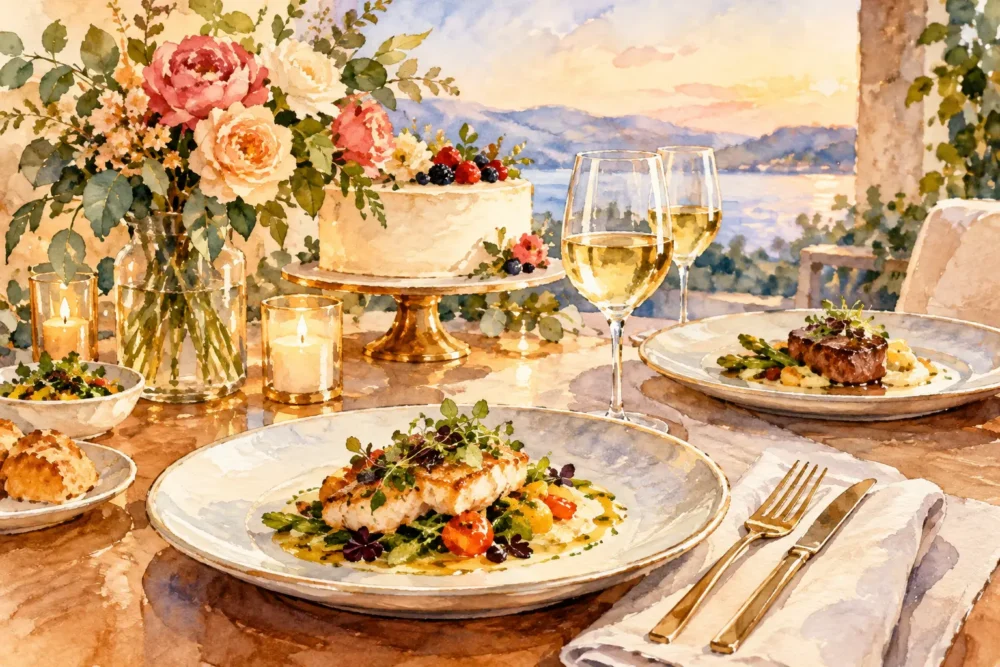
A memorable birthday dinner is not built around excess. It is shaped by intention: a first glass poured at the right moment, courses that progress gracefully, and enough time between them for laughter, conversation, and anticipation. This birthday dinner menu example is designed for hosts and diners who want the celebration to feel composed rather than crowded – festive, generous, and beautifully paced.
For an intimate gathering, the finest menu is rarely the longest one. A thoughtful sequence of bright flavors, comforting richness, and a striking final course gives the occasion a sense of occasion without asking guests to make too many decisions. French Mediterranean cooking offers an especially fitting language for this kind of evening: seasonal produce, pristine seafood and meats, aromatic herbs, supple sauces, and wine selected to complement rather than compete.
What Makes a Birthday Dinner Menu Feel Special
A birthday menu should have contrast. Begin with something light and inviting, then move toward a centerpiece with depth and warmth before ending on a dessert that feels unmistakably celebratory. If every course is rich, the meal can feel heavy before the candles arrive. If every course is delicate, the dinner may lack the satisfying sense of generosity guests expect from a special occasion.
Consider the season, the time of dinner, and the guest of honor’s preferences before choosing dishes. A summer birthday may call for chilled seafood, ripe tomatoes, citrus, and rosé. In the cooler months, a silky soup, braised entrée, and darker red wine create a more enveloping mood. The goal is not to follow a rigid formula. It is to let each course make the next one more welcome.
Pacing matters as much as the menu itself. A leisurely three-course dinner can feel more luxurious than a hurried five-course meal. For a small celebration, plan for an aperitif, a first course, an entrée, dessert, and perhaps a final pour of coffee or digestif. This leaves room for the evening to unfold naturally.
Birthday Dinner Menu Example for Six Guests
The following birthday dinner menu example is suited to an elegant evening at home, a private dining gathering, or a reservation at a refined restaurant. It favors French Mediterranean flavors while allowing each course to retain its own character.
Aperitif: Champagne, sparkling wine, and savory nibbles
Welcome guests with a chilled glass of Champagne or a dry sparkling wine alongside warm marinated olives, salted almonds, and small gougères filled with herb cheese. The aperitif should awaken the appetite, not replace the first course. Keep the bites small, salty, and restrained so guests can settle into conversation without filling up too early.
For a nonalcoholic option, serve sparkling water with grapefruit, rosemary, and a few drops of orange blossom water. It carries the same sense of ceremony and looks considered in a proper stemmed glass.
First Course: Crab cake with fennel and citrus
A delicately seared crab cake makes a graceful opening, especially when paired with shaved fennel, citrus segments, and a light saffron aioli. The sweetness of the crab and brightness of the salad establish a fresh beginning, while the warm crust gives the dish enough presence for a birthday table.
If shellfish is not suitable for the group, substitute a composed salad of roasted beets, whipped goat cheese, pistachios, and petite greens. It offers color, texture, and a similar balance of earthiness and acidity.
Second Course: A small seasonal soup
A brief interlude can distinguish a dinner from an ordinary meal. In autumn or winter, offer a small bowl of roasted tomato bisque finished with basil oil and crème fraîche. In spring, asparagus velouté with a touch of lemon and chervil feels lighter and more verdant.
This course is optional, and that is an important distinction. Include it when the evening is intended to be unhurried and the portions remain modest. Skip it for a later dinner or when guests prefer a simpler progression from starter to entrée.
Entrée: Filet mignon with Provençal accompaniments
For the main course, filet mignon with a red wine shallot reduction brings classic celebration-table appeal. Serve it with pommes purée enriched with butter, haricots verts, and roasted wild mushrooms. The plate feels luxurious without becoming overly ornate, and the components can be prepared with calm precision.
A beautiful alternative is seared branzino with fennel confit, fingerling potatoes, and a lemon-caper beurre blanc. This is an excellent choice for a warmer evening or for a guest of honor who prefers seafood. When offering more than one entrée, keep the sauces and side dishes complementary so the menu still feels unified.
Dessert: Chocolate mousse cake with berries
The birthday dessert should offer a clear moment of delight. A dark chocolate mousse cake with raspberry coulis, fresh berries, and softly whipped cream has the drama of a celebration cake while remaining elegant after a substantial entrée. Add candles just before it leaves the kitchen, rather than placing them on the table too soon.
Those who favor a brighter finish may prefer a lemon olive oil cake with mascarpone and macerated strawberries. It is particularly lovely after a seafood menu or on a warm Sedona evening, when a dense dessert may feel less appealing.
Final Pour: Coffee, tea, and a digestif
End with freshly brewed coffee or tea, accompanied by a modest pour of Cognac, Armagnac, or an herbal amaro for guests who enjoy it. This final gesture extends the celebration without introducing another full course. It also creates a natural moment for gifts, toasts, and lingering conversation.
Choosing Wine Without Overcomplicating the Evening
Wine pairing should support the meal’s rhythm, not turn dinner into a lecture. One sparkling wine for the opening and first course, followed by a single versatile white or red with the entrée, is often enough for a group of six. A crisp white Burgundy or a mineral-driven Rhône white suits crab, branzino, and vegetable-forward starters. For filet mignon, choose a balanced Bordeaux-style red, a refined Pinot Noir, or a Syrah with restraint and savory character.
If the table includes both fish and beef, serve a white with the first courses and move to a medium-bodied red for the meat. Guests enjoying the fish can continue with the white. There is no need to force one bottle to suit every plate when two thoughtful choices will do the work more elegantly.
Details That Protect the Mood
A polished birthday dinner depends on practical decisions made in advance. Confirm dietary needs before finalizing the menu, particularly allergies to shellfish, nuts, or dairy. Aim to prepare what can be prepared ahead of time, leaving only the elements that benefit from last-minute attention: searing, sauce finishing, plating, and the dessert presentation.
The table should feel inviting, not overproduced. Low flowers, candlelight, linen napkins, and room for shared platters or wine service are enough. Avoid arrangements tall enough to interrupt conversation. The most romantic setting allows guests to see one another clearly and remain present at the table.
At René at Tlaquepaque, the distinction of a birthday dinner lies in this same balance of setting and craft: composed courses, attentive hospitality, and an atmosphere that encourages guests to stay a little longer. Whether celebrating in a dining room or around your own table, allow the menu to create space for the people gathered there. The birthday will be remembered not only for what was served, but for how the evening felt.