

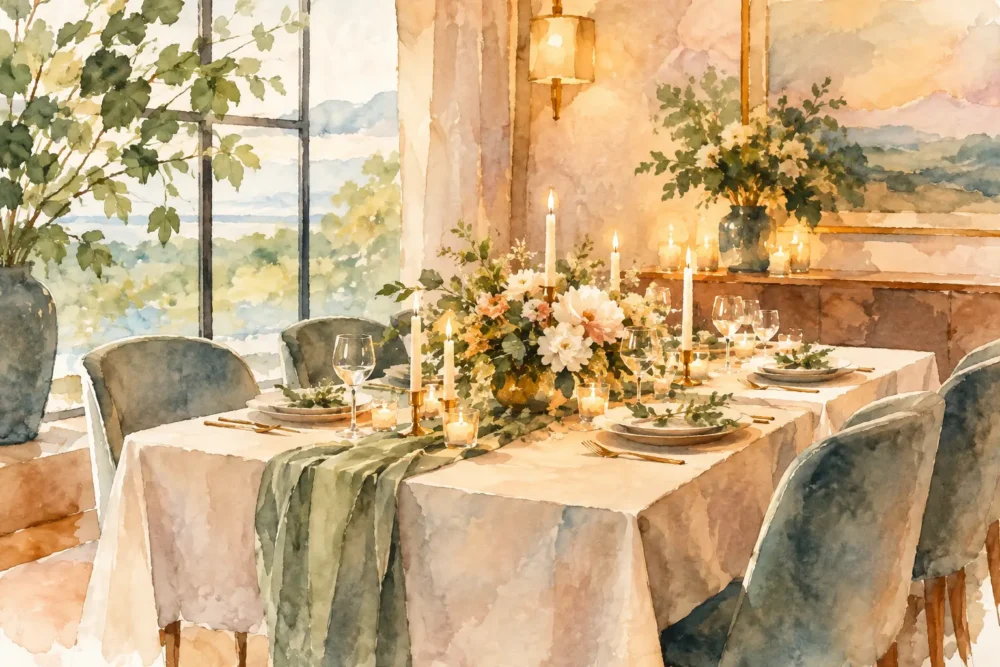
A private dinner should feel considered long before the first course arrives. Whether you are marking an anniversary, gathering close friends, hosting valued clients, or planning an intimate family celebration, knowing how to arrange private dining begins with one question: what should your guests feel when they leave the table?
The strongest private dining experiences are not simply larger reservations. They are shaped by intention, setting, and craft. A well-chosen room, a gracious pace of service, a menu that suits the occasion, and clear communication with the restaurant create the conditions for a celebration that feels effortless to guests and carefully composed behind the scenes.
Begin With the Purpose of the Gathering
Before contacting a restaurant, define the character of the occasion. A milestone birthday may call for a festive welcome cocktail and generous shared conversation. An anniversary dinner may be better served by a quieter table, candlelit surroundings, and a more leisurely progression through dinner. A business gathering often benefits from an arrival time that leaves space for guests to settle before any formal remarks begin.
This first decision guides the rest. Consider the number of guests, the preferred date, your ideal start and end time, and whether you want the evening to feel formal, relaxed, or somewhere between. If speeches, a toast, floral arrangements, or a cake are part of the plan, mention them early. Details that seem small can affect the room setup, service timing, and menu presentation.
Private dining does not always require complete exclusivity. Depending on your group size and priorities, a secluded table or semi-private area within an elegant dining room can offer the intimacy you want while preserving the energy of a beautiful restaurant. Full room buyouts provide greater freedom with timing and personalization, but they can carry higher minimums and may be best reserved for larger gatherings.
How to Arrange Private Dining at the Right Time
Fine dining venues often book their most desirable dates well in advance. For a weekend celebration, holiday season event, or group traveling to Sedona, begin your inquiry several weeks or months ahead whenever possible. Smaller gatherings may have more flexibility, especially on a weekday, but early planning allows the restaurant to offer more thoughtful options.
When you reach out, provide a clear starting picture: your preferred date, guest count, occasion, expected budget range, and any scheduling constraints. It is also helpful to share whether guests are local or visiting, if the group includes dietary needs, and whether the evening has a fixed endpoint. This gives the events team what they need to recommend an appropriate space and format rather than beginning with assumptions.
Ask about the restaurant’s private dining minimum, deposit requirements, cancellation terms, and final guest-count deadline. These policies protect both the host and the restaurant. A minimum may be based on food and beverage spending rather than a room-rental fee, which can be a sensible arrangement when the meal itself is the focus. Clarifying the details early prevents avoidable surprises later.
Choose a Menu That Supports the Evening
A private dinner menu should honor the occasion without making guests work too hard to enjoy it. For a small group, ordering from the regular menu may preserve spontaneity. For larger parties, a curated prix fixe menu usually creates a more polished experience. It allows the kitchen to maintain the quality and timing of each course while giving the host confidence around cost and pacing.
The best menu structure depends on the group. A two- or three-course dinner can suit an evening with a program or an earlier finish. A more elaborate progression – perhaps beginning with passed hors d’oeuvres, followed by a seated dinner and dessert – creates a celebratory, unhurried rhythm. If the gathering is centered on culinary discovery, consider asking whether the chef can build a menu around seasonal ingredients or a particular French Mediterranean sensibility.
Offer a modest number of choices rather than an expansive selection. Too many decisions can slow service and interrupt conversation. A well-designed menu might include one vegetarian option and one alternative for a common dietary restriction, with advance selections collected when the group is larger. The restaurant should be told about allergies and dietary requirements in advance, not at the table, so the kitchen can prepare with appropriate care.
Dessert deserves its own moment. A composed dessert course, a celebratory cake, or a pairing with after-dinner coffee and digestifs can give the evening a graceful finish. If you plan to bring a cake, ask about outside dessert policies, plating, storage, and any associated fee before making arrangements.
Build Wine and Cocktails Into the Plan
Wine is often where a private dinner becomes especially memorable. You may prefer a hosted bar with a defined selection, bottles chosen for the table, or pairings matched to each course. None is universally better. A hosted bar can feel generous but requires a clear spending framework; selected wines offer more predictability; pairings lend a sense of occasion and culinary direction.
Speak with the restaurant about the character of your menu and guests. A knowledgeable team can suggest sparkling wine for arrival, versatile whites and reds for dinner, and a final pour that complements dessert. Include thoughtful nonalcoholic options as well. A carefully prepared zero-proof aperitif ensures every guest is welcomed into the ritual of the evening.
Respect the Pace of Fine Dining
A private dinner is not improved by rushing it. Guests need time to arrive, greet one another, read the room, and enjoy the first course without feeling pushed toward the next. When planning a schedule, allow roughly 20 to 30 minutes for arrival and cocktails, then let the number of courses determine the remaining pace.
If there will be remarks, schedule them with service in mind. A toast is often most effective just after guests are seated or between courses, when glasses are full and the room is attentive. Avoid placing speeches at the exact moment plates are being served. The restaurant can advise on the natural pauses in the evening, helping the occasion feel composed rather than over-orchestrated.
For celebrations involving guests who do not know one another, seating matters. A single long table can create a convivial, unified atmosphere, while several smaller tables may encourage easier conversation for larger groups. Keep hosts, honorees, and key guests placed intentionally, but do not turn the seating chart into a formal exercise unless the event truly calls for it.
Set Expectations With Your Guests
An elegant invitation is practical as well as personal. Share the arrival time, location, parking guidance if applicable, and dress expectation if you have one. Let guests know whether dinner is hosted, whether guests will select from a limited menu, and whether you need advance dietary information.
For destination celebrations, send these details early enough for travelers to plan. Sedona evenings invite a sense of occasion, yet temperatures can shift after sunset and the village setting may encourage guests to arrive a few minutes early to enjoy the surroundings. A simple, precise note helps everyone arrive relaxed.
If children are attending, consider honestly whether the restaurant’s atmosphere and the length of the evening suit them. Fine dining is most rewarding when every guest can enjoy the calm, conversation, and attention to detail that the setting is designed to offer.
Confirm the Details, Then Let the Evening Breathe
About one week before the event, confirm the final guest count, menu selections, dietary needs, beverage plan, timeline, and payment arrangements. Reconfirm any personal touches, including name cards, flowers, printed menus, or a cake. Assign one trusted guest or family member as a point person if you would rather not manage questions during your own celebration.
At René at Tlaquepaque, private occasions are best approached as an extension of refined hospitality: a gathering shaped by beautiful surroundings, disciplined culinary technique, and the pleasure of lingering over a table with people who matter.
Once the plans are in place, resist the urge to direct every moment. The most memorable private dinners leave room for an unexpected story, a second glass poured at the right time, and the quiet pleasure of a table that does not need to be anywhere else.