

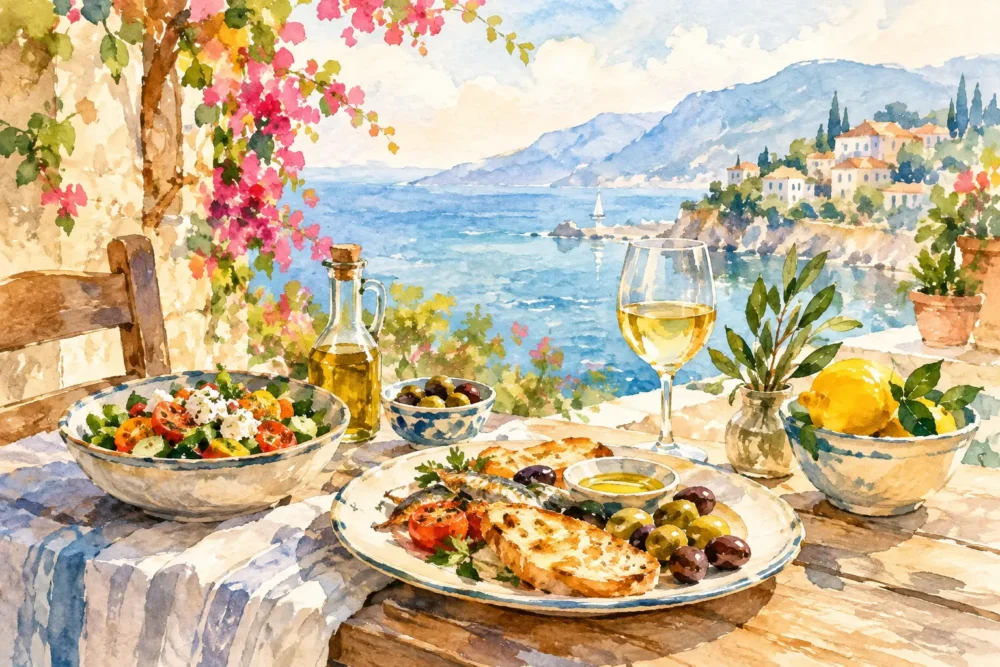
Midday in Sedona has its own particular light: warm stone, shifting shade, and the quiet invitation to linger a little longer than planned. A Mediterranean lunch experience belongs in that rhythm. It is not simply a pause between galleries, red-rock views, or an afternoon of shopping. When shaped with intention, it becomes a composed interlude of seasonal cooking, gracious service, and conversation allowed to unfold at its natural pace.
What Defines a Mediterranean Lunch Experience?
The Mediterranean table is often described through its ingredients, and rightly so. Olive oil, bright citrus, herbs, vegetables, seafood, tender meats, and fruit all have a place in its vocabulary. Yet ingredients alone do not create the experience. Its character comes from restraint, balance, and a respect for what is in season.
At lunch, that balance matters even more. The meal should feel generous without becoming heavy, polished without feeling overly formal, and satisfying enough to carry the afternoon forward. A delicate preparation of fish, a thoughtfully composed salad, a vegetable-driven entrée, or a classic French technique applied to regional ingredients can each offer a sense of place without demanding excess.
French culinary craft adds another dimension. It brings precision to sauces, a confident understanding of texture, and an eye for presentation that never needs to compete with the plate itself. The result is food with clarity: familiar flavors rendered with greater depth, and each element given a reason to be there.
Seasonality Sets the Tone
A memorable lunch begins before the first plate reaches the table. Seasonal ingredients give a menu its energy. In cooler months, that may mean a deeper sauce, a warming soup, or earthy vegetables with a touch of richness. In warmer weather, the focus may shift toward delicate greens, bright herbs, ripe fruit, and clean, citrus-driven flavors.
This is also where a carefully paced kitchen reveals its value. Fine dining at noon should not feel like dinner compressed into an hour. Courses arrive with consideration, allowing a guest to enjoy the details while still preserving the ease that makes lunch so appealing.
The Setting Is Part of the Meal
A Mediterranean lunch experience is inseparable from its surroundings. Dining outdoors or near a sunlit courtyard changes the way a meal is remembered. The gentle movement of a tree canopy, the sound of water nearby, and the warmth of stone under afternoon light create an atmosphere no dining room design can fully replicate.
Within Tlaquepaque Arts & Shopping Village, that sense of place is especially immediate. The village’s old-world architecture and courtyard passageways lend themselves naturally to a European-inspired meal. At René at Tlaquepaque, French Mediterranean cuisine is served within a setting that favors beauty, calm, and the pleasure of staying at the table.
Atmosphere is not decoration. It is an active part of hospitality. A well-spaced table offers privacy. Thoughtful lighting allows the room to feel intimate rather than enclosed. A composed service style leaves room for guests to speak, celebrate, or simply sit quietly together. For couples, travelers, and locals seeking a more meaningful afternoon, these details distinguish a destination lunch from a convenient one.
Why an Unhurried Pace Matters
The modern lunch break often treats time as a problem to solve. Orders are placed quickly, meals arrive quickly, and the table turns quickly. There are days when that convenience serves its purpose. But it asks little of the diner beyond efficiency.
An elevated lunch offers another possibility. It creates a small distance from the schedule, even when the day remains full. A properly chilled glass of wine, a cocktail prepared with care, or a thoughtful nonalcoholic pairing signals that the meal has begun. A second course invites another conversation. Dessert, if the moment calls for it, becomes a final pleasure rather than an afterthought.
This does not require an entire afternoon. It does require choosing a setting where the pace is deliberate. For an anniversary visit, a birthday, a gathering with a close friend, or a quiet day away from home, that distinction is worth protecting.
Wine, Cocktails, and the Art of Pairing at Lunch
Wine at lunch need not be grand to be meaningful. A well-chosen glass can sharpen the herbal notes in a dish, balance richer flavors, or echo the brightness of citrus and seasonal produce. Crisp whites and rosés are natural companions for seafood and lighter preparations, while a measured pour of red can be ideal alongside lamb, mushrooms, or a more savory sauce.
The better question is not whether a particular wine is expected. It is what will make the meal feel complete. Some guests prefer a single glass with an entrée. Others enjoy a more structured pairing across several courses. Both approaches have a place when the selection is guided by the food and the occasion.
Cocktails deserve the same consideration. At their best, they provide fragrance, acidity, and balance without overwhelming the palate. An aperitif can set an elegant tone before the first course, while a carefully made after-lunch drink may extend the occasion for a few quiet minutes more.
Choosing the Right Kind of Lunch
Not every midday meal needs ceremony, and not every occasion calls for the same table. The value of a Mediterranean lunch experience depends on what the day is meant to hold.
For visitors, it can be a restorative pause between Sedona’s trails, shops, and scenic drives. For locals, it may be a welcome way to mark an ordinary Wednesday with something more considered. For a couple, it can be an alternative to a late dinner, offering the same romance with the softness of daylight. And for hosts planning a private gathering, lunch often provides a gracious format for conversation, toasts, and shared plates without the length of an evening event.
There are practical considerations as well. An unhurried meal is best enjoyed when the schedule permits it. Guests with a tightly timed tour or an immediate drive may prefer a simpler format. Those who can make room for two or more courses, a pairing, and perhaps dessert will find greater pleasure in the full expression of the experience.
A Few Details That Elevate the Occasion
The most satisfying fine-dining lunches are built from small acts of attention. Arriving with time to settle in changes the mood from the start. Choosing courses with the table in mind, rather than ordering by habit, can make the meal feel more cohesive. Asking the service team for a wine suggestion is often more rewarding than selecting the most familiar label.
Dress, too, can be part of the pleasure. There is no need for formality for its own sake, but a lunch in a refined setting rewards a sense of occasion. More importantly, it benefits from presence. Phones put aside, conversation unhurried, and an openness to the details on the plate allow the meal to do what it does best.
That is the quiet appeal of the Mediterranean table. It makes room for flavor, craftsmanship, and connection without asking for spectacle. On your next Sedona afternoon, leave enough space in the day for a table where the food is considered, the setting is beautiful, and the final course does not need to be rushed.