

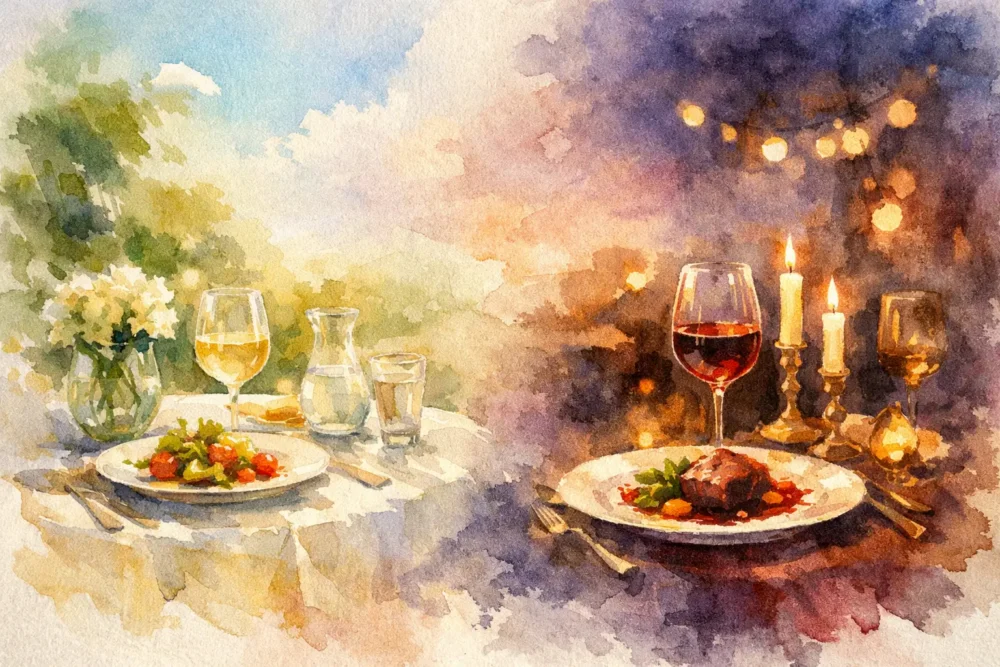
A table at noon and a table after sunset can offer two entirely different expressions of the same restaurant. When considering lunch vs dinner fine dining, the question is not simply which meal costs less or fits more easily into a schedule. It is about the kind of occasion you wish to create: a graceful pause within a Sedona afternoon, or an intimate evening shaped by candlelight, wine, and unhurried conversation.
Both can be memorable. The more fitting choice depends on your reason for gathering, the pace you prefer, and how fully you want the meal to occupy the day.
The Difference Begins With the Mood
Fine dining lunch carries a distinct lightness. Daylight in the courtyard, a crisp glass of wine, and a thoughtfully prepared plate create an experience that feels polished without requiring the evening to revolve around it. It is especially well suited to guests who want to pair a refined meal with shopping at Tlaquepaque, an art-filled afternoon, or time spent taking in Sedona’s red-rock setting.
Dinner changes the frame. The room settles into a more private rhythm, and the experience naturally becomes more immersive. Guests tend to arrive with fewer obligations waiting afterward, which leaves space for a longer aperitif, a considered bottle of wine, several courses, and conversation that does not need to compete with the clock.
Neither atmosphere is inherently better. Lunch feels open, luminous, and composed. Dinner feels romantic, layered, and quietly celebratory. Choosing between them begins with deciding whether you want the meal to complement the day or become its centerpiece.
Lunch vs Dinner Fine Dining: Pace and Presence
The most meaningful distinction is often pace. A fine dining lunch can still be intentional, with attentive service and carefully executed cuisine, yet it generally accommodates a more defined window of time. For locals meeting a client, friends gathering before an afternoon engagement, or visitors reserving time between exploring Sedona’s galleries and trails, lunch offers elegance without asking for an entire evening.
That does not mean lunch should feel rushed. A refined midday meal invites diners to slow down enough to notice the details: the balance of a French Mediterranean sauce, the freshness of seasonal ingredients, the texture of a composed dessert. The difference is one of tempo rather than standards.
Dinner invites a deeper sense of arrival. There is time to settle in, choose cocktails, discuss the menu, and let each course unfold at its proper pace. For couples who rarely have a quiet evening together, that spaciousness is often the point. The meal becomes a setting for connection, not merely an interval between other plans.
If your group has a firm curtain time, lunch may be the more comfortable choice. If the occasion calls for lingering, dinner is usually the natural answer. A reservation is most enjoyable when your expectations match the rhythm of the service.
Menus May Share a Point of View, Not a Format
At a destination restaurant, lunch and dinner are often guided by the same culinary philosophy while expressing it differently. Seasonal produce, disciplined technique, and Mediterranean brightness may appear at both services, but menu formats and portioning can change according to the hour, the season, and the chef’s direction.
Lunch may favor dishes that feel vivid and satisfying without carrying the weight of a long evening meal. It can be an ideal time to enjoy a beautifully prepared entrée, a composed salad, or a lighter wine pairing while retaining energy for the rest of the day. For travelers, it also offers a way to experience a restaurant’s culinary character when evening reservations are already devoted to another plan.
Dinner often allows for more breadth. A prix fixe experience, richer preparations, a longer dessert finish, and more expansive wine pairings can make the evening menu feel especially suited to a milestone. That said, a larger format is not automatically the correct choice for every guest. Some diners value a focused lunch precisely because it offers craft and pleasure with greater ease.
Before reserving, review the current service and menu details. Seasonal restaurants evolve, and a particular dish, prix fixe offering, or dining format may be available at one service but not the other. Let the menu inform the occasion rather than assuming lunch is always casual or dinner is always formal.
When Lunch Is the More Thoughtful Choice
A midday reservation is particularly appealing when the purpose is connection without ceremony. It works beautifully for a polished business conversation, a birthday gathering that leaves the evening free, or a reunion with friends who prefer natural light and a relaxed afternoon rhythm.
Lunch can also be a sophisticated choice for couples. A daytime date feels slightly unexpected, especially while traveling. After a morning drive through Oak Creek Canyon or an afternoon in the village, a leisurely table offers the pleasure of fine dining while leaving room for a sunset overlook, a spa appointment, or a quiet evening elsewhere.
For guests who appreciate exceptional food but prefer a more restrained commitment of time and appetite, lunch is not a compromise. It is a different kind of luxury: present, beautifully paced, and integrated into a full day.
When Dinner Sets the Right Tone
Dinner is made for occasions that deserve their own atmosphere. Anniversaries, engagements, milestone birthdays, and long-awaited visits to Sedona often call for an evening that feels removed from ordinary routine. As daylight fades, the pleasure of a composed dining room and a romantic courtyard becomes part of the memory alongside the cuisine.
It is also the right choice when wine is central to the experience. A longer dinner allows a bottle to develop across courses and gives diners the time to explore pairings with care. The same is true for dessert. At lunch, dessert may be a lovely finishing note; at dinner, it can be the lingering final chapter of an evening designed around indulgence.
At René at Tlaquepaque, dinner is especially compelling for guests seeking French Mediterranean cuisine within an intimate, European-inspired setting. The experience rewards those who arrive ready to be present, dress for the occasion, and let the evening unfold without urgency.
Consider the Practical Trade-Offs
Fine dining is most enjoyable when logistics are handled before you arrive. Lunch may be easier to reserve on a full Sedona itinerary, while prime dinner times can require earlier planning, particularly around weekends, holidays, and major travel seasons. If a specific date matters, reserving ahead protects the occasion from becoming a last-minute search.
Budget can also shape the choice, though it should be considered with nuance. Lunch may offer a more approachable way to enjoy refined service and cuisine, while dinner can invite a more expansive investment through multiple courses, cocktails, wine, and dessert. The better value is not necessarily the lower check. It is the experience that fits what you came to celebrate.
Finally, consider energy. After a day of hiking, sightseeing, or travel, some guests welcome the ease of lunch and a quieter evening. Others prefer to rest during the afternoon and arrive for dinner refreshed. Sedona rewards both approaches, provided you allow enough time to enjoy the table rather than treating it as another item on an itinerary.
Choose the Meal That Matches the Memory
The finest choice is the one that gives your occasion the right amount of room. Reserve lunch when you want refinement woven beautifully into a day of discovery. Choose dinner when you want the evening itself to feel set apart, with every course, glass, and conversation given time to matter.
A memorable meal does not depend on the hour. It depends on intention, setting, and the pleasure of sharing a table without needing to rush away.