

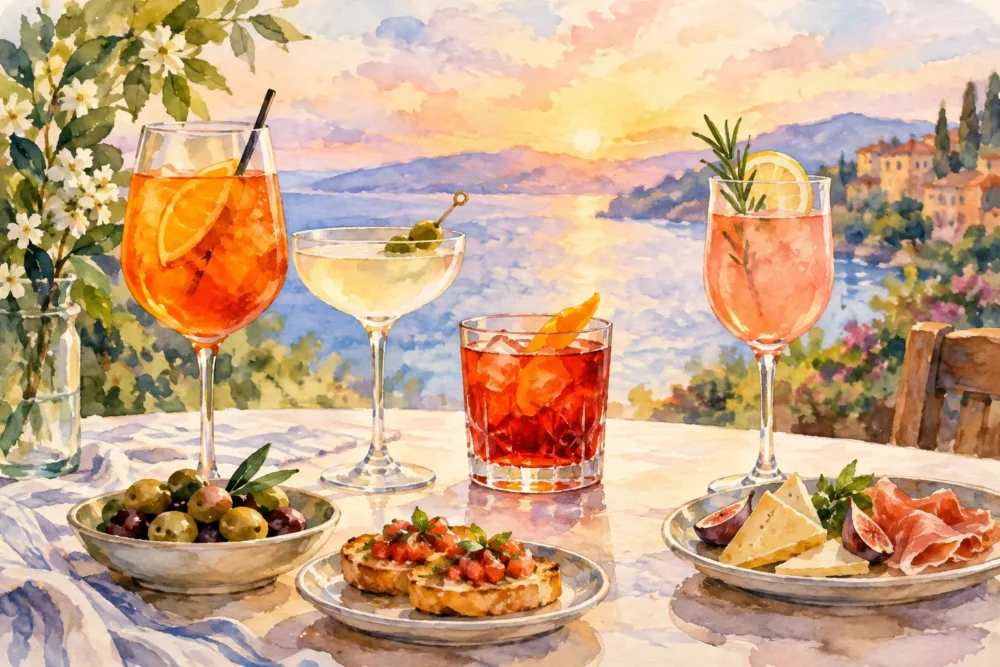
A well-chosen aperitif changes the character of an evening before the first course arrives. Knowing how to select aperitif cocktails is less about choosing the most elaborate drink and more about reading the moment: the season, the menu, the hour, and the company at the table. The right glass offers brightness and anticipation, inviting conversation while leaving the palate beautifully awake for dinner.
An aperitif should feel like an opening note, not the main event. Its purpose is to awaken appetite with dryness, gentle bitterness, acidity, or aromatic lift. That distinction matters. A rich, sweet, or overly spirited cocktail may be delicious on its own, but it can overwhelm the delicate pleasures of a carefully composed meal.
How to Select Aperitif Cocktails With Intention
Begin with a simple question: what kind of dinner is about to unfold? A chilled, mineral-driven aperitif suits a warm evening and lighter Mediterranean dishes. A softly bitter, herbaceous cocktail can be especially lovely before roasted meats, mushrooms, or deeper autumn flavors. The drink need not match every course precisely. It should simply create a graceful passage from arrival to the table.
Consider its weight as carefully as its flavor. An aperitif is usually lower in alcohol than a classic martini or Manhattan, often lengthened with sparkling wine or soda, and served in a modest portion. This allows the first drink to remain companionable through the opening moments of dinner without dulling the senses. A restrained pour also supports an unhurried pace, leaving room for wine or another considered pairing later in the meal.
Dryness is often the most reliable guide. Crisp sparkling wine, dry vermouth, fino-style sherry, and botanical spirits offer character without coating the palate in sugar. A trace of fruit, citrus, or floral liqueur can add charm, but sweetness should be held in balance by acidity or bitterness. Think of a lemon twist, not a dessert garnish; a suggestion of stone fruit, not a syrupy statement.
Let the menu lead
Aperitifs are chosen before food is ordered surprisingly often, yet a glance at the menu can sharpen the decision. If the meal begins with oysters, crudo, goat cheese, or a bright salad, choose something saline, sparkling, or citrus-led. A French 75-style cocktail, a dry spritz, or a vermouth and soda with a lemon peel may set the right tone.
For dishes built around olive oil, herbs, tomato, grilled fish, or garden vegetables, seek Mediterranean ease. A cocktail with dry vermouth, gin, citrus, and a subtle herbal note can echo those flavors without imitating them. Drinks with pronounced smoke, vanilla, heavy cream, or dense tropical fruit are usually better reserved for another setting.
If dinner will feature duck, lamb, braised meats, truffles, or an expressive sauce, an aperitif can carry a little more bitterness and spice. A classic Negroni variation, prepared with a lighter hand and a generous orange expression, may work beautifully. It depends on the guest, of course. For someone sensitive to bitterness, a sparkling rosé aperitif or a delicate wine-based cocktail provides a softer entrance.
Choose a Style That Fits the Occasion
The setting deserves a place in the decision. An anniversary dinner calls for a drink that feels festive but poised, perhaps Champagne with a measured splash of elderflower or an elegant sparkling cocktail finished with citrus. A long-awaited evening with friends may welcome a lightly bitter spritz that encourages conversation without demanding attention.
At René at Tlaquepaque, where the courtyard, candlelight, and deliberate rhythm of dinner are part of the experience, the most satisfying aperitifs tend to have clarity. They arrive cold, beautifully composed, and quietly aromatic – a first gesture of hospitality rather than a performance.
Season also changes the equation. In Sedona’s warmer months, bright acidity and effervescence offer relief from the heat. Grapefruit, lemon, cucumber, basil, and dry sparkling wine can feel especially refreshing, provided the herbal elements remain clean rather than sweet. During cooler evenings, gentian, orange peel, rosemary, and restrained warming spice bring depth without requiring a heavy drink.
A useful rule is to choose one dominant idea. A cocktail may be citrus-forward, bitter, floral, herbal, or sparkling, but it does not need to be all of those at once. Complexity should emerge in the glass, not announce itself through an overlong list of ingredients. The most graceful aperitifs often look simple because their proportions have been considered with care.
Three reliable aperitif directions
When the menu is still under consideration, three styles offer dependable starting points. A dry sparkling aperitif is ideal for guests who want lift and celebration. A vermouth-forward cocktail suits those drawn to botanicals, subtle bitterness, and a lower-proof first round. A spirit-led but well-diluted classic, such as a martini variation or a restrained Negroni, works for diners who prefer structure and savor.
Within those styles, ask for guidance rather than ordering by habit. A skilled bartender can adjust the expression of a drink: more citrus for freshness, less bitterness for softness, a different vermouth for herbal depth, or an added splash of soda for a more relaxed pace. These small changes are not fussy. They are the detail that turns a pleasant cocktail into one that belongs to the evening.
What to Avoid Before Dinner
The common misstep is treating an aperitif as a pre-dinner indulgence rather than part of the meal’s architecture. Cocktails high in sugar can make subsequent wines seem sharper and savory dishes less vivid. Heavy pours can also blur the appetite, particularly before a tasting menu or a dinner designed around nuanced sauces and seasonal ingredients.
This does not mean every aperitif must be austere. A small amount of liqueur can bring fragrance and roundness, while a richer base spirit can be entirely appropriate on a cold night. The question is proportion. If the drink feels complete enough to replace dessert, it is likely too substantial for the beginning of dinner.
Be mindful of timing as well. One aperitif, enjoyed while settling into the room and considering the menu, creates anticipation. Two strong cocktails before the first course can shift the evening away from food, wine, and conversation. Fine dining is not hurried, but neither is it without rhythm. The best first drink respects that rhythm.
The Value of Asking for a Pairing
There is no need to arrive with a fixed answer. Share what you enjoy and what you plan to eat. A guest who says, “I prefer gin, not too sweet, and I am starting with seafood,” gives a bartender the information needed to make a thoughtful recommendation. The same is true for someone who enjoys bubbles but dislikes bitterness, or prefers agave spirits and wants something light enough for a multi-course dinner.
This conversation can be particularly rewarding when the kitchen works with seasonal ingredients. An aperitif might reflect a particular herb, citrus, or savory accent appearing later on the menu, creating continuity without becoming literal. When done well, the drink and food seem to have been introduced to one another rather than forced into a pairing.
The glass in hand should make you more curious about dinner, not less. Choose an aperitif with brightness, restraint, and a touch of character, then allow the evening to unfold at its own elegant pace.