

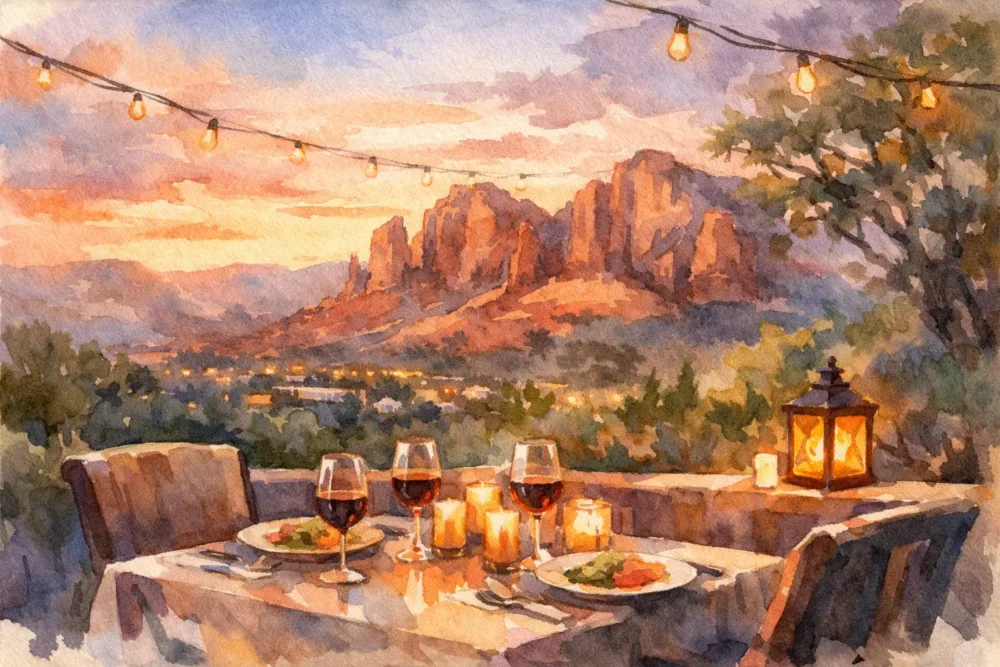
A beautiful dining room can feel effortless when you arrive at exactly the right moment – your table set, the pace unhurried, the evening already beginning to take shape. That is why so many guests ask, are reservations needed for dinner? In a destination like Sedona, where romantic evenings, weekend travel, and special occasions often guide the night, the answer is usually yes – especially if the experience matters as much as the meal.
Dinner reservations are not always required in every restaurant, on every night, at every hour. But when the setting is refined, the menu is carefully paced, and the expectation is a polished evening rather than a quick seat, reserving ahead is less about formality and more about protecting the experience you came for.
Are reservations needed for dinner at fine dining restaurants?
At fine dining restaurants, reservations are often the standard rather than the exception. A restaurant built around intention, setting and craft is rarely designed for high-turnover, last-minute traffic. Tables are spaced for comfort. Service is timed with care. The kitchen is pacing courses, not rushing plates. In that environment, reservations help preserve the quality of the evening for every guest in the room.
For diners, that means less waiting, more predictability, and a stronger sense that the night has been thoughtfully prepared. For the restaurant, it allows staffing, kitchen flow, and table timing to stay aligned with the level of hospitality guests expect. That is especially true for adults planning anniversaries, birthdays, date nights, or destination dinners while visiting Sedona.
There is also a practical reality. Fine dining rooms usually have fewer tables than casual restaurants. A sought-after dining room may look calm, but that calm is often the result of careful planning behind the scenes.
When dinner reservations matter most
If your evening falls into a high-demand category, a reservation is wise. Weekends are the most obvious example, especially Friday and Saturday nights when both locals and visitors are looking for a memorable dinner. Holiday weekends, spring travel season, and peak tourism periods in Sedona can fill dining rooms quickly.
Reservations also matter more when the dinner carries emotional weight. If you are celebrating an anniversary, planning a proposal dinner, entertaining out-of-town guests, or simply hoping for a romantic evening with no uncertainty attached, leaving the night to chance rarely improves it. A reservation creates a cleaner beginning to the experience.
Timing makes a difference too. Prime dining hours – typically between 6:00 and 8:00 p.m. – are the first to disappear. If you prefer a specific window, want enough time for cocktails and dessert, or hope to enjoy dinner at a leisurely pace, booking ahead gives you more control over the shape of the evening.
Are reservations needed for dinner in Sedona specifically?
In Sedona, reservations are often a very good idea because dining demand is shaped by tourism, scenery, and occasion-based travel. Many guests are not simply looking for food. They are looking for a memorable night in a place known for beauty, atmosphere, and celebration. That shifts dinner from a casual decision to part of the destination itself.
Sedona also has a pattern many travelers underestimate. Visitors spend the day hiking, shopping, exploring galleries, or returning from spa appointments and scenic drives, then begin looking for dinner around the same narrow window. That creates concentrated demand at exactly the time most people want to dine.
Restaurants with established reputations, distinctive settings, or elevated menus tend to feel that pressure most sharply. A romantic courtyard, a mature dining room, or a chef-driven menu attracts guests who plan ahead, and those plans fill the evening long before walk-ins begin to ask.
For that reason, diners visiting René at Tlaquepaque, or any similar destination restaurant in Sedona, should assume reservations are recommended for dinner, particularly on weekends and during travel peaks.
When you might be able to dine without one
There are situations where a reservation may not be strictly necessary. Midweek dinners can be more flexible, especially during quieter seasons. Early seatings and later evening tables sometimes offer more availability than the center of the night. Solo diners or couples may also have an easier time finding space than larger parties.
Still, possible is not the same as ideal. Even if a table opens up for a walk-in, the timing may not be what you wanted, and the experience may begin with waiting rather than settling in. If your standards are high, that distinction matters.
A spontaneous dinner can be charming in the right setting. But for a restaurant where ambiance, timing, and attentive service are central to the appeal, reservation-based dining usually feels more graceful from the start.
What a reservation really does for the experience
Many guests hear the word reservation and think only of access. In fine dining, it also shapes quality. When a restaurant knows who is arriving and when, it can manage the room in a way that supports quiet elegance rather than congestion.
That means the host can receive guests with more ease. The service team can pace the room thoughtfully. The kitchen can maintain consistency through the evening instead of absorbing sudden spikes. None of that is visible in a dramatic way, but guests feel it almost immediately. The room feels composed. The courses arrive in rhythm. The evening breathes.
This is one of the quiet distinctions between casual dining and a more refined restaurant. In a fine dining setting, the best hospitality often depends on preparation.
How far ahead should you book dinner?
That depends on the night you want and how specific your plans are. For a standard weekday dinner, a few days ahead may be enough. For a Friday or Saturday evening, booking one to two weeks ahead is often the safer choice, especially during Sedona’s busier seasons.
For holiday weekends, major local events, or milestone celebrations, even earlier is reasonable. If the dinner is part of a proposal, anniversary trip, or birthday itinerary, booking well in advance gives you the best chance of securing your preferred time and removing uncertainty.
If your schedule changes often, it is still worth reserving. You can always adjust within the restaurant’s policy window. That is usually far easier than trying to find a prime table at the last minute.
Signs you should definitely make a reservation
Some dinners plainly deserve one. If any of these apply, booking ahead is the more polished choice:
- You want to dine between 6:00 and 8:00 p.m.
- You are visiting on a weekend or holiday.
- You are celebrating a birthday, anniversary, or romantic occasion.
- You have a larger party.
- You are choosing a restaurant known for fine dining, atmosphere, or limited seating.
None of this means every restaurant is impossible without planning. It simply means the more intentional the evening, the more sensible a reservation becomes.
The trade-off between spontaneity and certainty
There is a certain romance to deciding on dinner in the moment. Some evenings invite that. But the trade-off is simple: spontaneity can be exciting, while reservations offer certainty, timing, and a calmer beginning.
For casual meals, spontaneity often wins. For elevated dining, certainty usually does. If you care about where you sit, when you dine, how the evening unfolds, and whether the restaurant can meet the tone of the occasion, reserving ahead is not restrictive. It is part of curating the night well.
That is particularly true for couples and travelers who want dinner to feel like an event, not an errand. A refined meal asks for a little forethought, and rewards it.
So, are reservations needed for dinner? Not always. But when the restaurant is sought after, the setting is intimate, and the night matters to you, the better question is whether you want to leave a memorable evening to chance. In most cases, a reservation is the simplest way to let the night begin exactly as it should.