

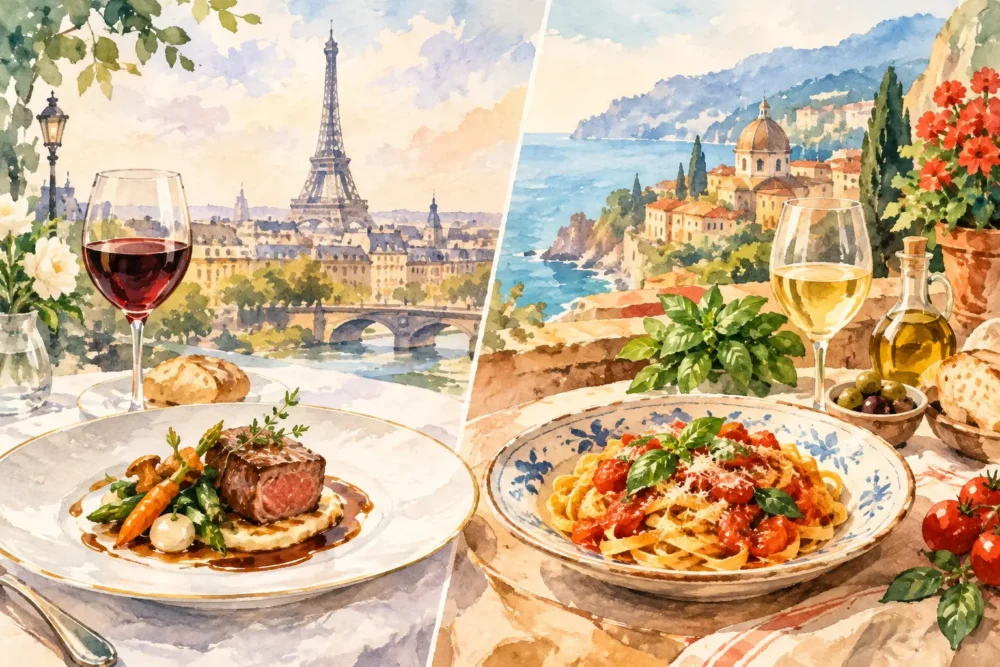
A candlelit table, a well-chosen bottle, and a meal allowed to unfold without haste can belong to either tradition. Yet French vs Italian fine dining offers two distinctly composed versions of elegance. One often draws its drama from precision, structure, and polished technique; the other from the clarity of exceptional ingredients, regional memory, and a generosity that feels effortless.
Neither is inherently more refined. The difference lies in where each cuisine places its emphasis, and in the kind of evening a guest hopes to have.
French vs Italian Fine Dining at the Table
At its most considered, French fine dining is architectural. A dish is composed with intention: sauce, texture, temperature, color, and garnish each have a role in the final impression. Classical French cooking established much of the vocabulary of modern restaurant cuisine, from foundational sauces and precise knife work to the choreography of formal service. Even when a contemporary chef pares back the presentation, the discipline beneath it remains visible.
Italian fine dining begins from a different conviction. It asks whether the tomato is at its peak, whether the olive oil carries peppery brightness, whether the pasta has the proper resistance, whether a fish needs anything more than heat, salt, acid, and a fine accompaniment. Technique is deeply present, but it is often designed to recede. The ingredient, its place of origin, and its season take the foreground.
This distinction can be felt in a single course. A French preparation might frame a pristine piece of fish with a reduction built over hours, a precisely prepared vegetable, and a garnish that sharpens every bite. An Italian preparation may allow equally beautiful fish to remain almost disarmingly simple, paired with a seasonal vegetable, fragrant oil, and a restrained sauce. Both require judgment. They simply express it differently.
The French Expression of Craft
French fine dining carries a sense of ceremony that can make an ordinary evening feel like an occasion. The experience is often shaped by layers: an amuse-bouche before the first course, a measured progression of plates, and a dessert with as much technical consideration as the savory menu. Sauces may bring richness and depth, while classical methods such as confit, braising, poaching, and soufflé reward patience.
This is not to say French cuisine must be heavy or formal in an old-fashioned sense. The best contemporary French kitchens value restraint as much as richness. They may use Mediterranean vegetables, delicate seafood, bright herbs, and clean broths, while retaining the control that defines the tradition. A sauce is not there to conceal an ingredient. It is there to give the plate dimension.
For diners, the appeal is often the feeling that every detail has been considered before they arrive. The folded napkin, the temperature of the bread plate, the timing between courses, and the quiet confidence of the service all support the food. French dining can be especially suited to anniversaries, proposals, and evenings when the ritual itself is part of the pleasure.
The Italian Expression of Place
Italian fine dining is frequently more regional in its language. A menu may evoke Piedmont through truffles and delicate agnolotti, Tuscany through olive oil and game, Emilia-Romagna through filled pasta and aged cheese, or the coast through raw seafood, citrus, and briny simplicity. There is no single Italian cuisine, which is precisely why it remains so compelling.
A great Italian meal often feels abundant without being excessive. It may begin with antipasti made for sharing, then move through pasta, fish or meat, vegetables, and dessert in a rhythm that invites conversation. The hospitality can feel relaxed, but its ease should not be mistaken for casualness. Properly made fresh pasta, a fine risotto, or a clear, balanced brodo demands exacting skill.
Italian fine dining also has a particular gift for making luxury feel familiar. A plate of handmade pasta can carry as much prestige as caviar when the flour, filling, sauce, and timing are impeccable. The memory is not always of intricate presentation. It is of flavor that feels complete, honest, and difficult to forget.
Service, Pacing, and the Mood of the Room
The contrast between French and Italian dining is sometimes overstated, particularly in modern restaurants where chefs borrow freely across borders. Still, each tradition offers a different emotional center.
French service tends toward discretion and formality. The staff may guide the table through the menu with precise language, replenish wine with minimal interruption, and maintain a composed distance that protects the intimacy of the occasion. The room often feels calm, elegant, and deliberately paced. A multi-course meal is an invitation to settle in.
Italian service is often more animated and familial, even at a highly polished level. A server may speak enthusiastically about a grandmother’s recipe, a producer, or a pasta shape tied to a particular town. The dining room can feel lively, warm, and communal. Yet the finest Italian restaurants also understand when to step back, allowing a celebratory dinner or a quiet conversation to remain undisturbed.
The setting matters as much as the style of service. A formal French dining room may suit a night of polished romance. A beautiful Italian dining room may offer a more expansive, convivial energy. In either case, genuine fine dining means the room supports the meal rather than competing with it.
Wine Tells a Similar Story
French wine service often reflects a tradition of appellations, cellar depth, and precise pairing. Burgundy beside duck, Champagne with a delicate opening course, or Sauternes with a carefully constructed dessert can create a progression of extraordinary nuance. The pleasure is in the conversation between the glass and the plate.
Italian wine brings its own expressive range. Barolo, Brunello, Amarone, Etna Rosso, and the white wines of Friuli or Campania can be deeply complex, but they often arrive with an inviting sense of place. Italian wines are famously comfortable at the table, able to move easily between food, conversation, and a long evening.
For diners, the most satisfying choice is not about national allegiance. It is about balance. A thoughtful wine professional will consider richness, acidity, spice, texture, and the pace of the meal, whether the bottle comes from France, Italy, or closer to home.
Which Style Is Right for Your Evening?
Choose French fine dining when you want a sense of composed occasion, intricate technique, and a menu that unfolds with formal grace. It is a natural fit for a milestone dinner, an evening of quiet romance, or a guest who delights in the details that transform a meal into theater.
Choose Italian fine dining when you want regional character, soulful simplicity, and food that feels both elevated and welcoming. It can be ideal for a celebratory table, a leisurely meal among close friends, or anyone drawn to the beauty of a few exceptional ingredients handled with care.
Of course, the most memorable restaurants need not choose one philosophy entirely. French technique and Mediterranean brightness can meet beautifully, especially in a destination setting where the meal is meant to be savored rather than rushed. At René at Tlaquepaque, that balance leaves room for classic craft, seasonal expression, fine wine, and the unhurried conversation that makes a special dinner linger.
The best choice is the one that matches the mood you want to create. Reserve the evening, arrive with time to spare, and let a beautifully prepared meal give the table its own language.