

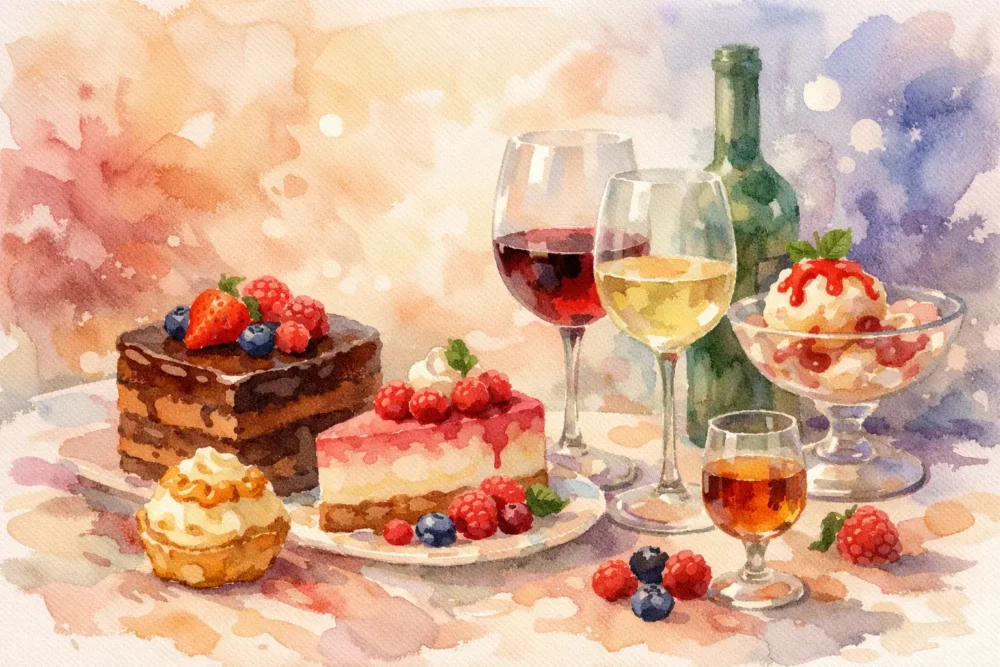
A beautiful dessert deserves more than a final pour chosen by habit. The best dessert and wine pairings create a measured conversation between sweetness, acidity, texture, and aroma – extending the pleasure of dinner without overwhelming the palate. In an intimate dining room, this final course can become one of the evening’s most memorable moments: a luminous fruit tart alongside a cool, fragrant wine, or dark chocolate met with the quiet depth of a fine Port.
The guiding principle is simple, though the result can feel wonderfully complex: the wine should be at least as sweet as the dessert. When the dessert is sweeter than the wine, the wine can taste thin, tart, or unexpectedly bitter. From there, pairing becomes an exercise in intention. Consider the dessert’s dominant flavor, its weight, and whether it leans toward brightness, creaminess, spice, or richness.
The Best Dessert and Wine Pairings Begin With Balance
Sweetness is the essential starting point, but it is not the whole story. Acidity gives a pairing lift. A dessert wine with fresh acidity can keep a buttery pastry or rich custard from feeling heavy, much as a squeeze of lemon brightens a classic sauce. Texture matters as well. A silky mousse often welcomes a wine with softness and depth, while crisp pastry and fresh fruit benefit from a wine with a more vivid, lifted character.
Intensity should also be matched with care. A delicate poached pear can disappear beside a dense, fortified red, just as a powerful chocolate torte may make a light Moscato seem inconsequential. The aim is not for wine to imitate dessert exactly. Contrast can be exquisite when it is considered: bright acidity against cream, gentle bubbles against a tender cake, or nutty oxidative notes beside caramelized fruit.
Serving temperature shapes the experience more than many diners realize. Sweet wines are generally most graceful when lightly chilled, allowing their freshness to come forward. Port and other fortified wines may be served slightly cool rather than warm, particularly in Sedona’s sunlit seasons. Proper temperature preserves detail and keeps sweetness poised.
Chocolate Desserts and Port, Banyuls, or Recioto
Dark chocolate is among the most rewarding ingredients to pair, but it asks for a wine with sufficient concentration. Its cocoa bitterness, roasted notes, and lingering richness can flatten a wine that is too light or too dry. A ruby Port offers ripe berry fruit and generous sweetness, making it a classic companion for a flourless chocolate cake, chocolate torte, or truffle-centered dessert.
For a more nuanced expression, Banyuls brings a French Mediterranean sensibility to dark chocolate. This fortified wine from the sun-warmed vineyards of southern France often carries notes of dried cherry, cocoa, spice, and warm earth. It can echo the dessert’s depth while retaining a savory edge. Recioto della Valpolicella, an Italian sweet red, is another beautiful choice when a dessert features black cherry, dark berries, or a subtle spice element.
Milk chocolate requires a slightly lighter touch. Its creamier, sweeter profile can work especially well with tawny Port, whose flavors of toasted nuts, caramel, and dried fruit complement praline, hazelnut, and butterscotch. White chocolate, despite its name, contains no cocoa solids and is better approached as a rich, buttery canvas. Pair it with late-harvest Riesling or a gently sparkling Moscato when the dessert includes berries, citrus, or tropical fruit.
Fruit Tarts Call for Bright, Late-Harvest Wines
Fruit desserts are often misunderstood as easy pairings. Their apparent lightness can conceal bracing acidity, herbal nuances, and pastry richness. The wine needs enough sweetness to meet the fruit, while its acidity should keep the combination vivid rather than syrupy.
Late-harvest Riesling is an elegant choice for apple tart, pear galette, peach dessert, or a tart accented with apricot. Its natural acidity offers clarity, while aromas of stone fruit, honey, and citrus peel can mirror the dessert without turning the pairing into a single note. A lightly chilled glass brings particular grace to an apple dessert scented with cinnamon or vanilla.
For lemon tart, citrus soufflé, or a dessert with grapefruit and orange, consider a late-harvest Sauvignon Blanc or a well-balanced Sauternes-style wine. The wine’s honeyed richness softens the dessert’s edge, while its acidity keeps the citrus radiant. This is a pairing where sweetness alone is not enough. A wine that is overly lush and low in acidity can make a lemon dessert taste sharper by contrast.
Berry desserts offer more flexibility. Strawberries and raspberries are lovely with Brachetto d’Acqui, a gently sparkling Italian red with floral perfume and a low-alcohol, celebratory character. For a mixed-berry tart or berry coulis over vanilla custard, a sparkling rosé with a touch of sweetness can be equally charming. The bubbles refresh the palate between bites and lend the final course a sense of occasion.
Creamy Desserts Need Acidity and Lift
Crème brûlée, panna cotta, cheesecake, and custard-based desserts invite a wine with brightness. Their appeal lies in their satin texture and gentle richness, which means the wrong pairing can feel excessively heavy. Sweet wines with a clean line of acidity provide the contrast these desserts need.
A classic crème brûlée is particularly lovely with Sauternes or a similar botrytized dessert wine. Notes of honey, vanilla, apricot, and saffron resonate with the caramelized sugar crust and vanilla-scented custard. Yet the finest examples retain enough freshness to keep every spoonful composed.
Cheesecake depends on its garnish. A plain vanilla or New York-style cheesecake can be splendid with late-harvest Riesling. Add strawberries, and a lightly sweet sparkling rosé becomes compelling. Add a dark berry compote, and Brachetto may be the more natural choice. The base dessert provides the richness; the fruit determines the wine’s direction.
Panna cotta offers a similarly adaptable canvas. With roasted stone fruit, choose late-harvest Riesling. With espresso or caramel, a tawny Port may be more persuasive. With vanilla and fresh berries, Moscato d’Asti supplies floral fragrance and gentle effervescence without overpowering the dessert’s delicacy.
Caramel, Nuts, and Coffee Favor Tawny Styles
Desserts built around caramel, toasted nuts, brown butter, dates, coffee, or warm spice often find their match in wines with developed, oxidative character. Tawny Port is a natural favorite. Its flavors can suggest walnut, dried fig, toffee, orange peel, and baking spice, making it an inspired partner for pecan tart, almond cake, sticky toffee pudding, or a caramelized apple dessert.
Vin Santo, the traditional Italian dessert wine often associated with Tuscany, also brings lovely depth to nut-forward desserts. Its dried-fruit and almond notes are especially appealing with biscotti, hazelnut pastry, or a cheese course that finishes with honey and fruit. Because these wines can be concentrated, portion and pacing matter. A smaller pour allows the details to linger without making the end of the meal feel heavy.
Coffee desserts introduce a useful distinction. Tiramisu, with mascarpone and cocoa, can welcome Vin Santo, tawny Port, or a sweet Marsala. A bitter espresso-forward chocolate dessert may call for Banyuls or a richer Port. The key is to account for bitterness. A wine with enough sweetness and ripe fruit will soften the coffee’s edge and preserve its aromatic complexity.
A Few Pairings Require Restraint
Not every dessert wants a wine companion. Very icy desserts, such as sorbet, can dull the palate and make wine taste muted. If served together, choose a wine with equally vivid fruit and serve both in modest portions. Extremely sweet confections can be difficult as well, particularly those dominated by frosting or candy-like flavors. In those moments, coffee, tea, or a carefully made after-dinner cocktail may be the more satisfying conclusion.
Cheese can also occupy the space between dessert and savory course. Blue cheese with Sauternes is a classic for good reason: salt, pungency, honeyed sweetness, and acidity find an elegant equilibrium. Aged cheeses with dried fruit and nuts often welcome tawny Port. These combinations are ideal for diners who prefer a less traditional finish while still savoring a final glass of wine.
At René at Tlaquepaque, an unhurried dessert course is an invitation to remain present at the table. Select a pairing that honors the dessert’s character, then give it the time it deserves. The finest final sip should not feel like an afterthought, but a quiet, beautifully composed close to the evening.