

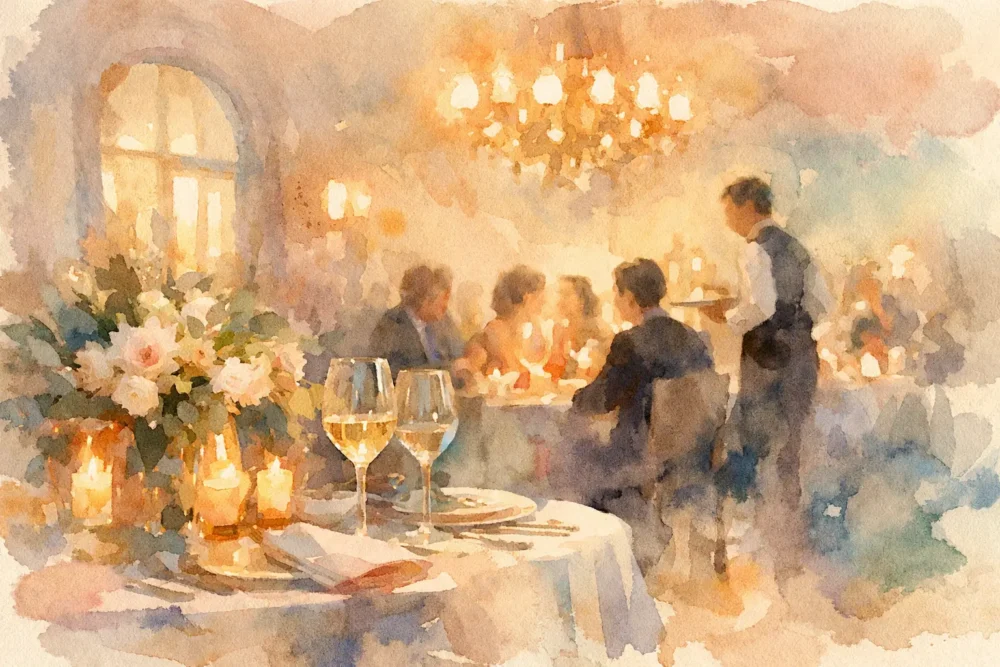
A private celebration is remembered in fragments: the glow of the courtyard at dusk, the first glass of Champagne, a beautifully composed plate placed before the table, and the ease of a room where every guest can be fully present. The right private event restaurant gives those moments a setting worthy of the occasion. It does more than provide a meal. It shapes the pace, mood, and hospitality that carry a gathering from arrival through the final course.
For anniversaries, milestone birthdays, rehearsal dinners, intimate corporate gatherings, and reunions among close friends, a restaurant can offer an especially graceful alternative to a traditional event venue. The kitchen, service team, wine program, and atmosphere are already in place. The question is not simply whether a restaurant has a private room, but whether it has the intention and craft to make a group feel genuinely hosted.
What to Look for in a Private Event Restaurant
The most successful private events begin with a setting that suits the people at the table. A celebration for twelve guests has different needs than a reception for forty, and a business dinner calls for a different rhythm than a wedding-adjacent evening. Before considering menus or table linens, consider the feeling you want guests to carry with them.
For an intimate occasion, look for a space that feels composed rather than oversized. Rooms with warm light, considered architecture, thoughtful acoustics, and a sense of privacy invite conversation without requiring a formal program. In Sedona, a courtyard or dining room framed by art, stone, and natural beauty can make the location part of the occasion rather than a backdrop to it.
Privacy itself can take several forms. A fully enclosed room offers focus and discretion, which may be ideal for a hosted business dinner or family toast. A semi-private section can feel more connected to the energy of the restaurant while still giving a group its own sense of place. Neither is inherently better. The right choice depends on whether guests will value seclusion, liveliness, or a balance of both.
Atmosphere Is Part of the Menu
Fine dining is an accumulation of details. The weight of the glassware, the spacing between courses, the music level, the polish of service, and the comfort of the chairs all influence how a meal is received. For private events, these details matter even more because guests have gathered with purpose.
A refined restaurant should preserve the qualities that made you choose it in the first place. An event should not feel like a standard banquet moved into a beautiful room. It should retain the restaurant’s point of view: the cuisine prepared with care, the room kept calm and elegant, and the service delivered with an unhurried confidence.
That is particularly valuable for hosts who want to entertain generously without turning the evening into a production. When the environment is already distinctive, there is less need for elaborate décor or a crowded itinerary. Guests can settle in, enjoy one another, and allow the meal to create the occasion’s natural progression.
A Private Event Restaurant Needs a Thoughtful Menu
The menu is often the most personal decision a host will make. It should feel celebratory, but it must also work gracefully for the group, the kitchen, and the occasion’s timing. A chef-curated prix fixe menu is often the strongest choice for a seated event because it brings cohesion to the table and allows each course to arrive at its best.
A well-designed event menu has range without becoming scattered. It may begin with a bright seasonal starter, move to a carefully prepared fish, poultry, or meat course, and end with a dessert that gives the evening a proper sense of finish. French Mediterranean cuisine is especially suited to this style of dining, where classical technique, fine ingredients, and a balance of richness and freshness can create a meal that feels both generous and precise.
Hosts should ask how dietary needs will be accommodated well before the event. The objective is not merely to provide an alternative plate, but to ensure every guest receives a thoughtful experience. With advance notice, a capable culinary team can guide the menu toward choices that are welcoming to a range of needs while preserving the integrity of the meal.
There is a trade-off between broad choice and polished execution. Offering many entrée selections may seem accommodating, but it can interrupt pacing and create a more transactional feel. A focused menu, with considered alternatives where needed, often results in a more beautiful and relaxed dinner. It allows the kitchen and service team to devote attention to what matters: quality on the plate and a natural rhythm at the table.
Wine and Cocktails Should Follow the Occasion
A wine program can give a private dinner its own character. For some groups, a host-selected wine pairing elevates each course and invites conversation around the table. For others, a concise selection of reds, whites, sparkling wines, and cocktails offers the freedom guests prefer.
The best approach depends on the gathering. A formal anniversary dinner may call for a Champagne welcome and wines chosen to complement the menu. A reunion may feel more relaxed with cocktails upon arrival and bottles shared throughout dinner. In either case, the restaurant should be able to offer clear guidance, not simply a long list of options.
When discussing beverages, ask about the timing of the reception, dinner service, and after-dinner drinks. A gracious event has room for arrival, conversation, and a final lingering moment. It should never feel rushed toward the check or held together by unnecessary delays.
Service Defines How the Evening Feels
Experienced service is one of the strongest reasons to hold a private event at a fine dining restaurant. The host should be able to welcome guests, make a toast, and enjoy the table rather than monitor every detail. That requires a team that understands the distinction between attentive and intrusive.
Good event service anticipates needs quietly. Water glasses are refreshed without interruption. Courses arrive together. Dietary accommodations are handled discreetly. A server knows when to pause before clearing plates because the table is still engaged in conversation. These gestures are easy to overlook in the moment, yet they are often what make guests feel cared for.
For a group dinner, pacing deserves special attention. A meal that moves too quickly can feel impersonal; one that lingers without purpose can lose its energy. Share the nature of your occasion with the restaurant in advance, especially if there will be remarks, gifts, presentations, or a specific departure time. This allows the team to build those moments into the evening without disrupting the dining experience.
Questions Worth Asking Before You Reserve
A conversation with the event team should leave you with a clear picture of how the evening will unfold. Ask whether the space is fully private or semi-private, what guest count it accommodates comfortably, and whether there are food and beverage minimums. Confirm the menu format, timing for dietary requests, and whether wine service or cocktails can be tailored to the group.
It is also wise to discuss the practical details that affect comfort: parking, accessibility, arrival time, seating configuration, and the appropriate duration for the event. If speeches are planned, ask where they can be heard comfortably. If guests are traveling from outside Sedona, consider an earlier start that leaves time to enjoy the evening without watching the clock.
The clearest sign of a well-run venue is not a quick promise that anything is possible. It is a team that asks thoughtful questions, explains the options plainly, and recommends choices that protect the quality of the experience.
Hosting With Intention in Sedona
Sedona has a way of making an ordinary gathering feel more meaningful. The landscape invites people to slow down, and the village atmosphere of Tlaquepaque offers a romantic sense of arrival before the first course is served. At René at Tlaquepaque, private dining is approached with the same attention to setting, culinary craft, and refined hospitality that defines an evening in the dining room.
The most memorable private events are not necessarily the largest or most elaborate. They are the ones in which the room feels right, the menu feels chosen rather than generic, and the host has enough confidence in the service to simply enjoy the people they brought together. Begin with that intention, and let the restaurant provide the calm, elegant framework for everything that follows.