

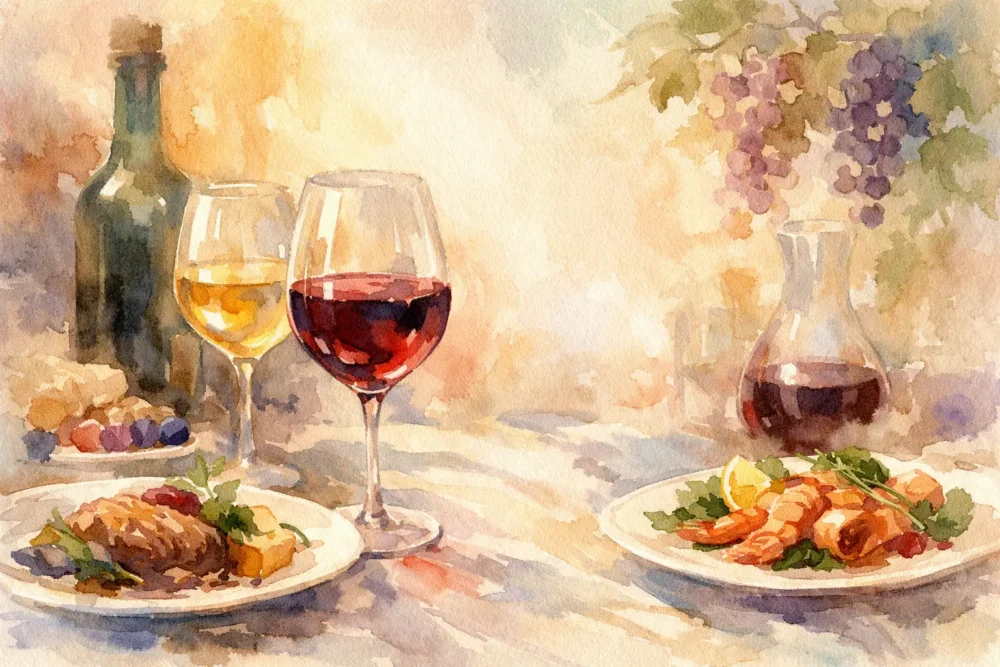
The right bottle can do more than accompany dinner. It can sharpen the brightness of a citrus-kissed sauce, soften the richness of a slow-braised entrée, and give a lingering dessert course its proper sense of occasion. This guide to restaurant wine pairing is designed for the diner who wants to choose with confidence while preserving the pleasure of discovery.
At an intimate table, wine pairing is not a test of knowledge or a performance for the room. It is part of the conversation between the kitchen, the cellar, and the people sharing the meal. A thoughtful choice honors the ingredients on the plate, the pace of the evening, and the reason you came together.
Start With the Dish, Not the Color
The familiar rule of white wine with fish and red wine with meat is a useful beginning, but it rarely tells the whole story. Preparation matters as much as the main ingredient. A delicate white fish served with a buttery, saffron-infused sauce may welcome the texture of a fuller white, while a tuna dish with olive, tomato, and herbs can be beautifully suited to a lighter, chillable red.
Consider the dish in layers. Is its defining quality richness, acidity, sweetness, spice, smoke, herbal freshness, or earthiness? A wine should either echo that quality or provide a graceful counterpoint. Creamy sauces often benefit from refreshing acidity. Charred or roasted flavors may invite a wine with subtle savory depth. Bright herbs, lemon, and seasonal vegetables tend to come alive beside wines with lift and mineral character.
In French Mediterranean cooking, olive oil, garlic, herbs, tomatoes, seafood, lamb, and seasonal produce often appear in elegant balance. This gives the wine list room to move. The aim is not to find one rigidly correct answer, but to select a wine whose structure complements the dish without obscuring its craft.
Match Weight Before Flavor Notes
One of the most dependable principles in restaurant wine pairing is to match the weight of the wine to the weight of the food. A delicate preparation can be overwhelmed by a powerful, heavily oaked red. In the same way, a lean, crisp white may feel lost beside a deeply savory braise or a richly marbled cut of beef.
Think in terms of presence. A lightly dressed salad, oysters, or a simply prepared sole calls for precision and freshness. A chicken dish with a velvety sauce may need more roundness and body. Duck, lamb, mushrooms, and roasted meats can comfortably meet reds with greater depth, although tannin should remain in proportion to the dish.
This is why a server or sommelier may ask how you prefer your entrée prepared, or whether a sauce is central to the dish. Those details are not incidental. They often determine whether the best pairing is a poised Pinot Noir, a textured Chardonnay, a savory Rhône blend, or something less expected.
Use Acidity to Bring a Plate Into Focus
Acidity is one of wine’s most valuable qualities at the table. It refreshes the palate after a rich bite and creates a clean, lively contrast with butter, cream, olive oil, and cheese. A wine with bright acidity can make a luxurious sauce feel more balanced rather than less indulgent.
For seafood with lemon, herbs, or a delicate vinaigrette, a fresh white is often a natural choice because it follows the dish’s brightness. With tomato-based preparations, acidity becomes even more essential. Tomatoes can make a low-acid wine seem flat or overly sweet, while a wine with energy and freshness keeps the pairing composed.
Acidity also makes sparkling wine remarkably versatile. Its fine bubbles and crisp structure can work beautifully with fried appetizers, shellfish, salty cheeses, and lighter first courses. It is not reserved for a toast. For a celebratory dinner, beginning with sparkling wine can establish an elegant rhythm before the entrée arrives.
Tannin, Salt, and the Pleasure of Red Wine
Tannin is the drying sensation often found in red wines, especially those made from thicker-skinned grapes or aged in oak. When tannin meets a lean, delicate protein, it can feel firm or even slightly austere. When it meets fat, however, the effect changes. A well-marbled steak, lamb, or duck can soften tannin and reveal the wine’s fruit, spice, and savory character.
Salt plays a similarly helpful role. Salty foods can make fruit in a wine seem more vivid and can tame a wine’s astringency. This is one reason a red with structure may work so well beside cured meats, a savory reduction, or a dish finished with aged cheese.
Yet more tannin is not always better. If the entrée is gently seasoned or prepared with a subtle sauce, a medium-bodied red may be more harmonious than the boldest selection on the list. In fine dining, restraint is often what allows every element to be heard.
Do Not Fear White Wine With Meat
A white wine can be an exceptional choice with poultry, pork, veal, and even certain preparations of lamb or beef. The deciding factor is often the sauce, garnish, and method of cooking. A roasted chicken with mushrooms and cream may find a natural partner in a layered white with enough body to meet the dish. Pork with fruit, herbs, or a gentle spice may be especially inviting with an aromatic white or dry rosé.
Rosé deserves particular attention in a French Mediterranean setting. Dry and food-friendly, it can bridge an evening that moves from seafood and vegetables to grilled meats. For two guests ordering different courses, it may offer a composed compromise without feeling like a concession.
A Guide to Restaurant Wine Pairing for the Whole Table
Ordering one bottle for the table is often the most gracious choice when guests are sharing appetizers, enjoying a similar style of entrée, or settling into an unhurried dinner. It creates a shared thread through the meal and allows the wine to evolve as conversation does.
Still, a bottle need not serve every course. If one guest is drawn to seafood and another to lamb, wines by the glass may offer more precise pairings. A glass of sparkling wine or a bright white with the first course, followed by a red with the entrée, can create a thoughtful progression without excess.
When choosing a bottle, tell your server what the table is ordering and how you hope to spend the evening. Are you celebrating an anniversary? Would you prefer something familiar, or are you interested in a discovery? Do you favor elegant, restrained wines or fuller, more generous styles? These are useful preferences, not signs that you need to know a producer, vintage, or region in advance.
At René at Tlaquepaque, this conversation is part of refined hospitality. A thoughtful recommendation should feel personal and clear, never intimidating. The best service meets you where you are, then guides you toward a wine that belongs at your table.
Leave Room for Dessert
Dessert pairing follows one essential rule: the wine should usually be at least as sweet as the dessert. A dry wine beside a sweet tart, chocolate course, or caramelized fruit can seem harsh by comparison. A late-harvest wine, a small pour of fortified wine, or a thoughtfully selected dessert wine can bring the final course into balance.
Chocolate often welcomes wines with depth and dark-fruit character, while fruit desserts can be lovely with wines that retain brightness and perfume. For a cheese course, the pairing depends on the cheese itself. Creamy, mild selections may favor a sparkling or aromatic wine, while blue cheese can be striking beside something sweet and concentrated.
There is also no requirement to pair dessert with wine. A composed after-dinner cocktail, espresso, or a final glass of something aged and contemplative may be exactly right. The closing course should reflect the mood of the table, not a rulebook.
Trust the Restaurant’s Point of View
A carefully built wine list is an extension of the kitchen. It reflects the dishes, the season, and the restaurant’s own sense of balance. While a familiar label may be reassuring, asking for a recommendation can lead to a more memorable experience, especially when the menu includes nuanced sauces, seasonal ingredients, or a chef’s prix fixe progression.
Be candid about budget. A simple phrase such as, “We are hoping to stay near this range,” gives the service team the information needed to make a considerate suggestion. Price should shape the recommendation, but it should never limit the care brought to it.
The most rewarding pairing is not necessarily the rarest bottle or the most elaborate choice. It is the one that makes the next bite more vivid, encourages the table to linger, and feels entirely right for the evening you came to enjoy.