

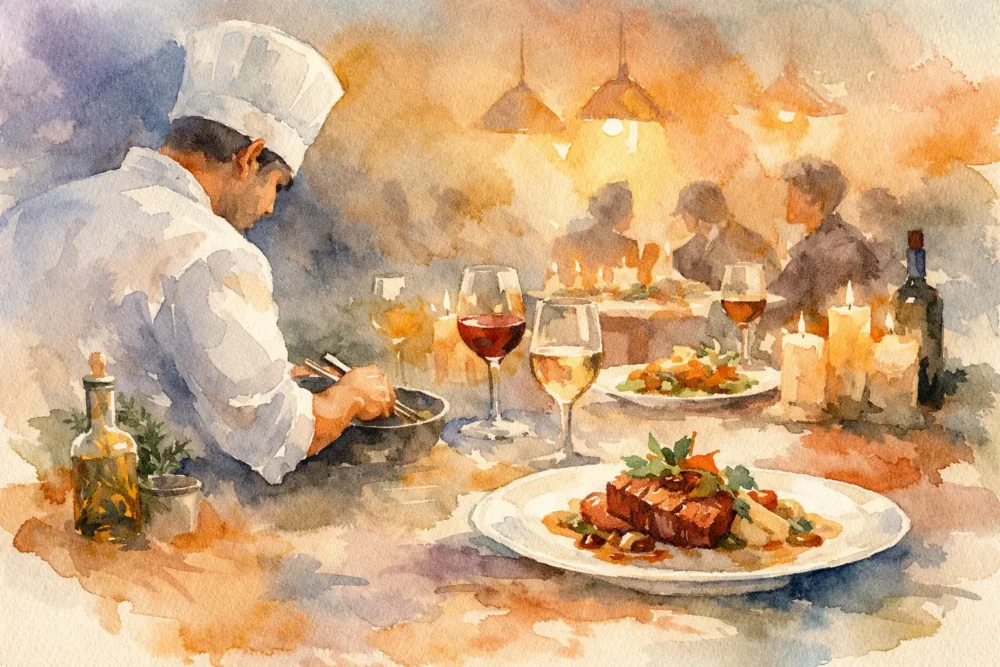
A chef curated dinner experience is not defined by a longer menu or a more elaborate plate. It is the feeling that every course, pour, and pause has been considered before you arrive. For diners seeking more than a convenient reservation, it creates an evening with intention: seasonal ingredients shaped by technique, service that anticipates rather than interrupts, and a setting that gives conversation room to breathe.
In Sedona, that distinction matters. A day spent among red rock vistas, galleries, and quiet courtyards deserves an evening that does not rush to compete with it. The most memorable meals offer a graceful transition from the energy of the day into something more intimate – a table set for presence, pleasure, and the simple luxury of time.
What Defines a Chef Curated Dinner Experience?
A curated dinner begins with a point of view. The chef is not merely assembling popular dishes; they are guiding the guest through a progression of flavors, temperatures, textures, and moments of contrast. A bright first course may sharpen the appetite, while a richer entrée creates depth. Dessert should feel like a satisfying final note, not an afterthought.
This approach is especially compelling in French Mediterranean cooking, where restraint is as important as abundance. A dish may rely on a few exceptional elements: pristine seafood, a deeply reduced sauce, herbs at their peak, or olive oil chosen for its character. The craft lies in knowing when to add complexity and when to let an ingredient speak clearly.
Curating also means making seasonal decisions. A menu should respond to what is most expressive at the market, not cling to the same formula all year. That may mean tender spring vegetables beside a delicate protein, sun-ripened tomatoes in warmer months, or earthy mushrooms and slow-braised preparations when the evenings turn cool. Guests receive a meal that feels rooted in its moment rather than designed for repetition.
The Course Progression Matters
Fine dining is often judged by individual dishes, but a chef’s real skill appears in the relationship between courses. A beautiful appetizer can lose its impact if the entrée that follows is too similar in weight or flavor. A thoughtful dinner avoids that flattening effect.
The progression should build naturally. Early courses often introduce acidity, freshness, or a delicate richness. The center of the meal carries greater depth, whether through roasted meats, seafood, handmade pasta, or a composed vegetarian preparation. A measured dessert offers contrast – perhaps fruit, chocolate, citrus, or a subtle cream – while leaving the guest content rather than overwhelmed.
This is why a prix fixe dinner can be so rewarding. By placing the sequence in the chef’s hands, diners can experience a menu as a complete composition. There is still room for preference and accommodation where possible, but the pleasure comes partly from allowing the kitchen to lead.
That said, a curated format is not automatically superior for every occasion. Guests with strict dietary needs, a very limited schedule, or a desire to choose freely from familiar favorites may prefer an à la carte meal. The right experience respects both the chef’s vision and the guest’s comfort. Refinement is never about making a diner feel constrained.
Wine and Cocktails Complete the Table
A thoughtfully chosen beverage does more than accompany dinner. It changes the way a dish is perceived. A mineral-driven white can bring lift to seafood or a creamy sauce. A balanced red can meet the savory depth of lamb, duck, or a slow-cooked braise without overwhelming the plate. Champagne and sparkling wine have a particular gift for celebration, but they also bring brightness and texture to the beginning of a meal.
A skilled service team listens before recommending. Some guests want a classic pairing by the glass; others prefer a bottle that can evolve through several courses. A cocktail may be the right opening gesture, especially when built with fresh citrus, botanical notes, or a spirit that invites a slower pace. The aim is not to prescribe a single correct choice. It is to find a pairing that suits the food, the occasion, and the guest.
For a celebratory dinner, it can be helpful to mention the occasion when reserving. An anniversary, birthday, engagement, or long-awaited reunion often calls for a different rhythm than an ordinary evening out. A gracious restaurant understands that details matter, from the welcome at the door to the timing of dessert.
Setting Is Part of the Cuisine
Even extraordinary cooking can feel diminished in a room that is loud, hurried, or visually careless. A chef curated dinner experience asks the setting to carry its share of the evening. Soft light, composed tables, attentive spacing, and a room designed for adult conversation create a sense of occasion before the first course arrives.
At René at Tlaquepaque, the courtyard setting and European-inspired dining room give French Mediterranean cuisine a natural sense of place. The atmosphere is romantic without becoming theatrical, polished without feeling remote. Within Tlaquepaque Arts & Shopping Village, the experience can feel like a private interlude after an afternoon of wandering the village’s stone paths and art-filled spaces.
This is also why refined dining rooms preserve a calm environment. An intimate meal depends on the ability to hear the person across the table, to linger over a glass of wine, and to notice the small details in front of you. The standard is not formality for its own sake. It is consideration for every guest sharing the room.
How to Plan the Evening Well
The best curated dinners are rarely hurried. Allow enough time to arrive without rushing, settle in, and enjoy the pace the kitchen has created. If the evening includes a performance, a tour, or a drive back to another part of Sedona, plan around the dinner rather than trying to compress it between obligations.
Reservations are particularly valuable for weekends, holidays, and special occasions. When booking, share relevant dietary information in advance and be realistic about timing. A restaurant can often prepare beautifully for a request it knows about; last-minute changes may be more difficult when a menu relies on precise preparation and seasonal ingredients.
Dress is another small but meaningful part of the experience. There is no need for stiffness, yet choosing attire that suits the room can make the evening feel more distinct from everyday life. Fine dining offers a rare invitation to be present with the person beside you. Meeting that invitation with a little care can be part of the pleasure.
Why Curated Dining Feels Personal
There is a paradox at the center of a great restaurant experience: it is carefully orchestrated, yet it should never feel mechanical. The kitchen follows exacting standards. The service team knows the room, the timing, and the menu. Still, the guest should feel welcomed as an individual, not processed through a system.
That is where hospitality becomes an art. A server who recognizes when to explain and when to step away, a sommelier who offers guidance without performance, and a chef who creates food with clarity rather than excess all contribute to the same feeling. The meal becomes personal because it has been prepared with care, not because it demands attention.
For couples, travelers, and those marking a meaningful occasion, that sense of care often outlasts the menu itself. Years later, guests may not recall every ingredient, but they remember the candlelit table, the wine selected for the moment, and the unhurried conversation that followed each course.
Choose a dinner that leaves space for those memories. The most satisfying evening is not one that tries to impress at every turn, but one where setting, craft, and hospitality quietly make the occasion feel entirely your own.