

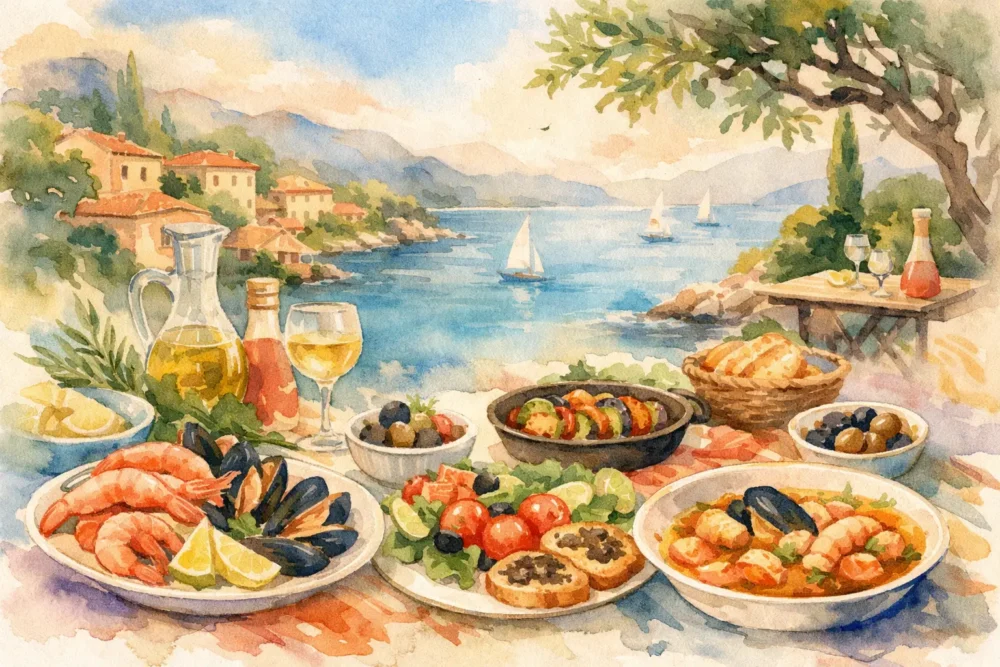
A memorable dinner often begins before the first course arrives: a softly lit table, a glass selected with care, and a menu whose language promises both familiarity and discovery. A French Mediterranean menu explained simply is a menu shaped by French culinary discipline and the sunlit ingredients of the Mediterranean coast. It values precision without heaviness, seasonality without excess, and a composed sense of occasion from aperitif through dessert.
For diners, this style is less about choosing between two cuisines than understanding how they meet. French technique gives structure to a dish. Mediterranean ingredients bring brightness, texture, and an unmistakable sense of place.
What Defines a French Mediterranean Menu?
French Mediterranean cooking is rooted in regions where French tradition meets the ingredients and rhythms of the coast: Provence, the Riviera, Corsica, and neighboring culinary cultures around Italy, Spain, and Greece. Olive oil may take the place of butter in some preparations, though fine French sauces and classical methods remain central. Tomatoes, citrus, herbs, seafood, market vegetables, olives, and aromatic garlic appear naturally alongside carefully prepared meats, reductions, custards, and pastry.
The result is elegant but not austere. A filet of fish may be gently roasted and served with fennel, saffron, and a vivid citrus sauce. Lamb might arrive with rosemary, eggplant, and a refined jus. A composed salad can carry as much intention as a main course when its greens, vinaigrette, cheese, fruit, and texture are in balance.
This is not necessarily food that tastes overtly rustic, although it honors rustic ingredients. In a fine dining setting, the kitchen refines those ingredients through temperature, seasoning, sauce work, and presentation. The goal is clarity. Each component should have a reason to be on the plate.
French Mediterranean Menu Explained by Its Building Blocks
A menu in this tradition usually reveals itself through a few recurring elements. Knowing them makes ordering more intuitive and allows guests to recognize the kitchen’s point of view.
Olive oil, butter, and sauce
French cooking is often associated with butter and cream, while Mediterranean cuisine is commonly associated with olive oil, herbs, and vegetables. A French Mediterranean kitchen does not treat these as opposing ideas. It uses each where it serves the dish.
Olive oil may lend fruitiness to a vinaigrette, grilled vegetables, or a fish preparation. Butter can enrich a delicate pan sauce or give a pastry its fine texture. Stock reductions, emulsions, coulis, and vinaigrettes provide contrast and cohesion rather than simply adding richness. If a menu describes a sauce with words such as jus, beurre blanc, aioli, or pistou, expect it to be an important part of the composition, not an afterthought.
The freshness of the market
Seasonal produce is essential, particularly in lighter courses. Spring may bring peas, asparagus, artichokes, and tender greens. Summer favors tomatoes, squash, peppers, stone fruit, and basil. Cooler months invite mushrooms, root vegetables, citrus, and braised preparations.
This seasonal rhythm is why a thoughtful menu should change. A dish may retain its form while its accompaniments evolve to reflect what is at its best. Diners who return at different times of year may find a familiar style expressed in a new way.
Seafood and carefully prepared proteins
Seafood is a natural fit for Mediterranean flavors. Look for fish paired with herbs, lemon, capers, fennel, shellfish broth, or saffron. The strongest preparations preserve the fish’s own character instead of masking it. A crisp skin, moist interior, and balanced sauce can say more than an elaborate arrangement of competing flavors.
Meat courses tend to be equally deliberate. Duck, lamb, beef, and chicken may be roasted, seared, or slowly cooked, then paired with vegetables, legumes, fruit, or an herb-driven garnish. A richer protein often benefits from an acidic note, such as preserved lemon, wine reduction, tomato, or a bright vinaigrette. That contrast keeps the course graceful rather than weighty.
Herbs, aromatics, and measured acidity
Thyme, rosemary, basil, parsley, tarragon, lavender, garlic, shallot, and citrus are central to the flavor vocabulary. Their role is rarely to overwhelm. Instead, they give shape to the dish and create lift around richer elements.
Mediterranean food often feels vivid because of acidity. Lemon, vinegar, tomato, wine, and pickled ingredients can sharpen a sauce, wake up vegetables, or cut through a luxurious preparation. If you prefer a rounder, gentler flavor profile, ask your server about the menu’s brighter dishes. If you enjoy freshness and contrast, those same notes are often what make the meal memorable.
How to Read the Courses
A polished menu is designed as a progression, not a collection of isolated plates. The courses should build in flavor and richness while leaving room for conversation, wine, and dessert.
Beginning with an aperitif and first course
An aperitif sets the tone. Sparkling wine, a dry white, a classic cocktail, or a spirit-forward selection can awaken the palate before dinner. This is a moment for anticipation rather than urgency.
First courses may include a soup, salad, terrine, seafood preparation, or seasonal vegetable dish. They are often more nuanced than they first appear. A warm goat cheese salad, for example, may balance creamy cheese with greens, fruit, nuts, and a precise vinaigrette. A seafood starter may be delicate in portion but layered in temperature and texture.
For two people sharing an intimate dinner, choosing different first courses is often the most rewarding approach. It creates a small exchange of tastes without disrupting the pace of the meal.
Choosing an entrée with balance in mind
When selecting an entrée, consider the evening as a whole. A lamb or duck dish may be ideal for a celebratory meal and a fuller red wine. A fish or vegetable-forward entrée may feel more appropriate after a rich starter or alongside a crisp white. Neither choice is more refined. The better choice depends on appetite, weather, and the kind of wine you hope to enjoy.
Descriptions can also offer useful clues. Roasted, grilled, and poached preparations are generally more direct and ingredient-focused. Braised, confit, and slow-cooked dishes tend to be deeper and more luxurious. A sauce described as Provençal often suggests tomatoes, garlic, olive oil, and herbs, while a saffron or shellfish sauce suggests a more maritime expression.
At René at Tlaquepaque, this balance between classic technique and Mediterranean brightness is part of the dining experience: dishes are meant to reward an unhurried table, attentive service, and a sense of occasion.
Saving room for dessert and cheese
Dessert is not merely a sweet ending. In French dining, it is a final expression of craft. Expect fruit, chocolate, custard, pastry, cream, and liqueur to appear in measured balance. A citrus tart may provide a clean finish after a richer entrée. Chocolate can be more fitting when the meal has been lighter, or when the table is lingering over coffee and a dessert wine.
A cheese course can be an excellent alternative for diners who prefer savory complexity to pastry. It may also be the right bridge between a final glass of wine and a relaxed close to the evening.
Wine Pairing Without Overthinking It
French Mediterranean cuisine is especially hospitable to wine because it relies on balance rather than sheer intensity. Crisp whites with mineral character complement seafood, salads, and dishes with citrus or herbs. Rosé can be remarkably versatile with vegetables, grilled fish, and Mediterranean flavors, particularly in warm weather. Reds with freshness and moderate tannin often suit lamb, duck, mushrooms, and herb-roasted meats better than very heavy wines.
The most useful pairing principle is to match weight before matching individual flavors. A delicate fish dish needs a wine that will not dominate it. A slow-braised entrée can carry greater depth. Acidic dishes often benefit from wines with refreshing acidity of their own.
There are exceptions. A creamy sauce may welcome a white with more body, while a tuna or swordfish preparation can stand comfortably beside a lighter red. Let the preparation guide the choice, and allow your server to help with the details. A good recommendation considers the sauce, not only the protein.
The Experience Is Part of the Menu
French Mediterranean dining asks for a little time, and that is part of its pleasure. Courses are paced so the table can settle, flavors can register, and a shared bottle can unfold naturally. This is not the ideal format for a hurried meal between obligations. It is well suited to anniversaries, birthdays, travel evenings, and any occasion when dinner itself is the plan.
The best way to approach the menu is with curiosity rather than caution. Choose a course that feels familiar, then let another introduce a new ingredient, sauce, or preparation. A gracious dining room, a thoughtful wine, and a plate made with intention can turn that small choice into an evening worth returning to.