

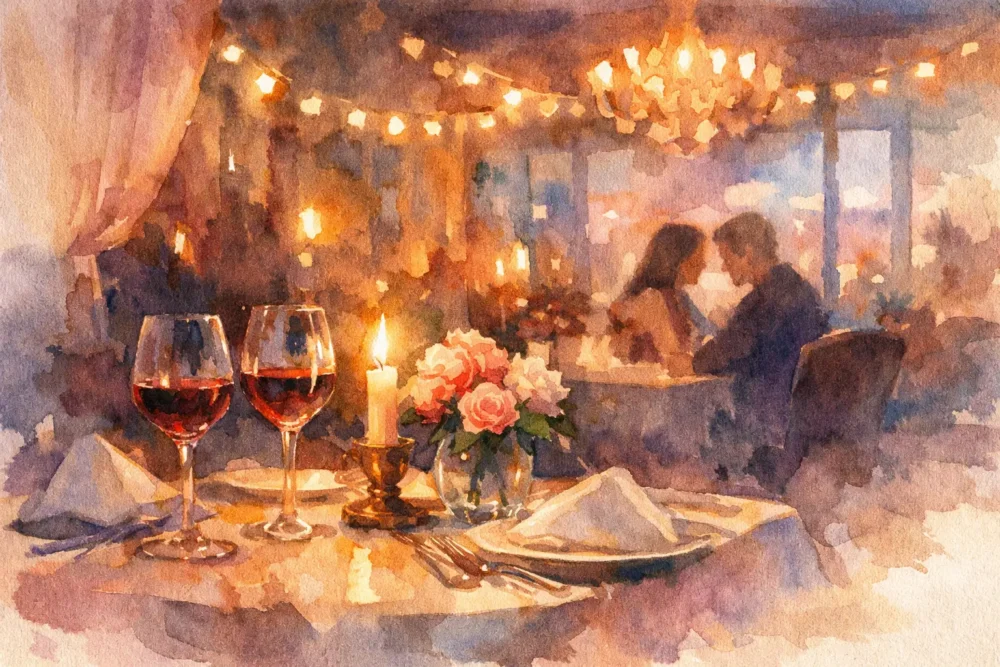
A romantic dinner is rarely created by candlelight alone. What makes a restaurant romantic is the feeling that the evening has been thoughtfully arranged around the people at the table: enough beauty to feel transported, enough quiet to be heard, and enough care that no one feels rushed through the occasion.
For an anniversary, a long-awaited evening away, or simply a meal shared with someone whose company deserves your full attention, romance comes from a collection of small, intentional decisions. The finest dining rooms make those decisions feel effortless.
What Makes a Restaurant Romantic? A Sense of Place
The setting establishes the mood before the first glass is poured. A memorable romantic restaurant offers a gentle transition from the pace outside its doors to a more composed, private experience within. Soft, flattering light; warm architectural details; graceful table settings; and a room designed for conversation all contribute to that change of pace.
Beauty matters, but it should not become distraction. An elaborate interior can feel theatrical if every surface competes for attention. By contrast, a courtyard illuminated after sunset, an intimate dining room with considered proportions, or a table set beside a quiet garden can feel naturally romantic because it gives the evening a sense of occasion without asking guests to perform for it.
In Sedona, the surroundings add their own character. Stone, desert air, mature trees, and the changing color of evening can make a meal feel grounded in a place rather than staged anywhere. A restaurant with a true connection to its setting offers more than a picturesque backdrop. It gives guests a memory tied to a particular hour and a particular table.
Light, Sound, and the Comfort of Conversation
Romance depends on being able to speak naturally across the table. Lighting should be low enough to soften the room, yet bright enough to appreciate the food, the wine, and the person seated opposite you. A single candle may be familiar shorthand for romance, but it is the overall balance of warmth and visibility that makes a table inviting.
Sound is equally decisive. A lively restaurant can be exciting for a group celebration, but it may not suit a quiet date or meaningful conversation. Music should support the atmosphere rather than dominate it, while thoughtful spacing between tables preserves a feeling of discretion. The goal is not complete silence. It is a room with an unhurried rhythm, where a private exchange does not have to compete with the table beside it.
Comfort also carries its own quiet romance. Chairs that encourage guests to linger, linens with a pleasing weight, polished glassware, and a table that is neither crowded nor oversized all signal care. These details may pass unnoticed in the moment, but their absence is immediately felt.
Intention in Service, Not Interruption
Attentive service is one of the most powerful elements of an intimate dining experience. It is also one of the easiest to misunderstand. Romantic service is not constant hovering, elaborate ceremony for its own sake, or a rehearsed speech delivered at every course. It is anticipation with restraint.
The best service teams read the table. They recognize when guests are enjoying a quiet pause and when they would welcome guidance on a wine selection. They replenish water without interruption, clear a course at the proper moment, and make a celebration feel acknowledged without turning it into a spectacle.
For special occasions, this sensitivity is especially meaningful. A thoughtful greeting, a well-timed dessert, or a recommendation shaped around a couple’s preferences can make a dinner feel personal. Yet there is a trade-off: guests seeking a lively, fast-paced evening may prefer a more casual restaurant where the energy is immediate and informal. For diners who value intimacy, however, measured hospitality is part of the pleasure.
The Value of an Unhurried Pace
A romantic meal needs room to unfold. The aperitif should feel like the beginning of an evening, not a delay before dinner. Courses should arrive with enough time to enjoy each other between them, and the final sip of wine should not be met with an impatient suggestion that the table is needed.
That does not mean every romantic dinner must be lengthy or formal. A beautifully prepared lunch can be deeply romantic when the setting is calm and the service is present. The distinction is intention. Guests should feel that the restaurant has made space for the experience, whether they are sharing a leisurely prix fixe menu or meeting over a composed meal before an evening in town.
Food That Invites Sharing and Discovery
Cuisine gives romance something tangible to remember. A dish can be visually striking, but it should also offer comfort, surprise, and a clear sense of craft. Seasonal ingredients, careful technique, and balanced flavors create confidence at the table. Guests can relax into the meal because every course feels considered.
French and Mediterranean traditions are especially suited to this kind of dining. They honor the pleasures of a well-made sauce, pristine seafood, fragrant herbs, thoughtfully selected produce, and desserts that reward lingering. The appeal is not formality for its own sake. It is the generosity of a meal prepared with precision and served at its best.
Shared choices can heighten the experience. Discussing a bottle of wine, comparing courses, or lingering over dessert creates small moments of connection. At René at Tlaquepaque, the relationship between refined French Mediterranean cooking, an elegant courtyard setting, and a deliberately paced meal reflects how food and atmosphere can work as one.
Wine and cocktails deserve the same attention. A thoughtful pairing can bring a new dimension to a dish and give diners an easy point of discovery together. Still, the most romantic recommendation is not always the rarest bottle or the most elaborate cocktail. It is the one that suits the meal, the season, and the guests at the table.
Privacy Is a Form of Hospitality
A restaurant can be welcoming without being indiscriminate about its atmosphere. For many couples, romance relies on a dining room that protects a certain degree of calm. This is why guest expectations, table spacing, and the overall style of service matter as much as décor.
An adults-oriented, refined environment is not about stiffness. It is about allowing guests to settle into the evening without unnecessary disruption. A polished room welcomes celebration, laughter, and warmth, while maintaining the composure that lets every table enjoy its own occasion.
Private dining can offer another expression of romance, particularly for proposals, milestone anniversaries, or intimate wedding celebrations. Yet a secluded room is not automatically more meaningful than a well-chosen table in the main dining room. Some guests prefer the gentle energy of a beautiful restaurant around them; others value complete privacy. The right choice depends on the occasion and the people sharing it.
The Details Guests Remember Later
Long after dinner, people rarely recall every ingredient in every course. They remember the glow of the courtyard, the way a server made a recommendation feel personal, the first taste of an exceptional wine, or the fact that they never once felt hurried.
These impressions are created through consistency. Fresh flowers, clean lines, properly chilled wine, a gracious welcome, and a dessert presented at just the right moment are not incidental. They are evidence of a restaurant that understands romance as an act of hospitality rather than a decorative theme.
When choosing a romantic restaurant, look beyond the promise of a beautiful table. Choose a place where setting, service, cuisine, and pace have been given equal care. The right dining room will not ask you to manufacture a special evening. It will give you the calm, beauty, and attention to make one your own.