

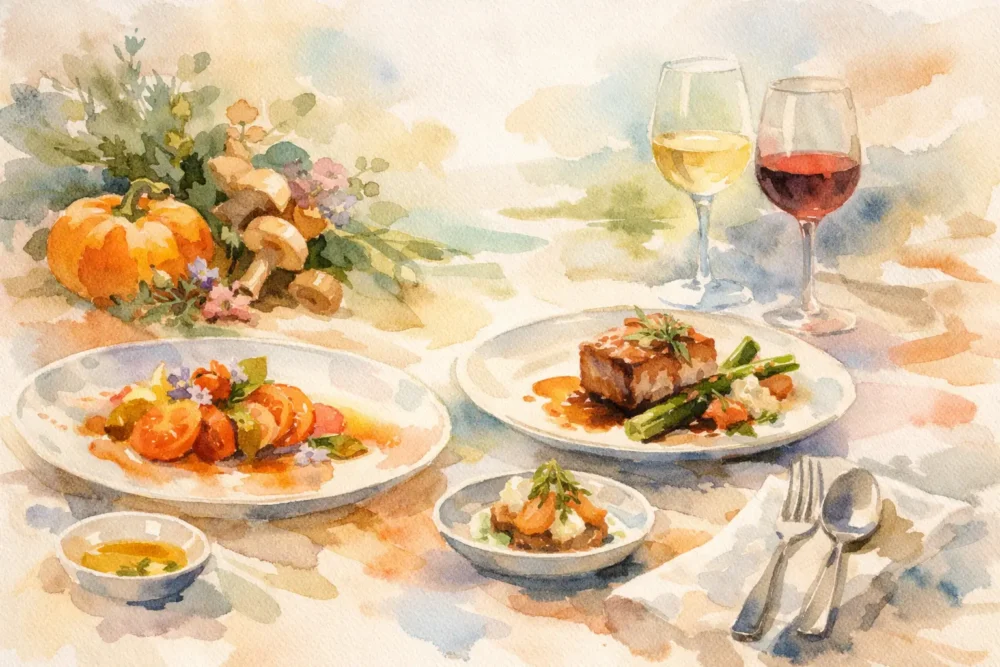
A first taste of spring pea, a perfectly ripened summer tomato, or a winter citrus dessert can say more than an elaborate menu description ever could. Seasonal ingredients fine dining is built on that fleeting clarity of flavor: choosing an ingredient at its most expressive moment, then applying enough technique to honor it without concealing its character.
For diners, seasonality makes a meal feel connected to a place and a particular evening. For the kitchen, it demands discipline. The familiar luxury ingredients remain compelling, but their greatest effect comes from timing, careful sourcing, and the confidence to let a plate evolve with the calendar.
Why Seasonal Ingredients Matter in Fine Dining
Seasonal cooking is often mistaken for a simple preference for local produce. Local sourcing can be meaningful, especially when a kitchen has strong relationships with growers, but seasonality is the larger principle. It asks a chef to seek ingredients when their flavor, texture, and natural perfume are at their peak, whether that means tender greens in early spring, stone fruit in high summer, wild mushrooms after rain, or the deep sweetness of root vegetables in cooler months.
At their best, these ingredients need less intervention. A ripe tomato has enough acidity and sweetness to carry a composed salad. Freshly harvested squash can bring silkiness to a velouté without excessive cream. A fig at its brief height of season can make a dessert feel complete with little more than a delicate pastry, a cultured dairy element, and a restrained touch of honey.
This is not an argument against craft. Fine dining depends on craft. Classical French methods bring structure through sauces, stocks, reductions, precise cooking, and pastry. Mediterranean cooking brings brightness, olive oil, herbs, citrus, seafood, and a certain generosity of the table. Seasonal cooking gives those traditions their living material. It ensures that technique serves flavor rather than becoming the story by itself.
A Seasonal Plate Has a Sense of Place
Sedona’s dramatic landscape invites attention to the details of an evening: warm light on the stone, the coolness that follows sunset, the perfume of the courtyard, and the anticipation of a well-paced dinner. A seasonal menu belongs naturally in that setting because it offers its own sense of time and place.
That does not mean every ingredient must be grown within a few miles of the restaurant. Arizona’s growing seasons are distinct, and exceptional French Mediterranean cuisine has always drawn inspiration from a wider pantry. Citrus, seafood, olive oil, wine, and carefully selected specialty products each have their place. The more meaningful question is whether an ingredient has been selected with discernment, treated with respect, and placed on the menu because it is truly at its best.
The Craft Behind Seasonal Ingredients Fine Dining
A changing menu may appear effortless to the guest. Behind it are many decisions, often made well before the dining room opens. Chefs assess availability, quality, price, and consistency. They taste repeatedly, adjust seasoning, rethink garnishes, and consider how a new dish will sit beside the rest of the menu.
A late-summer peach, for example, may appear in several forms across a single service: lightly grilled beside a savory course, folded into a chilled preparation, or paired with almond and vanilla at dessert. Yet repetition is not the point. The goal is to understand an ingredient deeply enough to give it the right role.
Seasonality also changes the structure of a meal. Spring dishes often favor fresh herbs, young vegetables, delicate fish, and bright sauces. Summer welcomes tomatoes, peppers, eggplant, berries, and stone fruit, with preparations that feel lighter even when they are generous. Autumn invites richer sauces, game, mushrooms, squash, and slow-cooked meats. Winter turns toward braises, roots, citrus, preserved flavors, and desserts with warm spice.
For a chef, these transitions prevent a menu from becoming static. For a returning guest, they create a reason to come back. The pleasure lies not only in revisiting a favorite restaurant, but in encountering its point of view through a new set of ingredients.
Seasonality Is Not a Gimmick
The word “seasonal” has become common enough to lose precision. A menu does not become seasonal simply because it includes a squash soup in October or berries in June. True seasonality requires flexibility, and flexibility can be inconvenient. Supply may vary. A beautiful ingredient may be available for only a few weeks. A dish that was popular last month may need to make room for something more compelling.
That is the trade-off. Diners who expect one particular dish at every visit may find a seasonal menu less predictable. Yet predictability is rarely the highest expression of a fine dining experience. A thoughtful menu should offer continuity in its style, hospitality, and standards while allowing the ingredients to guide its details.
There are also occasions when a chef deliberately works beyond the immediate season. A preserved fruit, confit, fermented vegetable, or carefully sourced specialty ingredient can add depth and contrast. In a refined kitchen, these choices should feel intentional, not merely fashionable. The point is not to impose rigid rules. It is to preserve the integrity of flavor.
How Seasonality Shapes the Complete Evening
A memorable dinner is not created by the plate alone. Wine, service, pacing, and setting all influence how a dish is received. Seasonal ingredients create opportunities for a more thoughtful conversation between the kitchen and the cellar.
A crisp white wine may amplify the salinity of a spring seafood course. A rosé or elegant red can meet the smoky sweetness of grilled summer vegetables. In cooler months, a mature red beside a braised dish can bring warmth and depth without overwhelming the food. The best pairing does not simply match flavors. It considers weight, acidity, texture, and the rhythm of the meal.
Cocktails can follow the same principle. A bright herb or citrus note may welcome a warm evening, while a spirit-forward preparation with autumnal spice can suit a slower winter dinner. Restraint matters here as much as it does on the plate. A drink should set the tone and complement conversation, not compete with either.
At René at Tlaquepaque, this approach belongs naturally to an intimate dining experience. The French Mediterranean foundation provides a graceful framework, while seasonal expression keeps each visit vivid. A carefully paced dinner allows guests to notice the details: the first aroma from a sauce, the contrast of a crisp garnish against a tender center, and the way a wine changes after a few quiet moments at the table.
What to Look for When Choosing a Seasonal Fine Dining Experience
A seasonal menu should still feel coherent. Look for a clear culinary point of view rather than a collection of fashionable ingredients. The menu need not announce every farm or explain every technique, but the dishes should have purpose. A vegetable should taste like itself. A sauce should bring balance. Richness should be answered by acidity, freshness, or texture.
It is also worth considering the setting. Fine dining rewards attention, and attention is easier to give in a room designed for calm. An unhurried pace, knowledgeable service, and a welcoming but polished atmosphere allow the flavors to unfold as intended. For anniversaries, celebrations, and destination evenings, that sense of occasion matters as much as the final course.
Ask what is new, trust the guidance of the service team, and leave room for surprise. The finest seasonal meals are not meant to reproduce the same evening again and again. They offer a brief, beautiful expression of what the kitchen has chosen to celebrate now.