

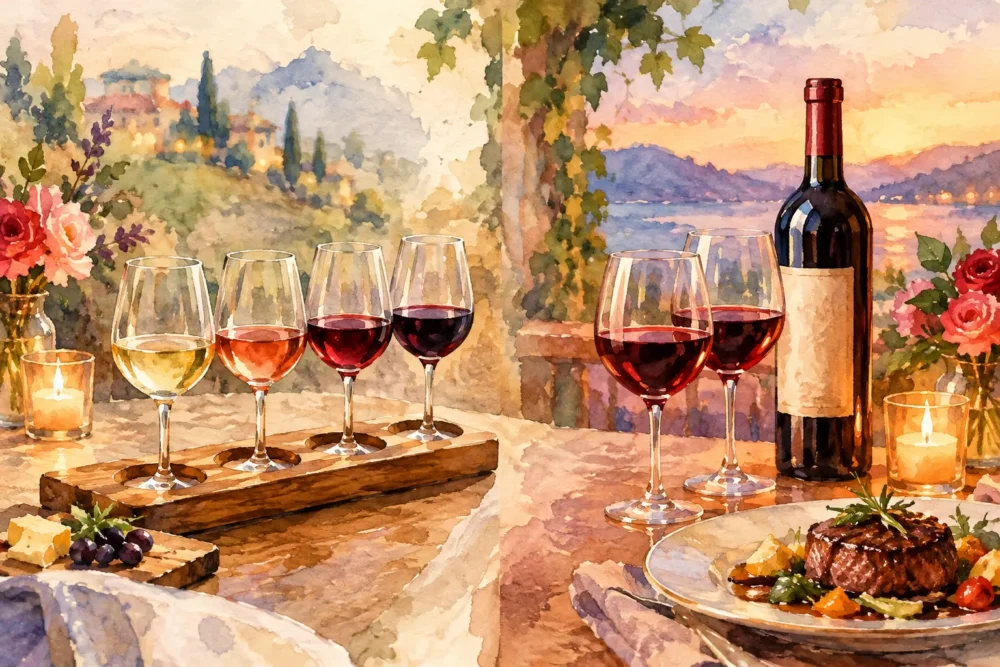
A wine decision can quietly shape the entire table. Wine flights versus bottles is not simply a question of how much to order. It is a choice between a tasting experience that evolves with each course and the gracious ritual of sharing one exceptional wine over an unhurried dinner.
For a romantic evening, either can be exactly right. The better choice depends on the menu, your familiarity with wine, the occasion, and whether you want conversation to center on discovery or settle into the pleasure of a known favorite.
Wine Flights Versus Bottles: Two Different Experiences
A wine flight invites comparison. Several smaller pours arrive with distinct personalities: perhaps a bright white with mineral lift, a supple red with dark fruit and spice, and a dessert wine with a lingering honeyed finish. Each glass gives the meal a new frame. A delicate seafood course can feel more vivid beside crisp acidity, while a savory entrée may call for deeper structure and warmth.
A bottle creates continuity. Rather than changing direction with every course, it becomes part of the evening’s rhythm. The first pour opens the conversation; the wine develops in the glass as the meal unfolds; the final taste may carry into dessert or a quiet moment after dinner. There is a certain elegance in choosing a bottle together and allowing it to accompany the table at its own pace.
Neither approach is inherently more sophisticated. A thoughtful flight reflects curiosity and a willingness to let the chef’s cooking lead. A carefully selected bottle reflects confidence, generosity, and the pleasure of returning to a wine that continues to reveal itself.
When a Wine Flight Is the More Thoughtful Choice
Flights are especially appealing when the menu moves across several flavor profiles. French Mediterranean cooking often brings that range naturally: citrus and herbs, olive oil and sea salt, roasted vegetables, delicate fish, richly prepared meats, and composed desserts. One wine may complement part of that progression beautifully without being the most expressive partner for every course.
A well-designed flight offers a more precise pairing experience. The wine beside a first course can be chosen for freshness and lift. The next pour can bring texture or earthiness to an entrée. A final selection may echo the sweetness, fruit, or roasted notes of dessert. Instead of asking one bottle to do every job, the meal is allowed to change gracefully from plate to plate.
Flights also suit guests who are deciding between styles. Perhaps one person usually orders Sauvignon Blanc but is curious about a Rhône-style blend. Perhaps both diners enjoy red wine but differ on whether they prefer silky Pinot Noir or a fuller Cabernet. Small pours make exploration feel relaxed rather than consequential.
This is particularly useful on a destination dinner in Sedona, when an evening is meant to feel memorable rather than routine. At René at Tlaquepaque, a curated progression can complement the restaurant’s deliberately paced approach, allowing the wine and cuisine to unfold in concert.
There is, however, a trade-off. A flight favors breadth over depth. You may find a wine you adore just as its final sip disappears. And because the pours change, the experience can feel more structured, with each course inviting a new moment of attention. That is wonderful for diners who enjoy tasting notes and subtle contrasts, but it may be less appealing when the goal is to settle in and linger over a single shared choice.
Choose a flight when variety matters most
A flight is often the stronger choice for a prix fixe menu, a multi-course dinner, or an evening when one or both guests want guidance from the service team. It is also ideal when the table includes diners with very different preferences. One person can experience a range of wines without committing the entire meal to a style the other does not enjoy.
The best question to ask is not, “What is your best flight?” Instead, describe the experience you want. Mention the dishes you are considering, whether you prefer whites, reds, or both, and whether you enjoy brighter, lighter wines or more generous, oak-influenced styles. A knowledgeable server can turn that small conversation into a pairing that feels personal.
The Case for Ordering a Bottle
A bottle is often the more romantic option because it is shared by design. Selecting it together creates a small ceremony before the first course arrives. There is the presentation of the label, the first taste, the gentle decision to approve it, and the quiet return of the bottle throughout the meal. These details are modest, but they lend an occasion a sense of intention.
Bottles are also where a wine can show its full character. With air and time, many wines become more expressive. A reserved red may soften and open, revealing perfume and savory nuance. A complex white may gain texture as it warms slightly in the glass. This evolution is difficult to appreciate in a brief tasting pour, especially when the next course is waiting.
For diners who already know what they love, a bottle offers ease. If you both enjoy Champagne, a vibrant white Burgundy, an elegant Pinot Noir, or a classic Bordeaux blend, there is no need to make the evening more complicated than it needs to be. A familiar style can be deeply satisfying when it is well chosen and served with care.
The value can be compelling as well. Two guests sharing wine through a full dinner may find that a bottle offers more generous pours than ordering several individual glasses. That said, value should not be reduced to volume. If the menu calls for dramatically different wines, a bottle may be less satisfying than a flight or a thoughtful combination of by-the-glass selections.
Choose a bottle when connection matters most
A bottle is especially fitting for anniversaries, birthdays, and dinners where the occasion itself is the centerpiece. It keeps the table visually calm and allows the evening to move at its own pace. You are not waiting for the next pour or shifting your attention from one wine to another. Instead, the wine becomes a familiar thread running through the meal.
If you are uncertain, choose a versatile bottle rather than the boldest one on the list. Wines with balanced acidity, moderate tannin, and freshness tend to work across more dishes. A refined Pinot Noir, a balanced Rhône blend, or a textured white with enough brightness for seafood and enough body for richer preparations can often carry a dinner beautifully.
Consider the Menu Before the Mood
The menu should have a voice in the decision. A bottle can be ideal if both diners are ordering similar preparations, such as two seafood entrées or two dishes centered on roasted meats. It becomes more challenging when one person chooses a delicate fish course and the other orders a deeply savory lamb or beef dish. In that case, a flight may honor both plates more fully.
Sauce, seasoning, and texture matter as much as the main ingredient. A rich beurre blanc, a tomato-forward Mediterranean preparation, or a dish with truffle, mushroom, or spice can change the pairing entirely. This is why a brief conversation with the dining room team is more valuable than relying only on the familiar rule of white wine with fish and red wine with meat.
Dessert is another useful dividing line. If you plan to linger over a sweet finale, do not assume the dinner bottle must continue to the end. A small dessert wine, sparkling pour, or well-made after-dinner cocktail can provide a graceful change of pace. The contrast can make the final course feel more considered.
A Few Details That Make Either Choice Better
Begin with your own preferences, not an imagined rule. If you dislike tannic reds, a celebrated Cabernet will not become enjoyable simply because the entrée is steak. If you love sparkling wine, it may be one of the most flexible and festive choices on the list.
Let the pace of the evening guide the order. Flights encourage an active tasting experience. Bottles reward lingering. For a shorter dinner before an evening walk through Tlaquepaque, a flight can create satisfying range without excess. For a long celebration in a candlelit dining room, a bottle gives the table something to return to.
Finally, be candid about how much wine you intend to drink. A bottle is usually most natural for two guests who both plan to enjoy several glasses. If only one person is drinking, or if you would prefer a lighter evening, a flight or a single glass can preserve the pleasure without turning the decision into a commitment.
The finest choice is the one that makes you more present at the table. Choose a flight when discovery will heighten the meal; choose a bottle when sharing one beautiful wine will make the evening feel complete.