

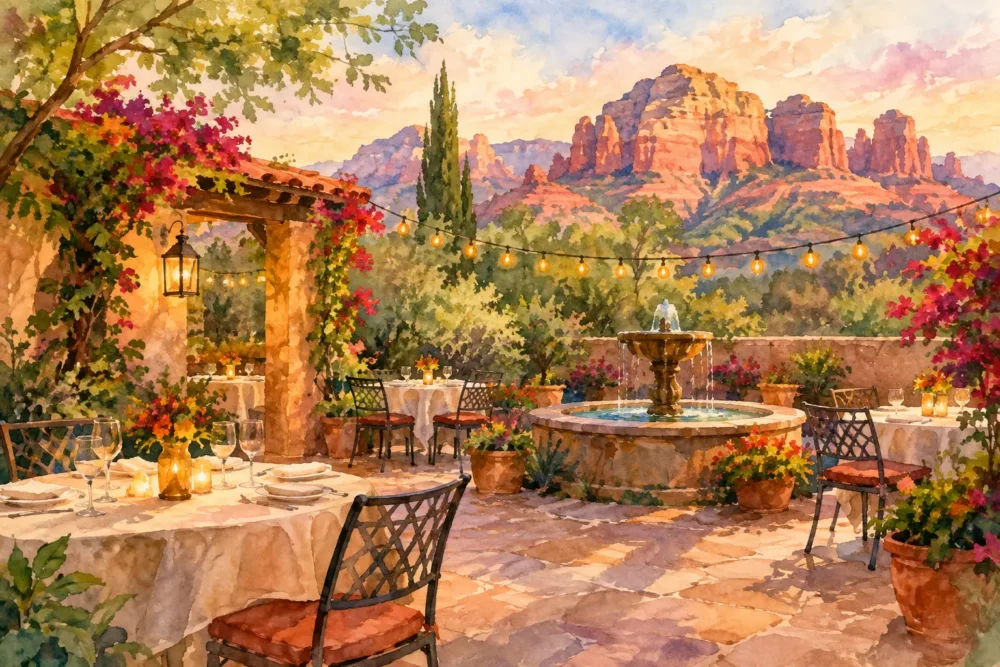
A memorable dinner begins before the first course arrives. In a courtyard restaurant ambiance review, the setting deserves the same considered attention as the wine, the menu, and the service: it determines whether a meal feels merely pleasant or genuinely transportive. In Sedona, where red rock light and desert evenings already carry their own sense of occasion, a well-composed courtyard can turn dinner into a lingering experience.
For guests choosing a restaurant for an anniversary, a birthday, or a quiet evening away from the pace of travel, ambiance is not a decorative extra. It is part of the promise. The right courtyard offers beauty without spectacle, intimacy without isolation, and a pace that invites conversation to unfold naturally.
What a Courtyard Restaurant Ambiance Review Should Consider
A courtyard is often described in photographs as romantic, but romance in a fine-dining setting is built through details that cannot be captured in a single image. The proportion of the space, the distance between tables, the quality of the lighting, and the way a server moves through the room all influence how guests feel once they are seated.
The strongest courtyard settings establish a sense of arrival. Passing from a village walkway or lively street into a more sheltered dining area should feel like a change of tempo. Architectural textures, mature plantings, fountains, stonework, and warm light can create that transition gracefully. In Tlaquepaque Arts & Shopping Village, the European-inspired setting provides a natural foundation for this kind of evening, balancing Sedona character with the feeling of a private escape.
Yet visual charm alone is not enough. An appealing courtyard can lose its refinement if tables are placed too closely, if lighting is harsh, or if the surrounding sound overwhelms the table. Fine dining requires a setting with enough energy to feel alive and enough restraint to let guests hear one another.
Light should flatter the table, not compete with it
As daylight fades, lighting becomes one of the most meaningful elements of a courtyard dinner. Candlelight and thoughtfully placed fixtures lend warmth to stone, greenery, glassware, and the colors of the plate. They also soften the evening without making the menu or a guest’s expression difficult to see.
The balance matters. A room that is too bright can feel rushed or impersonal. One that is too dim may be beautiful from a distance but impractical for dining. The ideal is a gentle, golden atmosphere that supports the meal while allowing the food’s presentation to remain clear.
Sedona’s seasonal shifts add another consideration. Summer evenings may begin with ample natural light and cool quickly after sunset, while cooler months call for careful attention to warmth and comfort. A considered restaurant anticipates these changes rather than asking guests to simply endure them for the sake of a beautiful view.
Sound is the unseen measure of intimacy
A courtyard has its own acoustics. Water may provide a soft, calming backdrop; distant conversation may add a sense of occasion; music can help establish a measured rhythm. But each element needs to remain subordinate to the table itself.
When music is too pronounced or the courtyard is filled with competing noise, guests begin to lean forward and repeat themselves. That small strain changes the tone of the evening. A romantic meal should leave room for laughter, a quiet toast, and the kind of unhurried conversation that makes a celebration feel personal.
This is one reason adults seeking an intimate dining experience often value refined restaurant environments. A calm atmosphere does not mean a silent one. It means that every sound has been given appropriate scale.
The Table Is Where Ambiance Becomes Personal
The view across a courtyard may draw guests in, but the individual table determines whether they settle in. In a fine-dining restaurant, a sense of privacy is created through spacing, service awareness, and a layout that avoids making one party feel on display.
Two-top tables deserve particular care. Couples should be close enough to share the moment, not positioned in a high-traffic lane or crowded beside another conversation. Larger parties, meanwhile, need enough room to celebrate without changing the atmosphere for everyone around them. These are subtle decisions, but they distinguish a setting designed for hospitality from one designed only for capacity.
A well-dressed table also contributes to the experience before a single dish is served. Crisp linens, polished stemware, balanced place settings, and fresh floral or botanical touches communicate intention. None of these details needs to feel theatrical. Their purpose is to signal that the evening has been prepared with care.
At René at Tlaquepaque, the appeal lies in this meeting of setting and craft: French Mediterranean cuisine, a mature European-inspired atmosphere, and hospitality calibrated for guests who value an evening with a deliberate pace. The courtyard is not separate from the dining experience. It frames it.
Service Sets the Pace of the Evening
Courtyard ambiance can be compromised by service that feels either absent or intrusive. A polished dining team reads the table: when guests are ready to consider wine, when they need a moment between courses, and when a celebration calls for quiet acknowledgment rather than a performance.
The best service has a composed presence. Glasses are refreshed without interruption. Courses arrive at a natural rhythm. Explanations of ingredients and preparation are informed but not rehearsed to the point of distraction. This is especially important with a prix fixe menu or a chef-driven tasting experience, where each course should feel connected to the last.
An unhurried pace is not synonymous with slow service. It means the restaurant respects the fact that a fine dinner is more than a sequence of transactions. Guests should have time to enjoy an aperitif, consider a pairing, and let a beautifully prepared course hold their attention. At the same time, pacing must remain responsive. Travelers with theater tickets, private event guests, and diners managing a full Sedona itinerary may need a more defined schedule. Thoughtful hospitality accommodates both without sacrificing calm.
Cuisine Must Belong to the Setting
The most successful courtyard meals feel coherent. If the environment suggests elegance and warmth, the food should carry the same discipline. French and Mediterranean cooking is especially well suited to this setting because it can be expressive without becoming heavy-handed: seasonal vegetables, carefully prepared seafood, composed sauces, fresh herbs, and desserts that reward a lingering final course.
Wine and cocktails complete the relationship between table and place. An aperitif at sunset, a thoughtful glass paired with the main course, or a classic digestif after dessert gives the evening shape. The goal is not excess. It is a sense that each choice supports the next.
Seasonality deserves recognition here. An open-air courtyard will feel different in spring than it does in high summer or on a crisp autumn evening. A restaurant that changes its ingredients, beverages, and accommodations with the season demonstrates a deeper understanding of place. Guests should feel that the meal belongs to that particular evening in Sedona, rather than being interchangeable with a dinner anywhere else.
A Few Practical Questions Before Reserving
For a special occasion, it is reasonable to be specific about the experience you hope to have. Ask whether courtyard seating is available, particularly if it is central to the evening. If outdoor conditions are uncertain, inquire about the restaurant’s approach to weather and indoor alternatives. A beautiful setting should come with a comfortable contingency plan.
It is also worth considering the character of the occasion. A courtyard is ideal for a romantic dinner, an elegant lunch, or a small gathering where guests want to talk and linger. It may be less suitable for a boisterous celebration that requires a highly animated atmosphere. There is no wrong preference, but matching the restaurant to the mood prevents disappointment.
Finally, let the restaurant know when the meal marks something meaningful. A birthday, anniversary, engagement, or long-awaited reunion does not require spectacle to feel special. Often, a gracious table, attentive timing, and a beautiful dessert are enough.
The finest courtyard dining leaves guests with more than a memory of what they ate. It leaves them remembering the warmth of the light, the ease of the conversation, and the rare pleasure of having nowhere else to be for a while. When choosing a Sedona dinner, look for a setting that gives those moments the room they deserve.