

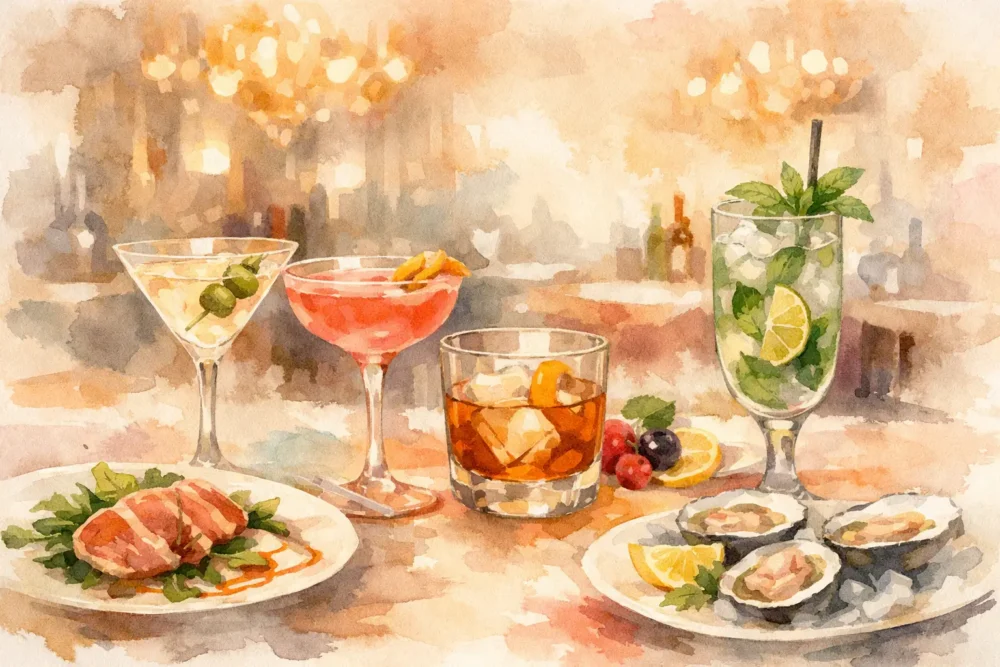
A memorable cocktail pairing does more than match a drink to a plate. It shapes the tempo of dinner: a chilled, citrus-bright aperitif that sharpens anticipation; a botanical sip that lifts a delicate first course; a spirit-forward finish that lets dessert linger. This guide to restaurant cocktail pairings is designed for diners who appreciate that the right glass can make a thoughtful meal feel even more complete.
At a fine dining table, pairing is not a rigid set of rules. It is an exercise in balance, setting, and personal taste. A cocktail may echo an ingredient on the plate, offer contrast to a rich sauce, or simply create a graceful pause between courses. The most rewarding choice considers the food, certainly, but also the occasion, the season, and the pace you want for the evening.
The Principles Behind Restaurant Cocktail Pairings
The first consideration is intensity. A light, sparkling cocktail can be lost beside a heavily reduced braise, while a smoky, high-proof drink may overwhelm a pristine seafood preparation. Aim for a similar degree of presence: bright and delicate drinks with subtle dishes, fuller and more structured cocktails with roasted, grilled, or deeply savory flavors.
Acidity is often the quiet hero of a successful pairing. Lemon, grapefruit, verjus, dry sparkling wine, and a measured touch of vinegar can refresh the palate after buttery fish, creamy risotto, or fried components. In French Mediterranean cooking, where olive oil, herbs, citrus, seafood, and slow-cooked meats may all appear at the table, acidity brings definition without asking the food to compete.
Sweetness calls for particular care. A slightly sweet cocktail can soften spice or salt, but it can make a savory dish seem flat if it is too prominent. As a practical rule, keep aperitifs and savory-course cocktails drier than the food itself. Reserve richer sweetness for dessert, where it can stand beside fruit, chocolate, custard, or caramel without disrupting the meal’s balance.
Texture matters as well. Effervescence cuts through richness. A silky, stirred cocktail complements smooth, luxurious preparations. Crushed ice and fresh herbs suit a sunlit lunch or a warm courtyard evening, while a composed, spirit-led drink often feels right when dinner turns toward candlelight and conversation.
A Guide to Restaurant Cocktail Pairings by Course
Begin with an aperitif that invites the meal forward
The opening drink should awaken rather than satisfy. A classic French 75, a dry gin and vermouth cocktail, or a sparkling aperitif with orange or grapefruit creates a crisp first impression. These choices bring lift, modest bitterness, and enough acidity to prepare the palate for hors d’oeuvres, oysters, crudo, olives, or a composed salad.
For a lighter lunch, consider a spritz with a restrained bitter edge. Its effervescence works beautifully with fresh greens, goat cheese, herbs, and bright vinaigrettes. If the first course includes salty elements such as cured fish, caviar, or tapenade, a dry sparkling cocktail is especially flattering. The bubbles keep each bite precise.
Avoid starting with a very sweet frozen drink or a heavy cream-based cocktail if you plan to enjoy several courses. There are exceptions, of course: a celebratory evening may call for the drink you genuinely love. Yet a restrained opening gives the chef’s work more room to unfold.
Pair seafood with brightness, herbs, and restraint
Fish and shellfish generally favor cocktails with clean lines. Gin, vodka, blanco tequila, and dry sparkling wine provide a fine foundation, especially when joined by lemon, cucumber, basil, tarragon, mint, or a whisper of saline. A martini variation with a lemon expression can be compelling beside simply prepared white fish, while a gin cocktail with herbs and citrus can echo a garden-fresh Mediterranean preparation.
With richer seafood, such as lobster, scallops, or salmon, a little more body is welcome. A dry rum cocktail with lime and gentle spice, or a tequila-based drink rounded by grapefruit, can provide contrast without obscuring the delicacy of the main ingredient. The question is not whether a cocktail must be light. It is whether its sweetness, smoke, or alcohol heat permits the seafood to remain the focal point.
If a dish is finished with beurre blanc, aioli, or another creamy element, seek acidity and bubbles. If it leans toward tomato, saffron, fennel, or roasted pepper, an herbaceous cocktail with citrus may be the more harmonious route.
Let poultry and vegetables welcome aromatic complexity
Chicken, duck, mushrooms, squash, eggplant, and seasonal vegetables invite a wider range of flavors. These dishes often respond beautifully to cocktails built around gin, Cognac, amaro, or a dry sherry-style profile. Herbal notes can mirror thyme, rosemary, sage, or lavender, while restrained stone-fruit flavors can complement caramelization and gentle sweetness.
Duck deserves special attention because its richness can carry more structure. A Manhattan-style cocktail, moderated so that its sweetness remains controlled, can work well with duck breast, cherries, figs, or a dark fruit reduction. If the preparation is more delicate, perhaps paired with citrus or herbs, a rye-heavy drink may feel too forceful. A softer Cognac or gin-based choice may preserve the dish’s elegance.
For vegetable-forward plates, look to what is happening in the garnish and sauce. Earthy mushrooms may welcome a dry, stirred cocktail with a savory edge. Charred vegetables can stand beside mezcal in very small measure, provided its smoke does not dominate. Fresh spring vegetables often shine with gin, elderflower used sparingly, and lemon.
Match red meat with depth, not excess
Steak, lamb, and braised meats are natural companions for barrel-aged spirits, bitter liqueurs, and spice. An Old Fashioned, Boulevardier, or well-balanced Manhattan can meet roasted flavors with confidence. Orange oils, cherry, cacao, coffee, and warming spice can all find common ground with a proper sear, a reduction, or a savory jus.
Still, strength alone is not sophistication. A cocktail that is overly sweet or aggressively smoky can dull the nuance of a well-prepared filet or lamb chop. When the dish includes peppercorn, truffle, or a powerful cheese, consider a cleaner spirit-forward drink with less ornament. When it features fruit, balsamic, or a gentle glaze, a cocktail with controlled bitter-sweetness may create a more expressive pairing.
Aged tequila and mezcal can be excellent with grilled meats, particularly those touched by chile, cumin, or charred vegetables. The decision depends on the level of smoke in the food. If the kitchen has already built deep fire-kissed flavor, choose a brighter tequila preparation rather than doubling down on smoke.
Finish with a cocktail that respects dessert
Dessert pairings require discipline. The drink should be at least as sweet as the dessert, or it may taste thin and austere. Chocolate, espresso, caramel, and roasted nuts welcome aged rum, Cognac, coffee liqueur, or a thoughtfully made espresso martini. Fruit tarts and citrus desserts are lovely with sparkling cocktails, orange liqueur, or a floral spirit tempered by fresh acidity.
For an elegant finish, consider whether a full cocktail is desired at all. A small, stirred nightcap can be more satisfying than another large drink after a leisurely dinner. An amaro-based digestif, a Vieux Carré-style pour, or a modest Cognac cocktail offers warmth and complexity while allowing the final course to remain the occasion.
How to Order with Confidence
The most useful question for a bartender or server is not, “What is your best cocktail?” It is, “What would you pour with this dish?” Share whether you prefer dry, citrus-driven, herbal, bitter, or spirit-forward drinks. Mention any flavor you avoid, especially smoke or sweetness. This gives the service team a clear direction and opens the door to a recommendation tailored to your meal.
It is also perfectly reasonable to select one cocktail for the first part of dinner and transition to wine, sparkling water, or a final digestif later. A pairing need not be one drink carried from appetizer through dessert. Fine dining is most enjoyable when the pace feels intentional, not obligatory.
At René at Tlaquepaque, the most fitting cocktail is the one that honors both the plate and the evening: composed with care, served at the right moment, and enjoyed without haste. Let curiosity guide the first choice, then allow the conversation, the cuisine, and the setting to suggest what comes next.