

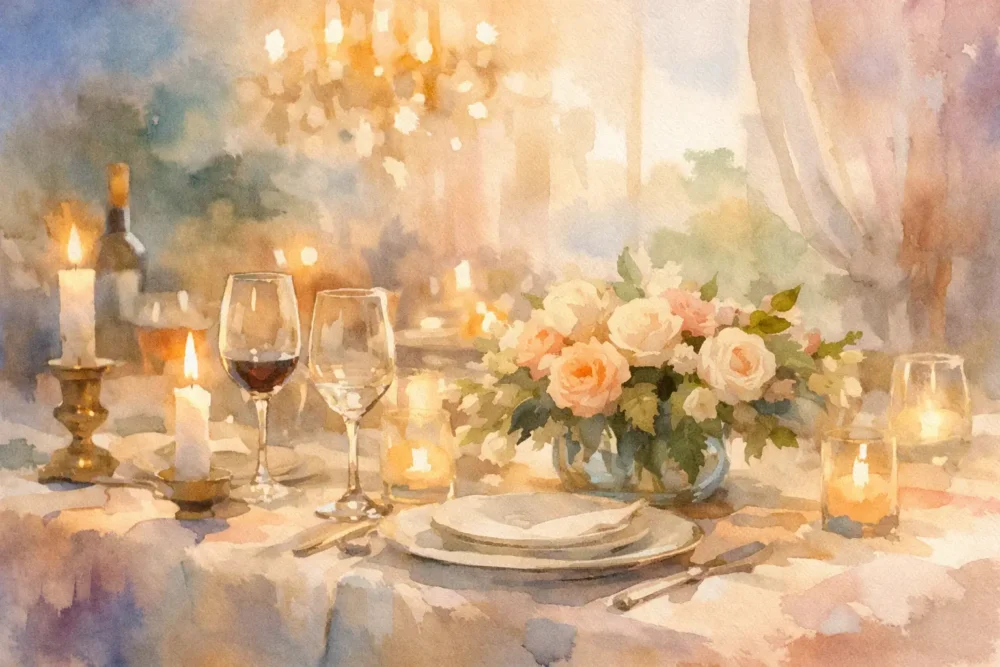
A memorable private dinner is not defined by how many courses appear on the table. It is defined by how effortlessly the evening allows guests to settle in, connect, and feel cared for. This guide to hosting a private dinner begins with that principle: every choice, from the guest list to the final toast, should serve the mood you hope to create.
For an anniversary, milestone birthday, intimate rehearsal dinner, or gathering of favorite friends, the most gracious occasions feel considered without becoming overproduced. The aim is not perfection. It is an unhurried evening shaped by intention, setting, and craft.
Begin With the Feeling You Want to Create
Before choosing a menu or sending an invitation, decide what the dinner should feel like. A candlelit celebration for six calls for different decisions than a lively gathering of 14, even when both take place in a private dining room. Think in terms of atmosphere: romantic and quiet, warm and conversational, or celebratory with a little more energy.
This first decision gives the event a point of view. It guides the invitation language, floral choices, music, pacing, and style of service. It also helps guests understand what kind of evening they are joining. A formal milestone dinner may invite cocktail attire, while a relaxed wine-focused supper can be elegant with a less structured dress code.
Resist the urge to add a theme simply for decoration. A beautiful private dinner needs coherence more than novelty. Seasonal flowers, linen napkins, soft light, and a table with enough room for plates, glassware, and conversation often create more impact than elaborate props.
Choose Guests With the Table in Mind
A guest list is not merely a count for the reservation. It shapes the entire rhythm of the evening. Consider which people will genuinely enjoy one another’s company, rather than assembling a group based only on obligation. The best tables leave room for stories, shared laughter, and the small pauses that make an evening feel intimate.
For a hosted dinner, eight to 12 guests is often a sweet spot. It is large enough to feel festive yet small enough for everyone to participate in a single conversation. Smaller groups can support a more romantic, deeply personal atmosphere. Larger parties can be wonderful, but they benefit from thoughtful seating, a private setting, and a clear plan for service.
If guests do not all know one another, introduce the group with care. A few thoughtful pairings at the table can ease conversation naturally. Seat people according to shared interests or complementary personalities, not simply who arrived together. Couples do not always need to sit side by side.
Select a Setting That Supports the Occasion
The setting should make the event easier to enjoy, not compete for attention. At home, this means considering practical details: comfortable chairs, appropriate lighting, enough space for service, and a kitchen that can handle the menu. Hosting in a restaurant offers a different advantage: the host can remain present at the table while a professional team manages timing, glassware, cuisine, and the quiet details that preserve the evening’s flow.
A private room is not always necessary. For a small group, a beautifully placed table in a refined dining room may feel more alive and less isolated. For speeches, a multi-course menu, or a group with particular privacy needs, a dedicated space can be the better choice. It depends on whether the occasion calls for intimacy within the energy of a restaurant or a room entirely your own.
In Sedona, a courtyard setting can lend a special sense of place, especially as the light softens into evening. René at Tlaquepaque offers the kind of composed, European-inspired atmosphere that lets a private gathering feel like a true occasion rather than a meal arranged around a calendar.
Plan the Menu Around Pace, Not Excess
A private dinner menu should feel generous, but it should never exhaust the table. The finest menus move with an easy rhythm: an opening bite or first course, a composed entrée, perhaps a palate-clearing transition, and a dessert worth lingering over. More courses can be beautiful for a chef’s tasting or wine dinner, but they require more time and attention from guests.
Start by asking a few practical questions. Are there dietary restrictions or allergies? Is the group adventurous, or will it be most comfortable with familiar preparations executed beautifully? Will guests arrive hungry after travel, a ceremony, or an afternoon outdoors? These answers matter more than chasing the most elaborate menu possible.
Seasonal ingredients offer a natural path to a menu with character. A French Mediterranean approach, for example, can balance richness with brightness through market vegetables, herbs, seafood, thoughtfully prepared meats, and desserts that feel polished rather than heavy. Ask the culinary team which dishes are at their best during the season of your event. A menu built around what is excellent now will always feel more confident than one designed around trends.
If the dinner is hosted at home, choose a menu that allows you to spend time with guests. One or two elements prepared just before serving can feel special; an entire menu requiring last-minute attention can leave the host absent from their own party. Consider hiring a chef or arranging professional service when the occasion warrants it. Hospitality is most convincing when the host is relaxed.
Give dietary needs the same care as every other course
Guests with dietary needs should receive a considered dish, not an afterthought. Share requirements well before the event, particularly for allergies. A skilled restaurant team can often create an alternative that belongs gracefully within the menu, preserving both presentation and the guest’s sense of inclusion.
Pair Wine and Cocktails With Restraint
A well-chosen welcome cocktail gives guests a gentle transition into the evening. Keep it simple, balanced, and easy to enjoy before dinner. Champagne, a classic aperitif, or a seasonal cocktail can establish a celebratory tone without overwhelming the palate.
For wine, one thoughtful pairing per course may be appropriate for a formal dinner, while two wines served across the meal can be equally elegant for a more relaxed gathering. The right approach depends on the menu, the group, and the desired length of the evening. A knowledgeable sommelier or restaurant manager can help select bottles that complement the food while respecting a range of preferences and budgets.
Do not overlook nonalcoholic pairings. Sparkling water, botanical beverages, and carefully selected zero-proof cocktails deserve the same presentation as wine. Offering a beautiful alternative without calling attention to it is a small but meaningful expression of hospitality.
Set the Table for Conversation
A formal table need not feel stiff. Begin with the essentials: crisp linens, polished flatware, proper glassware, and a centerpiece low enough for guests to see one another. Candlelight is flattering and intimate, though unscented candles are generally best so they do not interfere with the food or wine.
Place cards are helpful when the group is larger than six or when you are intentionally creating new conversations. They also eliminate the small uncertainty of choosing seats. If there will be menus, print them simply and include the date or occasion if it feels meaningful. This becomes a quiet keepsake without turning the table into a stage set.
Music should sit in the background. If guests must raise their voices to be heard, it is too loud. The same principle applies to flowers, décor, and even speeches: beauty should support connection, never interrupt it.
Give the Evening Room to Breathe
Fine dining is defined as much by pacing as by food. Build in time for arrivals, an aperitif, and conversation before the first course. Rushing guests directly from the door to the table can make even an elegant setting feel transactional.
For a restaurant dinner, communicate the schedule early. Let the team know whether there will be a toast, gift presentation, or brief remarks so they can time service around those moments. Speeches are usually best kept short and offered between courses, when glasses are filled and plates have been cleared.
The host sets the emotional temperature. Welcome each guest personally, make introductions, and then allow the evening to unfold. There is no need to fill every silence or explain every detail of the menu. Trust the setting, the cuisine, and the people you chose to invite.
Attend to the Details Before Guests Arrive
The most polished events feel effortless because their practical questions were resolved early. Confirm the final guest count, menu selections, dietary needs, timing, and payment arrangements several days in advance. If hosting at a restaurant, clarify whether beverages, tax, gratuity, flowers, or printed menus are included in the event plan.
For milestone occasions, consider one personal gesture: a handwritten note at each place, a favorite vintage for the guest of honor, or a dessert presented with a few sincere words. Keep it specific. A private dinner becomes memorable when guests sense that it could not have been created for just anyone.
When the last course is cleared, do not rush to signal the end. Let coffee, dessert wine, and the final conversation have their place. The most gracious private dinners leave guests with more than a beautiful plate in mind. They leave them feeling that, for one evening, time was given the attention it deserved.